


The most high-profile AI chip smuggling prosecution in US history landed in a Manhattan federal court when three men linked to server giant Super Micro Computer were charged with secretly diverting at least $2.5 billion worth of restricted Nvidia GPU-equipped servers to China in violation of US export controls.
The unsealed indictment charges Yih-Shyan “Wally” Liaw, 71, Ruei-Tsang “Steven” Chang, 53, and Ting-Wei “Willy” Sun, 44, with conspiring to divert high-performance computer servers assembled in the United States and integrating sophisticated US artificial intelligence technology to China, in violation of US export controls laws. Liaw is a US citizen from Fremont, California, and a co-founder of the company. Chang and Sun are both from Taiwan.
Each of the defendants is charged with one count of conspiracy to violate the Export Controls Reform Act, carrying a maximum prison term of 20 years. Additional counts of smuggling and fraud charges carry maximum penalties of 10 years in prison.
The AI chip smuggling case sent immediate shockwaves through the technology industry — wiping more than $6 billion from Super Micro’s market capitalisation in a single trading session and raising urgent new questions about the integrity of the global AI chip supply chain.
Background
The AI chip smuggling indictment arrives at a moment of sharp contradiction in US technology policy.
In 2022, the US tightened its chip export restrictions on selling advanced artificial intelligence chips to China, citing national security concerns. The bans covered Nvidia’s B200 and H200 graphics processing units, among the company’s most advanced AI chips, and only allowed sales to China through a licence granted by the government.
Yet just months before this prosecution was announced, the Trump administration loosened those same chip export restrictions. The Trump administration recently gave the green light to sell some AI chips to China, embracing industry arguments that Beijing has its own advanced technology and it is best for US firms to enter the market and compete.
That contradiction — tightening rules while simultaneously relaxing them — forms the political backdrop against which the AI chip smuggling case will be prosecuted. The technology transfer case may be difficult to prosecute as a result of varying Trump administration policies that initially aimed to restrict advanced US AI technology from boosting China’s military, then loosened the policy in January to allow Nvidia to sell China advanced H200 microchips that are up to 13 times more powerful than previously allowed.
How the AI Chip Smuggling Scheme Worked
The AI chip smuggling operation was not a crude black-market transaction. It was a sophisticated, multi-country deception operation that ran for more than a year.
According to the indictment, the scheme used shell companies in Southeast Asia to place fake orders for Super Micro AI servers. The servers were assembled in the US with restricted Nvidia GPUs, shipped to Taiwan, forwarded to Southeast Asia, then repackaged with identifying markings removed and diverted to buyers in mainland China. The operation ran from 2024 to 2025.
In one detail straight out of a spy thriller, prosecutors say labels and serial numbers were swapped using hair dryers. The operation reportedly relied on thousands of dummy servers used during inspections while the real machines had already been diverted.
The indictment alleges that Wally Liaw, Steven Chang, and Willy Sun conspired to sell $2.5 billion worth of servers to a company based in Southeast Asia, which then repackaged the boxes to send $510 million worth of servers with banned chips to final destinations in China.
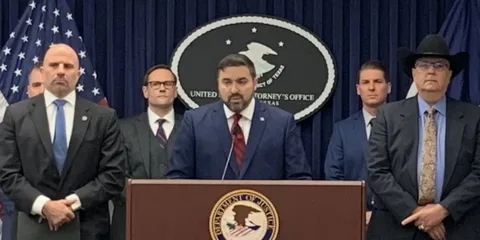
US Attorney Jay Clayton said the defendants secretly diverted massive quantities of advanced AI technology to China through a tangled web of lies, obfuscation and concealment — all to drive sales and generate revenues in violation of US law. He added that diversion schemes like those disrupted today generate billions of dollars in ill-gotten gains and pose a direct threat to US national security.
The Chips Involved — Nvidia’s Most Powerful AI Hardware
The specific hardware at the centre of the AI chip smuggling case reveals precisely why China wanted it badly enough to risk criminal prosecution to obtain it.
The chips involved in the operation included Nvidia advanced AI accelerator chips, such as the Nvidia B200, H100, and H200 GPUs, and servers incorporating those chips. The technology is included on the Commerce Department’s Bureau of Industry and Security Commerce Control List that requires an export licence to be sold to China.
These are not commodity products. Nvidia’s H100 and H200 are the dominant chips powering the world’s most advanced AI training and inference systems. The B200 is Nvidia’s most advanced chip, part of its Blackwell architecture. Access to even a fraction of the hardware involved in this AI chip smuggling operation would represent a meaningful acceleration of Chinese AI development.
The 910c AI Chips Context — Why China Needs American Hardware
Understanding the AI chip smuggling case requires understanding why Chinese buyers are willing to take criminal risks to obtain American hardware when China has its own chinese ai chip programme.
Huawei’s Ascend 910c is China’s best domestically produced AI chip. DeepSeek researchers concluded that the 910c performs 60 percent as well as the Nvidia H100 — a chip that is similar to the H200 but has lower memory bandwidth.The 910c ai chips represent the ceiling of what China can currently produce domestically — and that ceiling sits significantly below what Nvidia offers.
Chinese developers are rewriting code and restructuring workloads to run on domestic accelerators like Huawei’s Ascend 910B and 910c, which are less powerful than Nvidia’s latest GPUs. The 910c ai chips are emerging as a default chinese ai chip choice, combining two 910B dies in one package.
But the performance gap matters enormously for frontier AI development. Huawei will not be able to make a chip more powerful than the H200 until the Ascend 960 in 2027 at the earliest, which will likely be widely available in 2028.That two-year gap is precisely the window that makes AI chip smuggling economically rational for Chinese buyers willing to absorb the legal risk.
Some China experts say if Beijing had technology comparable to Nvidia’s, there would be no need for large-scale smuggling operations like this one. The scale of the AI chip smuggling case is itself evidence of how desperately China’s AI industry wants access to American hardware it cannot legally obtain or domestically replicate.
Chip Export Restrictions — The Policy Framework Being Tested
The AI chip smuggling indictment is ultimately a test of whether the chip export restrictions the US has built since 2022 can actually be enforced.
First imposed in October 2022 and subsequently expanded in 2023 and 2024, the chip export restrictions primarily target China and are intended to limit its ability to produce or acquire advanced semiconductors for military and artificial intelligence applications. The controls represent a departure from roughly three decades of US trade policy, which had generally permitted the export of dual-use technologies to China subject to end-use and end-user restrictions.
Restrictions are potentially effective with respect to chipmaking equipment — which is commonly produced in small lots, is heavy, and is technically challenging to transport, install, and maintain. But semiconductor chips are produced by the millions and are small and easily concealed. Chinese enterprises have already proven adept at smuggling proscribed chips through various forms of subterfuge.
The Southeast Asia transshipment route used in this AI chip smuggling case is not new. A Financial Times report estimated that China was able to secure about $1 billion in advanced AI processors in the three months after President Trump tightened chip export restrictions — suggesting that the smuggling pipeline was operating at significant scale even before this prosecution.
Lawmakers have responded to the AI chip smuggling case with calls for tighter enforcement. Key Republicans are calling for action to ensure AI chip sales to China do not take place. House Foreign Affairs Committee Chair Brian Mast said that H200s, Blackwells, or any other AI chips that could help China win the AI arms race can never have Chinese end users. Lawmakers have introduced several bills to tighten chip export restrictions, including legislation to block exports of advanced AI chips to China and require location-tracking technology in those chips.
Super Micro’s Response and Market Impact
Super Micro Computer moved quickly to distance itself from the AI chip smuggling indictment while acknowledging the individuals involved.
Super Micro said it had placed the charged employees on leave and ended its relationship with the contractor. The company stated that the conduct alleged in the indictment is a contravention of its policies and compliance controls, including efforts to circumvent applicable export control laws and regulations. The company noted that it is cooperating with investigators and is not named as a defendant in the indictment.
CEO Charles Liang, who co-founded Super Micro with Liaw in 1993, has not made public statements about his co-founder’s arrest. The two men built Super Micro from a small server assembler in San Jose into a company projecting at least $40 billion in revenue for the current fiscal year.
Nvidia also responded directly. In a statement, Nvidia said strict compliance with export laws is a top priority, adding that it continues to work closely with customers and the government on compliance programmes as chip export restrictions have expanded. The company added that unlawful diversion of controlled US computers to China is a losing proposition — noting that it does not provide any service or support for such systems.
Quotes
“As alleged in the indictment, the defendants participated in a systematic scheme to divert massive quantities of US artificial intelligence technology to customers in China. They did so through a tangled web of lies, obfuscation, and concealment — all to drive sales and generate revenues in violation of US law.” — Jay Clayton, US Attorney, Southern District of New York
“These chips are the product of American ingenuity, and the national security division will continue to enforce our export-control laws to protect that advantage.” — John Eisenberg, Assistant Attorney General for National Security
“You would not be seeing such acts if there wasn’t an enormous desperation within the Chinese tech industry for advanced chips.” — Leland Miller, US-China Economic and Security Review Commission
“I’ve said this over and over again — our H200s, Blackwells, or any other AI chips that could help China win the AI arms race can never have Chinese end users. No American AI chips to China.” — Brian Mast, House Foreign Affairs Committee Chair
“Credit to the Trump Administration for cracking down on the enforcement of export controls. Nvidia has insisted for years that there is no evidence of chip smuggling while experts raised the alarm.” — Chris MacKenzie, Americans for Responsible Innovation
Impact
For the AI industry, the AI chip smuggling case shatters the industry argument that large-scale smuggling of restricted chips to China was not happening. A new AI chip smuggling case is challenging industry claims that smuggling to China is not happening on a massive scale. Some China experts say if Beijing had comparable technology, there would be no need for large-scale smuggling operations like this.
For chip export restrictions, the prosecution validates the framework while simultaneously exposing its vulnerabilities. The Southeast Asia transshipment loophole — using shell companies in third countries to repackage and reroute hardware — emerged as the dominant evasion method, and closing it will require significantly more aggressive monitoring of technology flows through countries like Malaysia, Singapore, and Thailand.
For the US-China technology competition, the scale of the AI chip smuggling operation — $2.5 billion in a single scheme — confirms that the race for AI computing power has crossed into criminality. Chinese enterprises have proven adept at smuggling proscribed chips through various forms of subterfuge. Export controls alone cannot substitute for comprehensive industrial and research policy measures necessary to ensure US leadership in semiconductor design, production, and infrastructure.
FAQs
Can location verification stop AI chip smuggling?
Location-tracking technology embedded in chips is one of the most actively discussed responses to AI chip smuggling. Lawmakers have introduced legislation that would require location-tracking technology in advanced AI chips sold abroad, allowing the government to verify that chips remain at their stated destinations rather than being transshipped to restricted buyers.However, experts note that determined smugglers could potentially disable or deceive such systems, and that enforcement would still require ongoing monitoring and international cooperation to be effective. Location verification is a meaningful deterrent — not an airtight solution.
How long do AI chips last?
AI chips like Nvidia’s H100 and H200 are engineered for years of continuous high-load operation in data centre environments. Under normal data centre conditions, these chips typically remain operationally effective for five to seven years before performance degradation or obsolescence makes replacement necessary. The fact that Chinese buyers were willing to pay black-market premiums for chips through AI chip smuggling networks — accepting hardware with no manufacturer support or warranty — indicates how pressing the demand was, even for hardware that would arrive without the service infrastructure that legitimate purchasers receive.
Why can’t China make AI chips?
US chip export restrictions prohibit Chinese firms from using overseas fabrication facilities such as those operated by TSMC to make advanced AI chips. This forces all Chinese AI chip production to occur at fabs within China. However, China’s most advanced fabs are far less advanced than the TSMC fabs that make Nvidia’s chips, and the production capacity of China’s most advanced fabs is also very limited relative to TSMC. Recreating a semiconductor supply chain that does not involve US technology requires hundreds of billions of dollars and an incredible amount of engineering talent and energy. The cutting edge of the semiconductor supply chain is both globalised but also so specialised that at any step in it there are only a handful of firms in the world that can do it — and if you are locked out of any one of these steps, you cannot make chips.China’s best current chinese ai chip, the Huawei 910c, performs at roughly 60 percent of the Nvidia H100’s real-world capability — and closing that gap domestically remains years away.
Conclusion
The AI chip smuggling indictment is the highest-profile enforcement action in the history of US semiconductor export controls — and it arrives at precisely the moment when Washington’s AI chip policy is most contradictory.
The scale of the AI chip smuggling operation is further evidence that China is aggressively seeking US technology to help power its AI industry. These chips are not just powering chatbots — as the conflicts abroad make clear, there are real national security implications for advanced chips making their way into China.
The defendants face up to 20 years in federal prison. One remains a fugitive. Super Micro has lost billions in market value. And Congress is moving to tighten the chip export restrictions that the scheme so elaborately evaded.
Whether this prosecution deters the next AI chip smuggling operation — or simply raises the price of the next one — will depend on how seriously the US government closes the transshipment loopholes that made this scheme possible in the first place.