


NASA has unveiled the most ambitious restructuring of its space programme in decades — committing $20 billion over the next seven years to build a nasa moon base on the lunar surface, scrapping its planned orbiting lunar station, and announcing a nuclear-powered spacecraft that will reach Mars before the end of 2028.
NASA has unveiled a major overhaul of its moon and Mars strategy, scrapping plans for a lunar-orbit space station and instead committing $20bn over the next seven years to build a nasa moon base on the moon’s surface, while also advancing plans to send a nuclear-powered spacecraft to Mars.
“This time, the goal is to stay,” NASA Administrator Jared Isaacman said as he outlined the nasa moon base strategy — a declaration that drew a sharp line between the Apollo era’s short visits and what NASA now intends to build.
The announcement came just over a week before NASA’s Artemis II launch — a convergence that framed the upcoming crewed lunar flyby not as a standalone event but as the opening move in a decade-long plan to establish permanent human presence on the Moon.
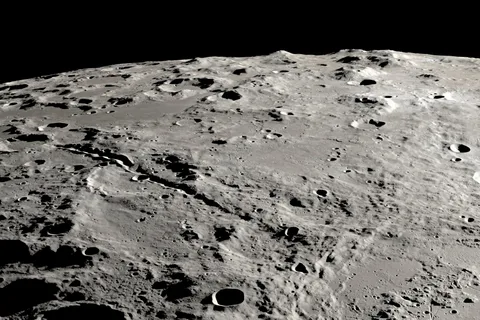
Background
The nasa moon base announcement is the product of a new leadership team with an explicit mandate to move faster, spend smarter, and beat China to the lunar surface.
NASA Administrator Jared Isaacman, a billionaire entrepreneur who twice traveled to low-Earth orbit on missions he financed, portrayed the agency’s plans as important steps toward establishing civilisation’s first permanent outpost beyond Earth. He noted China’s accelerating space ambitions — describing it as a real geopolitical rival challenging American leadership in the high ground of space — and added: “The difference between success and failure will be measured in months, not years. They may be early, and recent history suggests we might be late.”
The Planetary Society estimates NASA will have spent about $107 billion on return-to-the-moon plans through 2026 in inflation-adjusted dollars — thanks in large part to repeated programme changes over the past 20 years by successive presidential administrations. The nasa moon base plan is therefore not NASA’s first attempt at a bold lunar strategy. It is its latest — and its most specific.
Both projects are meant to satisfy an executive order President Donald Trump signed in December, calling on the US to land astronauts back on the moon by 2028 and begin building a permanent lunar outpost by 2030.
What the NASA Moon Base Plan Actually Involves
The nasa moon base is not a single structure that will appear on the lunar surface on a set date. It is a phased construction programme spanning the better part of a decade.
NASA announced ambitious long-range plans to spend $20 billion over the next seven years to build a nasa moon base near the lunar south pole featuring habitats, pressurised rovers and nuclear power systems. Isaacman envisioned launching two moon landing missions per year to establish semi-permanent astronaut occupation on the lunar surface to explore, conduct research and develop the technology needed for eventual flights to Mars.
To cover the first two phases of the nasa moon base, Isaacman said NASA will invest approximately $20 billion over the next seven years and build it through dozens of missions. The third phase of the nasa moon base would cost an additional $10 billion. At that stage, the moon base would include about 150,000 kilograms of payload on the surface — habitats, vehicles to carry astronauts and cargo across the surface, power and communication systems, and potentially nuclear power plants.
The first phase of the nasa moon base plan, which starts immediately, consists of learning how to get to the moon more frequently with robotic landers and experimenting with new technologies for infrastructure, including new satellite networks to allow for better communication on the lunar surface. The next two phases will entail developing a fleet of landers, rovers, drones, power generators and other critical hardware across the next decade.
Gateway Is Gone — What Replaces It
One of the most consequential decisions embedded in the nasa moon base announcement is the cancellation of the Lunar Gateway — the orbital space station that had been planned as NASA’s staging point for lunar landings.
NASA announced it has cancelled plans to deploy a space station in lunar orbit and will instead use components from the project to build the nasa moon base on the moon’s surface. The Lunar Gateway station, largely already built with contractors Northrop Grumman and Intuitive Machines subsidiary Lanteris Space Systems, was meant to be a space station in a lunar orbit.
Significant parts of existing Gateway hardware and facilities can be directly repurposed to support near-term exploration objectives along with those orbital elements needed to support a surface-focused mission, according to nasa moon base programme executive Carlos Garcia-Galan.
The cancellation of Gateway leaves uncertain the future roles of Japan, Canada, and the European Space Agency — three key NASA partners that had agreed to provide components for the orbital station. It should not really surprise anyone that NASA is pausing Gateway in its current form and focusing on infrastructure that supports sustained operations on the lunar surface, Isaacman said.The nasa moon orbit strategy has therefore shifted decisively — from a permanent station circling the Moon to a permanent base sitting on it.
The Nuclear Mars Spacecraft
Alongside the nasa moon base announcement, NASA revealed a mission that represents an equally dramatic leap in ambition — a nuclear-powered spacecraft bound for Mars.
NASA will develop an entirely new spacecraft called Space Reactor-1 Freedom, a nuclear-powered spacecraft that NASA intends to send to Mars by 2028. SR-1 Freedom will be tasked with deploying helicopters on the Red Planet, similar to the Ingenuity helicopter that NASA flew with its Perseverance Mars rover.
NASA will launch Space Reactor-1 Freedom, the first nuclear-powered interplanetary spacecraft, to Mars before the end of 2028, demonstrating advanced nuclear electric propulsion in deep space. Nuclear electric propulsion provides an extraordinary capability for efficient mass transport in deep space and enables high-power missions beyond Jupiter where solar arrays are not effective. When SR-1 Freedom reaches Mars, it will deploy the Skyfall payload of Ingenuity-class helicopters to continue exploring the Red Planet.
The 2028 Mars mission would put nuclear electric propulsion technology to use in space for the first time. The tech presents difficult design challenges and could carry high costs along with the risks inherent to launching nuclear systems, including radiation. The lightning-fast timeline in the world of space travel is one of the most scrutinised elements of the entire nasa moon base and Mars announcement.
Is NASA Going Back to the Moon in 2026
The question of whether nasa is going back to the moon in 2026 has a clear answer — and it is yes, though with an important distinction.
Four astronauts will fly around the Moon and back on Artemis II, the first crewed flight under NASA’s Artemis campaign. NASA astronauts Reid Wiseman, Victor Glover, and Christina Koch, as well as Canadian Space Agency astronaut Jeremy Hansen, will be the first humans aboard the SLS rocket and Orion spacecraft as the crew ventures into the harsh environment of deep space.
Artemis II is a lunar flyby, not a landing. The mission loops around the Moon and returns to Earth — testing every system, gathering critical crew health data, and proving that the hardware works before astronauts attempt a surface landing. The upcoming mission, which will send a crew of four to slingshot around the moon, will help set the stage for a crewed moon landing in the coming years.
So nasa is going back to the moon in 2026 — in the most meaningful sense of the phrase since Apollo 17.
NASA Artemis Name to Moon — Send Your Name to Space
One of the most widely shared public engagement initiatives connected to the nasa moon base era is the NASA Artemis name to moon campaign that ran alongside the Artemis II mission.
As part of the agency’s “Send Your Name with Artemis II” effort, anyone can claim their spot by signing up. Participants can download a boarding pass with their name on it as a collectable.
Submitted names will be included on an SD card that will fly inside Orion when the Artemis II mission launches. The nasa artemis name to moon programme gives members of the public a direct and personal connection to the most significant crewed space mission in over 50 years.
Over 2 million people already signed up to have their names on this trip — a number that reflects the depth of public excitement surrounding the nasa moon base era and everything the Artemis programme represents for the future of human exploration.
Quotes
“This time, the goal is to stay.” — Jared Isaacman, NASA Administrator, announcing the nasa moon base strategy
“The difference between success and failure will be measured in months, not years. They may be early, and recent history suggests we might be late.” — Jared Isaacman, NASA Administrator, on the race with China
“NASA is committed to achieving the near-impossible once again — to return to the Moon before the end of President Trump’s term, build a moon base, establish an enduring presence.” — Jared Isaacman, NASA Administrator
“We will invest approximately $20 billion over the next seven years and build it through dozens of missions.” — Jared Isaacman, NASA Administrator, on the nasa moon base funding
“At this point, we’re talking about 150,000 kilograms of payload on the surface.” — Carlos Garcia-Galan, NASA Moon Base Programme Executive, on Phase 3 of the nasa moon base
Impact
For space exploration, the nasa moon base plan reframes the entire Artemis programme — from a series of individual crewed missions into a decade-long construction project with a permanent human outpost as its endpoint. NASA is accelerating its Commercial Lunar Payload Services programme, targeting up to 30 robotic landings starting in 2027, expediting delivery of science and technology to the lunar surface.Each robotic landing prepares the ground — literally — for the nasa moon base that follows.
For geopolitics, the announcement is as much a response to China as it is a space policy statement. The changes to NASA’s flagship Artemis programme come as the United States faces growing competition from China, which is aiming to land astronauts on the moon by 2030. The nasa moon base plan is Washington’s answer to that challenge — a claim of permanent presence before any rival can establish one.
For the public, the nasa artemis name to moon campaign and the imminent Artemis II launch have brought space exploration back into mainstream conversation in a way not seen since the final Apollo missions. The nasa moon base announcement gives that enthusiasm a long-term destination — not just a single mission to follow, but a decade of building something that has never existed before.
FAQs
Does NASA have a base on the moon?
Not yet. NASA has announced plans to build a nasa moon base near the lunar south pole, with $20 billion committed over the next seven years for the first two phases of construction. The third phase would add another $10 billion.The first phase begins immediately with increased robotic lander missions to develop infrastructure and test technologies. A permanent crewed nasa moon base — with habitats, pressurised rovers, and nuclear power systems — is the goal of the programme’s later phases, targeted for completion in the early 2030s.
What kind of food do they eat in space?
NASA published the astronauts’ menu for Artemis II, giving the public a detailed look at what the crew will eat during the ten-day mission around the Moon.Space food has evolved dramatically since the Apollo era. Modern astronaut meals are carefully balanced for nutrition, shelf stability, and ease of preparation in zero gravity. They include rehydratable dishes, thermostabilised foods, and natural form items that require no preparation. For long-duration missions to the nasa moon base and beyond, food systems will need to evolve further — with research into growing fresh produce on the lunar surface forming part of the nasa moon base infrastructure planning.
Is Artemis 2 going to land on the moon?
No. Unlike Apollo 8 and Apollo 10, which orbited the Moon without landing, Artemis II will not enter lunar orbit. The mission follows a free-return trajectory — using the Moon’s gravity to loop the spacecraft around and return it to Earth. Artemis II is a crewed test flight, not a landing mission. The first crewed lunar landing since Apollo 17 is now targeted for Artemis IV in early 2028 — the mission that will mark humanity’s return to the lunar surface and the first boots-on-the-ground milestone of the nasa moon base era.
Conclusion
The nasa moon base announcement marks the moment NASA stopped talking about returning to the Moon and started building the infrastructure to stay there.
After years of talking about lunar outposts in vague terms for sometime in the indefinite future, NASA has put a continuing American presence at the moon solidly on their road map for the coming decade, setting out specific plans and timelines.
With Artemis II launching in days, a nuclear Mars spacecraft targeting 2028, and $20 billion committed to building a permanent nasa moon base near the lunar south pole, the next chapter of human space exploration has a structure, a schedule, and a deadline.
The Moon is no longer a destination NASA is working toward. It is a construction site waiting to begin.