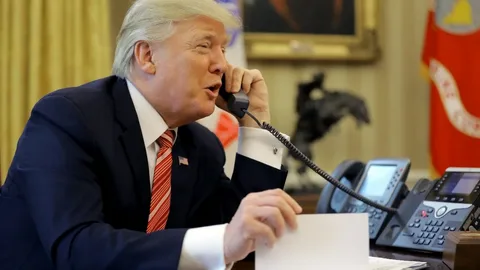
The Trump peace plan Iran has officially entered the diplomatic arena. President Donald Trump confirmed on March 24, 2026, that a formal peace proposal — described as a 15-point plan Iran deal — has been delivered to Tehran through Pakistani intermediaries. In a significant signal of early progress, Iran responded by allowing “non-hostile” oil vessels safe passage through the Strait of Hormuz for the first time since the war began. Peace talks Iran are now being described as closer than at any point in the 25-day conflict.
Background: From War Threats to Peace Proposal
The Trump peace plan Iran did not emerge from calm diplomacy — it came after a dramatic escalation and sudden reversal within 72 hours.
Just days earlier, Trump had threatened to “obliterate” Iran’s power plants if the Strait of Hormuz was not reopened within 48 hours. But warnings from Gulf allies that striking civilian energy infrastructure could trigger disastrous escalation prompted the administration to change course.
Treasury Secretary Scott Bessent, appearing on NBC’s Sunday morning programme, summarised the US posture with a single phrase: “Sometimes you have to escalate to de-escalate.”
The war itself began on February 28, 2026, when the United States and Israel launched strikes on Iran, killing Supreme Leader Ayatollah Ali Khamenei on the first day. Iran responded with waves of missile and drone attacks against Israel, US military bases across the region, and multiple Gulf states.
Details: What the Trump Peace Plan Iran Contains
The Trump administration formally submitted a 15-point ceasefire plan to Iran, according to a person briefed on the proposal. The plan was delivered to Iranian officials through Pakistani intermediaries, who have also offered to host direct negotiations between Washington and Tehran.
The Iran war 15 point plan is the most comprehensive US proposal since the conflict began. Based on reporting from multiple outlets, the key elements include:
According to Israel’s Channel 12, the plan includes a proposed one-month ceasefire during which both sides would negotiate further. Under the proposal, Iran would hand over its enriched uranium stockpile and halt all further enrichment activity. In return, Iran would receive full sanctions relief — ending restrictions that have been in place for years — and assistance in developing civilian nuclear energy at the Bushehr reactor site.
Among the other key points of the 15 point plan Iran: limits on Tehran’s conventional defence capabilities, a complete cessation of support for regional proxy forces, and a formal acknowledgment of Israel’s right to exist. The Strait of Hormuz would be declared a permanent free maritime zone under the agreement.
Analysts say the Trump peace plan Iran is not limited to the nuclear file alone, but aims at a much broader reshaping of Iran’s military and geopolitical posture — reflecting a long-standing US objective of not just preventing Iranian nuclear weapons, but reducing Iran’s overall regional influence.
Iran War 15 Point Plan: What Iran Must Agree To
The Iran war 15 point plan sets demanding conditions for Tehran. Based on multiple sourced reports, the core demands are:
Nuclear Programme: The plan reportedly requires the complete dismantling of all existing Iranian nuclear capabilities, a binding commitment that Iran will permanently discontinue efforts to obtain nuclear weapons, and a requirement that any already-enriched uranium be surrendered to US custody.
Trump’s own words confirmed this priority. Speaking in the Oval Office, Trump stated: “They’re not going to have a nuclear weapon. That’s number one. That’s number one, two and three,” adding that the US would insist on taking physical possession of Iran’s highly enriched uranium stockpile.
Strait of Hormuz: A permanent reopening of the Strait of Hormuz and a mechanism ensuring it remains a free maritime route is among the core demands of the 15 point plan Iran framework.
Regional Proxies: A full cessation of Iranian financial and military support for regional proxy groups — including Hezbollah in Lebanon and Houthi forces in Yemen — is also included in the plan’s terms.
Peace Talks Iran: The Hormuz Signal
The most visible sign that peace talks Iran may be gaining traction came on Tuesday when Tehran made a concrete gesture toward de-escalation.
Iran sent a message to the International Maritime Organization assuring safe passage to “non-hostile vessels” passing through the Strait of Hormuz — the gateway for approximately one-fifth of the world’s entire oil supply. The announcement came shortly after Trump told reporters in the Oval Office that Iran had given him what he called “a very big present worth a tremendous amount of money.”
Trump declined to elaborate on the details but confirmed the gesture related to the Strait of Hormuz, saying: “That meant one thing to me — we’re dealing with the right people.”
However, Iran’s move stopped short of a full reopening. Shipping had already slowed dramatically as insurance companies refused to cover vessels transiting the strait, and the partial “non-hostile vessel” announcement did not immediately resolve the underlying insurance and security concerns.
Quotes: What Officials Are Saying
President Trump told reporters: “We’re actually talking to the right people, and they want to make a deal so badly, you have no idea how badly they want to make a deal.” He added: “They’re talking to us, and they’re talking sense.”
Trump further stated in the Oval Office: “There won’t be any nuclear weapons. Iran has agreed to that. We’re in a good bargaining position. We’re way ahead of schedule and they have no navy, air force, or missile protection.”
Iran, however, has not publicly confirmed the peace talks Iran framework. Iranian officials have denied that any direct negotiations are taking place, calling the US statements premature.
Gulf News analysts noted that the absence of clarity around the full contents of the 15 point plan Iran “is not unusual in early-stage diplomacy, particularly when talks are indirect and mediated through third countries such as Pakistan, Oman, Egypt or Turkey.”
Impact: What the Trump Peace Plan Iran Means for the World
The Trump peace plan Iran development had an immediate — if short-lived — effect on global markets.
Talk of negotiations briefly drove down oil prices and boosted stocks on Wall Street. However, that respite was short-lived, with Brent crude nudging back above $100 a barrel on Tuesday — up nearly 40% since the war began.
The announcement of the Iran war 15 point plan was strategically timed two hours before the opening of US trading on Monday, resulting in a rally on Wall Street and a sharp slide in the price of Brent crude — areas that had been causing significant concern for Trump and his economic advisers.
Military pressure, meanwhile, has not eased. Even as peace talks Iran were being discussed, the US military was preparing to call up at least 1,000 more troops to supplement the approximately 50,000 already deployed in the region. The Pentagon was also deploying a pair of Marine Expeditionary Units set to add around 5,000 Marines and thousands of additional sailors to the theatre.
Conclusion: Will the Iran War 15 Point Plan Succeed?
The Trump peace plan Iran represents the clearest diplomatic opening since the war began 25 days ago. Pakistan’s role as the delivery channel and proposed host for direct talks, combined with Iran’s partial Hormuz gesture, suggests that both sides may be searching for a face-saving exit.
Two regional sources cited by CNN assessed that several of the 15 points would be “next to impossible” for Iran to accept as written, and that the plan closely mirrors demands the US had already placed before Iran in pre-war negotiations — demands Tehran had previously refused.
Iran remains deeply suspicious of the United States, which twice under the Trump administration launched attacks during high-level diplomatic talks — including the February 28 strikes that started the current war.The next 48 to 72 hours will be decisive. If peace talks Iran in Islamabad proceed with VP Vance in attendance, the Iran war 15 point plan could become the framework for ending the conflict. If they collapse, the region faces a dangerous new phase — with 55,000 US troops and an emboldened Israel already in position.
FAQs
What’s the point of Trump’s Board of Peace?
Established by President Donald Trump and led by the government of the United States, the board is named in United Nations Security Council Resolution 2803 as a body tasked with overseeing the processes of the Gaza peace plan.
Who rejected the two-state solution?
Consequently, the recommended partition proposal was rejected by the Arab community of Palestine, and was accepted by most of the Jewish leadership.
Did Israel accept the Peace Treaty?
Israel accepted the PLO as the representative of the Palestinians, and the PLO renounced terrorism and recognized Israel’s right to exist in peace. Both sides agreed that a Palestinian Authority (PA) would be established and assume governing responsibilities in the West Bank and Gaza Strip over a five-year period.