

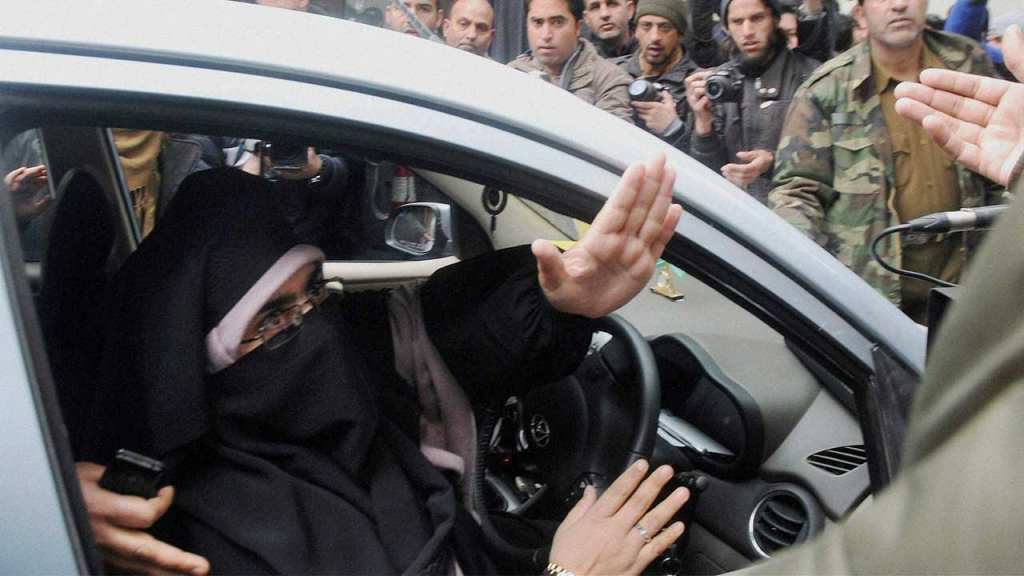
Pakistan’s Foreign Office has formally condemned the life imprisonment sentence awarded to Kashmiri freedom leader Asiya Andrabi by a special NIA court in Delhi — describing the verdict as a grave miscarriage of justice and part of India’s pattern of politically motivated prosecutions aimed at silencing Kashmiri voices advocating self-determination. Asiya Andrabi — the 62-year-old founder and chief of the Dukhtaran-e-Millat women’s rights and freedom organisation — was sentenced to life imprisonment by Additional Sessions Judge Chander Jit Singh, while Asiya Andrabi’s two associates Sofi Fehmeeda and Nahida Nasreen received 30-year sentences each. The Asiya Andrabi latest news of the Delhi court verdict is the most significant Kashmir-related political sentencing since Hurriyat leader Yasin Malik received a life sentence in 2022.
Background: Who Is Asiya Andrabi and Why Was She on Trial?
Asiya Andrabi is one of the most prominent and internationally recognised voices of Kashmiri self-determination — the founder and chief of Dukhtaran-e-Millat, an organisation she established in 1981 that advocates for Kashmiri Muslim women’s rights and the independence of Kashmir from Indian rule. Asiya Andrabi has been a central figure in the Kashmir freedom movement for over four decades — combining Islamic scholarship, women’s activism, and political advocacy in a profile that has made her simultaneously celebrated in Pakistan and the Kashmiri diaspora, and targeted by Indian security and legal authorities.
Asiya Andrabi was first arrested by Indian authorities in 2018 — when she was transferred from Jammu and Kashmir to Delhi’s Tihar Jail and charged under the stringent Unlawful Activities Prevention Act. Asiya Andrabi has been held in Tihar Jail since 2018 — a period of over seven years during which the Asiya Andrabi latest news has consistently documented the deterioration of her health, the denial of regular family contact, and her continued advocacy from within prison walls.
The Asiya Andrabi UAPA case is part of India’s broader post-August 2019 crackdown on Kashmiri political leadership — which followed the revocation of Article 370 that had granted Jammu and Kashmir special status within India. Since August 2019, dozens of Kashmiri political leaders, journalists, and civil society figures have been detained, tried, or sentenced under the UAPA and other anti-terror statutes in proceedings that human rights organisations including Amnesty International and Human Rights Watch have consistently described as politically motivated.
The charges against Asiya Andrabi in the Delhi trial included conspiracy to commit terrorist acts, waging war against India, and providing material support to a proscribed organisation. Asiya Andrabi and her defence counsel have maintained throughout the proceedings that the charges are politically motivated and that Asiya Andrabi’s activities — including public advocacy, religious teaching, and communications with Pakistani officials — are protected political and religious expression.
Details: Asiya Andrabi Sentencing — Full Story
Asiya Andrabi — The Delhi Court Verdict
Additional Sessions Judge Chander Jit Singh of the NIA Special Court in Delhi pronounced sentence on Asiya Andrabi and her associates on March 24, 2026 — following a conviction on multiple counts under the Unlawful Activities Prevention Act, the Indian Penal Code’s sedition provisions, and the anti-terror sections relating to conspiracy to wage war against the state.
Asiya Andrabi received a life sentence — the maximum available punishment under the applicable sections of the UAPA. The Asiya Andrabi life sentence means she will remain incarcerated in Tihar Jail for the remainder of her natural life unless the verdict is overturned on appeal. Asiya Andrabi is currently 62 years old — making the life sentence effectively a sentence to die in prison.
Asiya Andrabi’s associates Sofi Fehmeeda and Nahida Nasreen — who were co-accused in the same trial — received sentences of 30 years each. All three women have been held in Tihar Jail since 2018 and were present in the courtroom when the Asiya Andrabi sentencing was delivered.
The Asiya Andrabi verdict was welcomed by Indian security officials as confirmation of the judiciary’s role in holding Kashmiri separatist leaders legally accountable. Indian government representatives said the Asiya Andrabi verdict demonstrated that no one who engages in activities designed to undermine India’s territorial integrity and incite violence would escape the consequences of their actions.
Asiya Andrabi Latest News — Pakistan FO Condemnation
Pakistan’s Foreign Office issued its formal condemnation of the Asiya Andrabi verdict on March 25, 2026 — the day after the sentencing. The FO statement described the Asiya Andrabi verdict as a continuation of India’s unlawful occupation of the Indian-Illegally Occupied Jammu and Kashmir and the suppression of the fundamental rights of the Kashmiri people.
The FO statement on Asiya Andrabi latest news said the verdict reflected the continuing suppression of fundamental rights in IIOJK and formed part of a pattern of politically motivated prosecutions aimed at silencing voices advocating the legitimate rights of the Kashmiri people. Pakistan raised serious concerns over due process, judicial independence, and India’s adherence to its international human rights obligations.
The FO statement demanded Asiya Andrabi’s immediate and unconditional release — stating that Asiya Andrabi and her associates were political prisoners whose only crime was advocating for the internationally recognised right of the Kashmiri people to self-determination through a UN-mandated plebiscite that India has refused to hold for over seven decades.
Pakistan’s Foreign Office also called on the United Nations, the Organisation of Islamic Cooperation, and the international community to take note of the Asiya Andrabi sentencing and to pressure India to comply with its obligations under UN Security Council resolutions on Kashmir.
Asiya Andrabi — Who Is She? Background and Life
Asiya Andrabi was born in 1962 in Sopore, Kashmir. She completed her education including a science degree before turning to Islamic scholarship and political activism. Asiya Andrabi founded Dukhtaran-e-Millat — Daughters of the Nation — in 1981, initially as a women’s organisation focused on Islamic education and social welfare, which later became one of the most visible organisations in the Kashmiri self-determination movement.
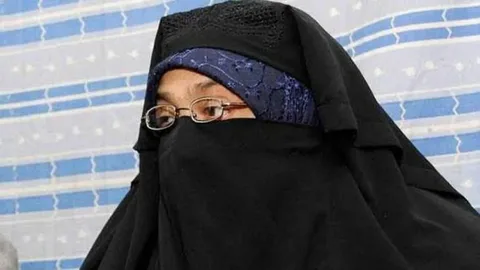
Asiya Andrabi is widely recognised by her distinctive black hijab and burqa — her Asiya Andrabi photo in this appearance has been one of the most recognisable images of the Kashmiri freedom movement internationally. Asiya Andrabi is married to Dr. Mohammed Qasim Faktoo, himself a prominent Kashmiri leader who has served lengthy prison terms in India. Asiya Andrabi son Haroon Qasim is based outside India — and the Asiya Andrabi son news following the sentencing confirms he has called on the international community to intervene for his mother’s release.
Asiya Andrabi has been arrested and imprisoned by Indian authorities multiple times since the 1990s — including extended periods of detention before her 2018 transfer to Delhi. The Asiya Andrabi latest news of her life sentence represents the most severe judicial action yet taken against her by Indian authorities in what has been a four-decade confrontation between the Kashmiri freedom movement and the Indian state.
Asiya Andrabi — The UAPA Framework and Its Criticisms
The charges against Asiya Andrabi were prosecuted under the Unlawful Activities Prevention Act — India’s primary anti-terrorism statute, which grants investigating agencies sweeping powers of detention, restricts bail, and places a very high burden on accused persons to establish their innocence in bail applications.
Human rights organisations including Amnesty International, Human Rights Watch, the International Federation for Human Rights, and the UN Special Rapporteur on Human Rights Defenders have all previously raised concerns about the UAPA’s use against Kashmiri political leaders — noting that the act’s broad definitions of unlawful activity and terrorism enable its application to peaceful political advocacy, journalism, and civil society work.
The Asiya Andrabi case has been cited specifically in international human rights reports as an example of the UAPA’s misuse against political prisoners — with the UN Working Group on Arbitrary Detention previously issuing opinions in similar Kashmiri cases finding detention to be arbitrary and contrary to international standards.
Asiya Andrabi — Yasin Malik Parallel
The Asiya Andrabi life sentence follows the 2022 life sentence of Hurriyat leader Mohammed Yasin Malik — who received a life term in a separate NIA trial for similar charges under the UAPA. The Asiya Andrabi verdict confirms a pattern of Indian judicial proceedings resulting in life sentences for the most prominent leaders of the Kashmiri independence movement.
The Asiya Andrabi and Yasin Malik sentences together represent the effective judicial neutralisation of the Kashmiri political leadership that had operated in Indian-administered Kashmir for decades — a pattern that human rights organisations describe as the criminalisation of political dissent and that the Indian government describes as necessary counter-terrorism action.
Quotes
Pakistan Foreign Office spokesperson, condemning the Asiya Andrabi verdict: “The sentencing of Asiya Andrabi and her associates reflects the continuing suppression of fundamental rights in IIOJK and forms part of a pattern of politically motivated prosecutions. Pakistan demands their immediate and unconditional release. The world must not remain silent while the Kashmiri people’s voices are imprisoned.”
Asiya Andrabi, speaking in court before sentencing (through her counsel): “I have no regrets. I have spent my life advocating for the legitimate rights of the Kashmiri people. If advocating for freedom is a crime in India, then I am guilty of that crime and I accept this sentence with dignity.”
Asiya Andrabi son Haroon Qasim, on the sentencing: “My mother is a political prisoner. She has been held for seven years without justice. This sentence is designed to silence her permanently. I appeal to the international community — the United Nations, the OIC, and all human rights organisations — to demand her release.”
Human Rights Watch, on the Asiya Andrabi verdict: “The life sentence imposed on Asiya Andrabi under India’s UAPA is a deeply troubling development that confirms our longstanding concerns about the act’s use to criminalise peaceful political advocacy. India must release all UAPA detainees who have been prosecuted for their political views.”
Amnesty International, on Asiya Andrabi latest news of the sentencing: “Asiya Andrabi is a prisoner of conscience whose imprisonment represents a grave violation of international human rights law. India must immediately and unconditionally release her and all others detained solely for exercising their rights to freedom of expression and political advocacy.”
India’s National Investigation Agency, on the Asiya Andrabi verdict: “The verdict confirms the NIA’s position that the accused engaged in activities designed to incite violence, promote secession, and provide material support to proscribed organisations. The law has been properly applied and justice has been served.”
Impact: What the Asiya Andrabi Sentence Means
For the Kashmir Freedom Movement
The Asiya Andrabi life sentence — following Yasin Malik’s life sentence in 2022 — effectively removes the two most internationally prominent figures of the Kashmiri independence movement from any active public role for the remainder of their natural lives. The Asiya Andrabi latest news represents the Indian state’s most successful judicial suppression of Kashmiri political leadership since the insurgency began in 1989 — and leaves the freedom movement without its most visible and credible international faces.
For Pakistan-India Relations
The Asiya Andrabi verdict will further strain Pakistan-India relations — which were already under severe pressure from the broader regional context of the Iran war, the BSF killing of the mentally challenged Kasur man, and the India-China border tensions. Pakistan’s FO condemnation of the Asiya Andrabi sentence is a formal diplomatic communication that India will receive and ignore — but that places the Asiya Andrabi case on the official bilateral record of Kashmir-related grievances.
For International Human Rights Discourse
The Asiya Andrabi case has been raised by Pakistani officials at the UN Human Rights Council, the OIC, and in bilateral meetings with European governments. The Asiya Andrabi life sentence gives fresh ammunition to Pakistan’s Kashmir advocacy at international forums — and will be cited by human rights organisations in their periodic India UPR reviews at the UN.
For Kashmiri Women’s Rights Advocates
Asiya Andrabi’s sentencing is being watched closely by Kashmiri women’s rights and civil society organisations both inside IIOJK and in the diaspora. The Asiya Andrabi latest news confirms that even women’s rights advocacy — when conducted in the context of Kashmiri self-determination — is treated by Indian authorities as a terrorist activity under the UAPA. This chilling effect on women’s political participation in IIOJK is one of the most concerning dimensions of the Asiya Andrabi verdict for gender justice advocates globally.
Conclusion
The Asiya Andrabi life sentence is a landmark — and deeply troubling — moment in the seven-decade history of the Kashmir dispute. A 62-year-old woman who has spent her entire adult life advocating for the rights of Kashmiri Muslims now faces the prospect of dying in a Delhi prison cell for that advocacy.
The Asiya Andrabi latest news has produced the predictable diplomatic response — Pakistan condemns, India defends, international human rights organisations call for release, and the Kashmir dispute remains as unresolved in 2026 as it was when the UN Security Council passed its first resolution on the matter in 1948.
Asiya Andrabi son Haroon calls for intervention. Pakistan’s Foreign Office issues formal condemnation. Human Rights Watch and Amnesty International express deep concern. And Asiya Andrabi — whose Asiya Andrabi photo has been a symbol of Kashmiri resistance for four decades — remains in Tihar Jail, sentenced to life, unbroken in her advocacy.
The Kashmir dispute will not be resolved by imprisoning Asiya Andrabi. History shows that silencing voices through the courts produces martyrs, not solutions. The Asiya Andrabi verdict confirms India’s determination to pursue the judicial route. It does not confirm that the route leads anywhere except deeper into the darkness of an unresolved conflict that has already claimed far too many lives and far too much freedom.
FAQs
Who is the father of Darakshan Andrabi?
Dr. Darakhshan Andrabi Daughter of Syed Ghulam Nabi Andrabi Aged 40 years, residen Bazar, Srinagar Kashmir a candidate at the above election, do hereby solemnly affirm and stare bath as under.
Who is Andrabis?
Andrabi is a Persian, Iranian, and Kurdish surname. It is commonly used by people from the Andarab region of the Middle East, however people with Andrabi surname can be found in other parts of the world too. Notable people with the surname include: Shaykh Syed Mir Mirak Andrabi, 15th-century scholar.
What is the story of Narjis Khatun?
Narjis was a Roman princess and it was via a miracle, in by which she became married to Imam Hasan al-Askari (the eleventh Imam), and to subsequently become the mother of the last Imam (‘aj). She was born in the Byzantine Empire and as she narrated, she turned to Islam because of a special dream.