
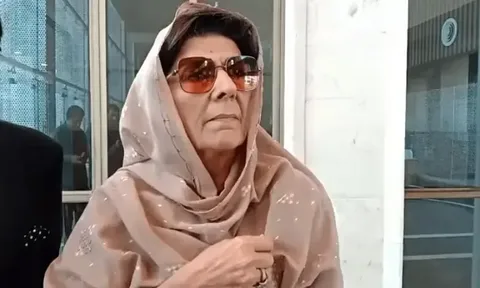
The Pakistan political crisis within Pakistan Tehreek-e-Insaf deepened on March 17, 2026, when Imran Khan’s sister Aleema Khan issued a formal denial that she had blocked PTI leaders from meeting the party founder in Adiala jail — after multiple senior PTI figures publicly complained that they had been unable to meet Imran Khan despite repeated attempts. The Pakistan political crisis inside PTI has been simmering for months as the party struggles to manage its leadership, legal strategy, and political direction without direct access to its incarcerated founder. The Pakistan political crisis PTI dimension involves competing power centres — Aleema Khan, Bushra Bibi, the legal team, and senior party leadership — each claiming authority over Imran Khan’s access and communications while the party’s rank and file grow increasingly frustrated with the opacity surrounding Pakistan’s most high-profile political prisoner.
Background: What Is the Pakistan Political Crisis and How Did PTI’s Internal Division Reach This Point?
The Pakistan political crisis has multiple simultaneous dimensions in 2026 — but the PTI internal crisis is one of the most politically consequential aspects of the political situation in Pakistan today. Imran Khan, founder and chairman of Pakistan Tehreek-e-Insaf, has been incarcerated in Adiala Central Jail in Rawalpindi since August 5, 2023 — the longest period of imprisonment for any former prime minister in Pakistan’s history.
The Pakistan political crisis created by Imran Khan’s continued imprisonment has forced PTI to operate without direct, regular access to its primary decision-maker and public face. The Pakistan political crisis access problem is not merely symbolic — PTI’s legal strategy, electoral decisions, negotiation positions with the establishment, and public messaging all depend on Imran Khan’s direction. When that direction is unavailable because leaders cannot meet him, the Pakistan political crisis of PTI’s organisational coherence intensifies.
The political situation in Pakistan today shows PTI operating in three distinct centres simultaneously — Imran Khan in Adiala, Bushra Bibi managing party affairs from outside, and the parliamentary party under Gohar Ali Khan navigating the National Assembly and Senate. The Pakistan political crisis of competing authority among these centres has produced contradictory public statements, confused messaging, and now the public conflict over who controls access to Imran Khan inside Adiala.
The Pakistan political crisis access controversy is particularly significant because Adiala jail’s visiting rules — which the government controls — already restrict who can meet Imran Khan and for how long. The Pakistan political crisis allegation that Aleema Khan was additionally blocking party leaders from visits that they were entitled to under prison rules suggests internal gatekeeping beyond state-imposed restrictions.
Details: Pakistan Political Crisis — PTI Access Row Full Story
Pakistan Political Crisis — What PTI Leaders Complained
The Pakistan political crisis access row began when multiple senior PTI leaders — speaking initially on condition of anonymity to Dawn and then more publicly — said they had been denied the ability to meet Imran Khan in Adiala jail on multiple recent occasions despite having valid visiting permissions. The Pakistan political crisis complaint centred specifically on the allegation that Aleema Khan — Imran Khan’s sister who has significant influence over his personal and legal affairs — had intervened to prevent certain party leaders from accessing the PTI chairman.
The Pakistan political crisis access allegations named specific instances — leaders who had travelled to Rawalpindi for scheduled visits being turned away at the last minute, communications channels through which PTI leaders had previously passed messages to Imran Khan being closed, and decisions being communicated to the party as Imran Khan’s direction without the ability of senior party figures to verify that direction directly with him.
The Pakistan political crisis access complaint reflects a deeper political situation in Pakistan today — in which the question of who speaks for Imran Khan, and whose version of his instructions is authentic, has become one of the most contested questions inside Pakistan’s most significant opposition party.
Pakistan Political Crisis — Aleema Khan’s Denial
Aleema Khan held a press conference on March 17, 2026, to formally address the Pakistan political crisis access allegations. Aleema Khan stated categorically that she had never blocked any PTI leader from meeting Imran Khan — and that the Pakistan political crisis access complaints were based on misunderstanding, misinformation, or deliberate malice from elements within PTI who wanted to create internal division.
Aleema Khan stated that the Pakistan political crisis access restrictions that PTI leaders were experiencing were imposed by the state — by the jail administration and the government — and had nothing to do with any decision or action on her part. The Pakistan political crisis, she argued, was being manufactured as an internal PTI story to deflect attention from the government’s actual responsibility for restricting Imran Khan’s access to his party.
Aleema Khan also addressed the political situation in Pakistan today more broadly — saying that PTI remained united behind Imran Khan and that any reports of internal divisions were enemy propaganda designed to weaken the party’s resolve. The Pakistan political crisis narrative of a divided PTI, she stated, served the government’s interests — not the interests of Pakistan’s democratic opposition.
Pakistan Political Crisis — Imran Khan’s Eye Health Concern
The Pakistan political crisis access controversy is compounded by serious concerns about Imran Khan’s health inside Adiala. The political situation in Pakistan today includes reports from legal team members who have been able to meet Imran Khan that he is experiencing significant eye health problems — with deteriorating vision that has not received adequate medical treatment inside the jail.
The Pakistan political crisis health dimension is one that PTI has been raising publicly for months — arguing that the government is deliberately withholding adequate medical care from Imran Khan as part of a broader Pakistan political crisis strategy to weaken him physically and psychologically while keeping him incarcerated. The Pakistan political crisis eye health concern has been raised formally through legal petitions — with Imran Khan’s lawyers filing applications requesting specialised ophthalmological treatment that the jail administration has reportedly delayed or denied.
The Pakistan political crisis eye health situation adds urgency to PTI leaders’ desire to meet Imran Khan directly — both to assess his condition themselves and to convey his instructions in person rather than through intermediaries whose reliability the Pakistan political crisis access row has now brought into question.
Pakistan Political Crisis — PTI’s Sit-In Demand
The Pakistan political crisis inside PTI is also shaped by ongoing demands from the party’s base for a fresh sit-in or mass protest outside Adiala jail — a direct action campaign that would pressure the government on both Imran Khan’s release and his access situation. The Pakistan political crisis sit-in demand comes primarily from PTI’s grassroots workers and younger leadership who believe that the party’s current parliamentary strategy has not produced meaningful results.
The Pakistan political crisis sit-in debate reflects the political situation in Pakistan today more broadly — a party caught between the parliamentary engagement that some leaders believe can produce results through negotiation, and the street politics that others argue is the only language the current government understands. The Pakistan political crisis tension between these two strategic visions is partly fuelled by the access problem — PTI leaders who cannot confirm Imran Khan’s direction firsthand cannot resolve the sit-in debate by producing his unambiguous instruction.
Pakistan Political Crisis — The Broader Political Situation in Pakistan Today
The Pakistan political crisis involving Imran Khan’s access is one component of the political situation in Pakistan today — which also includes the stalled IMF negotiations, the Gulf crisis economic fallout, PTI’s reserved seat legal battles, and the government’s management of the Balochistan security situation. The political situation in Pakistan today is defined by a government that holds parliamentary power but lacks popular legitimacy in the eyes of a significant portion of the population — and an opposition that holds popular support but lacks the organisational coherence and leadership access needed to translate that support into political pressure.
The political issues in Pakistan PDF academic and policy literature consistently identifies the same structural Pakistan political crisis — a democratic system in which military influence over political processes, the use of judicial proceedings to manage political opponents, and the selective application of the law create a political situation in Pakistan today where formal democratic institutions function without producing democratic accountability.
The political crisis in Pakistan essay PDF literature — from PILDAT, PIDE, and international think tanks including the Wilson Center and Carnegie Endowment — frames the Pakistan political crisis as fundamentally a crisis of rule of law and institutional independence rather than simply a conflict between specific political parties.
Quotes
Aleema Khan, denying the Pakistan political crisis access allegations, March 17, 2026: “I have never blocked any PTI leader from meeting Imran Khan. These allegations are completely false. The Pakistan political crisis of access is created by the government — the jail administration and the state impose the restrictions. I am being made the scapegoat to hide the government’s actions.”
Senior PTI leader (speaking anonymously), on the Pakistan political crisis access situation: “We have legitimate visiting permissions and we are being turned away. Whether it is the jail administration, Aleema, or someone else — the Pakistan political crisis result is the same. We cannot confirm the party chairman’s instructions directly. This creates confusion and division.”
PTI parliamentary leader Gohar Ali Khan, on the political situation in Pakistan today and the access issue: “PTI is united. There may be administrative difficulties in accessing Imran Khan but these are created by the state, not by any party member. The Pakistan political crisis is the government’s continued unlawful imprisonment of Pakistan’s most popular leader.”
Imran Khan’s lawyer, on the Pakistan political crisis health concern: “Imran Khan’s eye condition requires specialist treatment that has been denied by the jail administration. The Pakistan political crisis of deteriorating health in custody is a human rights issue that we have formally raised before the courts.”
Human Rights Commission of Pakistan, on the political situation in Pakistan today and political prisoners: “The restrictions on Imran Khan’s access to legal counsel, party leadership, and medical care represent a serious Pakistan political crisis for the rule of law. No political prisoner should be subjected to these conditions regardless of the charges against them.”
Government spokesperson, on the Pakistan political crisis access allegations: “Imran Khan receives the standard facilities available to all prisoners under Pakistan’s jail code. The Pakistan political crisis narrative of deliberate restriction is a PTI political fabrication designed to generate sympathy and distract from the legitimate legal proceedings against him.”
Impact: What the Pakistan Political Crisis PTI Access Row Means
For PTI’s Organisational Coherence
The Pakistan political crisis of competing authority over Imran Khan’s access and communications is one of the most damaging internal challenges PTI has faced since his imprisonment began. The political situation in Pakistan today inside PTI shows a party that draws its primary energy and identity from Imran Khan personally — and is therefore structurally vulnerable to any disruption of the link between the party and its founder. The Pakistan political crisis access row, if not resolved, risks creating permanent factional divisions between those who have access to Imran Khan and those who do not.
For Pakistan’s Democratic Discourse
The Pakistan political crisis of the former prime minister’s imprisonment — and the contested access to him — is one of the most significant political issues in Pakistan PDF analyses have identified as defining the political situation in Pakistan today. A functioning democracy should not have a situation in which the founder of the country’s largest opposition party is unable to communicate with his own party leadership about basic political decisions. The Pakistan political crisis this creates is institutional, not merely partisan.
For PTI’s Legal Strategy
The Pakistan political crisis access problem has direct consequences for PTI’s legal strategy — in the multiple criminal cases against Imran Khan where legal instructions require direct client-lawyer consultation. The Pakistan political crisis of restricted access creates legal vulnerabilities in proceedings where Imran Khan’s ability to give informed instructions to his defence team is compromised. The political issues in Pakistan PDF legal commentary on these cases notes that restricted access to counsel is an independent human rights violation separate from the Pakistan political crisis political dimension.
For the Political Situation in Pakistan Today
The political situation in Pakistan today is already under acute stress from economic challenges — the IMF negotiations, the Gulf crisis, rising petrol prices, and Ramazan inflation. The Pakistan political crisis of PTI’s internal access row adds a political instability dimension to the already difficult governance environment — making national dialogue on economic policy and security challenges harder to achieve in a political situation in Pakistan today defined by maximum confrontation between government and opposition.
Conclusion
The Pakistan political crisis of PTI leaders unable to meet Imran Khan — and Aleema Khan’s denial that she is responsible — reveals the deeper Pakistan political crisis at the heart of the political situation in Pakistan today. Pakistan’s largest opposition party is trying to function without regular access to its founder and chairman. The political issues in Pakistan PDF literature would describe this as a structural democratic crisis — when the most popular political leader in a country cannot communicate with his own party, the democratic system has failed at a fundamental level.
The Pakistan political crisis is not just about who is blocking access to Adiala’s most famous prisoner. It is about whether Pakistan’s political system — its jails, its courts, its government — will allow the political situation in Pakistan today to progress toward genuine democratic accountability or remain trapped in the cycle of imprisonment, restriction, and managed opposition that the political crisis in Pakistan essay PDF literature has documented for decades.
Aleema Khan says she is not the obstacle. PTI leaders say something is blocking them. Imran Khan sits in Adiala with deteriorating eyesight and diminishing direct contact with the party that millions of Pakistanis voted for.
That is the Pakistan political crisis in its simplest and most human form.
FAQs
What is the political crisis in Pakistan?
The 2022–2026 Pakistan political unrest is a series of political crises after the ousting of former prime minister Imran Khan through a no-confidence motion at 12 p.m., 10 April 2022 and 8 February 2026.
How did Pakistan’s economy fall into crisis?
Decades of poor governance and low productivity per capita contributed to the crisis, leaving the country unable to earn enough reserves to fund its imports. In May 2023, Pakistan’s CPI inflation rate reached 37.97%, the highest level ever recorded.
What are the 4 economic reforms?
Under the economic reforms of 1991, the government carried out a series of policies which were categorized under the heads of liberalization, privatization and globalization. The initiatives included deregulation of industrial market, financial sector reforms, tax reforms, removal of license raj, disinvestments etc.