A fresh inspection of the Shalimar Express accident site has produced findings that directly contradict the conclusions of the original Pakistan Railways inquiry — deepening the controversy over who or what caused one of the most serious train accidents on the Karachi-Lahore corridor in recent years. The Shalimar Express accident original inquiry had attributed the derailment primarily to driver error and excessive speed — but the fresh inspection commissioned after the 60 percent brakes failure revelation found that track condition deficiencies, signal failures, and maintenance lapses at the depot level contributed independently to the Shalimar Express accident, regardless of the driver’s conduct. The Shalimar Express accident contradictory findings have raised serious concerns about cover-up, institutional self-protection, and whether Pakistan Railways’ internal inquiry process is capable of producing honest accountability in accidents involving systemic maintenance failures.
Background: What Is the Shalimar Express Accident and What Did the First Inquiry Find?
The Shalimar Express accident that is now at the centre of two conflicting investigations occurred on the main Karachi-Lahore railway corridor — Pakistan’s most heavily used long-distance passenger route. The Shalimar Express is one of Pakistan’s oldest and most iconic intercity trains, connecting Karachi to Lahore and onwards — carrying thousands of passengers daily at ticket prices that make it the most accessible long-distance travel option for millions of lower and middle-income Pakistanis.
The Shalimar Express accident caused a derailment that injured multiple passengers and damaged coaches. The Shalimar Express accident response included the immediate constitution of an inquiry committee by Pakistan Railways — the standard institutional response to any major railway accident that causes passenger casualties or significant infrastructure damage.
The Shalimar Express accident original inquiry — completed within days of the incident — attributed the primary cause to driver error. The original inquiry report stated that the Shalimar Express accident occurred because the driver was operating at excessive speed approaching a curve — and that the driver failed to apply appropriate braking in time to maintain safe cornering velocity. The Shalimar Express accident original inquiry recommended disciplinary action against the driver and assistant driver — suspending both pending further proceedings.
The Shalimar Express accident original inquiry findings were then dramatically complicated by the subsequent revelation — from a separate inspection — that 60 percent of the Shalimar Express coaches did not have functioning brakes. This Shalimar Express accident brakes finding made the original driver-error conclusion look either incomplete or deliberately misleading — because a train with 60 percent brake failure cannot be adequately controlled by any driver, however skilled or cautious.
Details: Shalimar Express Accident — Fresh Inspection vs Original Findings
Shalimar Express Accident — What the Fresh Inspection Found
The fresh inspection of the Shalimar Express accident was commissioned after the brakes failure revelation generated parliamentary criticism, media pressure, and public outrage at what critics described as Pakistan Railways’ attempt to scapegoat an individual driver for a systemic institutional failure.
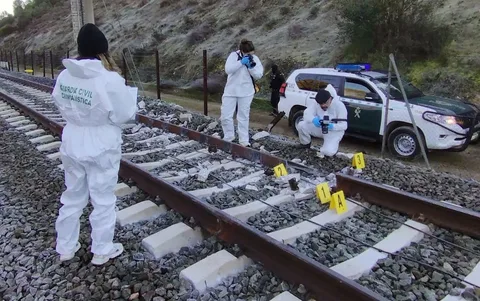
The fresh Shalimar Express accident inspection team — comprising independent railway engineers, a representative from the Ministry of Railways, and two external technical consultants — examined the Shalimar Express accident site, the coaches involved, the track condition at the derailment point, and the signal and communication records for the hour preceding the Shalimar Express accident.
The fresh Shalimar Express accident inspection found track gauge irregularities at the curve where the derailment occurred — deviations from the standard gauge specification that should have been flagged during routine track maintenance inspections in the weeks before the Shalimar Express accident. The Shalimar Express accident fresh inspection found that the last formal track inspection at this location had been conducted 47 days before the accident — exceeding the maximum permitted inspection interval for a high-traffic mainline curve.
The fresh Shalimar Express accident inspection also found that the signal system in the section where the accident occurred had a recorded fault history — with at least three signal irregularities logged in the two weeks before the Shalimar Express accident that had been marked as resolved in the maintenance register without independent verification.
The fresh Shalimar Express accident inspection concluded that the track condition, signal history, and brake system failure created a compounding risk environment that made the Shalimar Express accident likely regardless of driver conduct — contradicting the original inquiry’s finding that driver error was the primary cause.
Shalimar Express Accident — How the Two Inquiries Contradict Each Other
The Shalimar Express accident now has two sets of official findings that cannot both be correct. The original inquiry says: driver error caused the Shalimar Express accident. The fresh inspection says: systemic infrastructure failures — including track defects, signal irregularities, and 60 percent brake failure — caused or substantially contributed to the Shalimar Express accident independently of driver conduct.
The Shalimar Express accident contradictory findings create a direct institutional conflict within Pakistan Railways itself. The original inquiry was conducted by Pakistan Railways’ own internal investigation team — the same organisation responsible for track maintenance, brake inspection, and signal management. The Shalimar Express accident fresh inspection’s finding that track and signal maintenance failures contributed to the accident therefore implies that Pakistan Railways’ original inquiry deliberately minimised the role of institutional maintenance failure to protect the organisation from accountability.
The Shalimar Express accident driver who was suspended based on the original inquiry findings has now been placed in a deeply unjust position — bearing suspension and disciplinary proceedings for an accident that the fresh inspection attributes substantially to infrastructure failures for which he bears no responsibility. The Shalimar Express accident driver’s union has formally demanded his reinstatement pending the resolution of the contradictory inquiry findings.
Shalimar Express Accident — The Cover-Up Concern
The Shalimar Express accident contradictory findings have generated strong concern that Pakistan Railways conducted a deliberate institutional cover-up in the original inquiry — attributing blame to the driver to avoid accountability for the maintenance failures that the fresh inspection has now documented.
The Shalimar Express accident cover-up concern is structural as well as institutional. Pakistan Railways’ internal inquiry system — the mechanism that investigated the original Shalimar Express accident — is staffed, managed, and controlled by Pakistan Railways itself. The same organisation that is responsible for track maintenance, brake inspection, and signal management is also responsible for investigating accidents caused by failures in those very areas. The Shalimar Express accident illustrates the fundamental conflict of interest in self-investigation — Pakistan Railways investigating Pakistan Railways.
Parliamentary critics of Pakistan Railways’ Shalimar Express accident investigation have called for the creation of an independent railway accident investigation authority — analogous to the Air Accident Investigation Branch in the UK or the National Transportation Safety Board in the US — that operates entirely outside the Ministry of Railways and Pakistan Railways’ institutional control. The Shalimar Express accident fresh inspection’s contradictory findings have given these calls significant new momentum.
Shalimar Express Ticket Price — Passenger Rights in the Context of the Accident
The Shalimar Express ticket price context adds a passenger rights dimension to the Shalimar Express accident controversy. Pakistan’s railway passengers pay the Shalimar Express ticket price in exchange for a safe journey — and the Shalimar Express accident revelation that 60 percent of coaches had non-functioning brakes raises the question of whether the Shalimar Express ticket price purchase constitutes a contractual commitment by Pakistan Railways to provide safe transportation that the organisation has been systematically failing to honour.
Legal analysts following the Shalimar Express accident have noted that Pakistani law does allow civil claims against Pakistan Railways for accident compensation — but that the claims process is slow, under-resourced, and historically unfriendly to passengers. The Shalimar Express ticket price gives passengers a legal standing in the Shalimar Express accident — but exercising that standing requires legal resources that most Shalimar Express passengers, who travel on the train precisely because the Shalimar Express ticket price is affordable, do not have.
Passengers injured in the Shalimar Express accident have been offered ex gratia compensation by Pakistan Railways — amounts that legal analysts describe as inadequate given the severity of injuries and the documented evidence of systemic maintenance failure that the Shalimar Express accident fresh inspection has now confirmed.
Shalimar Express Timetable Today and Online Booking — Current Status
The Shalimar Express timetable today reflects the emergency inspection regime that Pakistan Railways implemented following the brakes failure revelation. Shalimar Express timetable today shows modest departure delays at origin stations — Karachi and Lahore — as mandatory pre-departure brake testing adds approximately 45 to 60 minutes to the pre-departure preparation schedule.
Passengers using Shalimar Express online booking platforms should verify the Shalimar Express timetable today directly with Pakistan Railways before travel — as the Shalimar Express timetable today remains subject to adjustment while the enhanced inspection regime and the fresh investigation findings are being processed institutionally. The Shalimar Express online booking system — available through the Pakistan Railways official website and mobile application — reflects the current Shalimar Express timetable today with any delays flagged at the point of booking.
The Shalimar Express online booking system has seen a modest reduction in forward bookings in the weeks since the Shalimar Express accident and brakes failure revelation — with some passengers switching to bus or air travel for the Karachi-Lahore route while the safety investigation is ongoing. Pakistan Railways has confirmed that the Shalimar Express online booking system remains fully operational and that the train continues to run with enhanced safety inspection.
Quotes
Fresh inspection team lead engineer, on the Shalimar Express accident findings contradiction: “Our inspection found track gauge irregularities at the accident curve, a signal fault history that had not been properly resolved, and confirmed 60 percent brake failure across the coaches. These infrastructure failures created a compounding risk environment. Driver error alone cannot explain this Shalimar Express accident.”
Suspended Shalimar Express driver, through his union representative: “I have been suspended for causing an accident on a train where more than half the coaches had no working brakes and the track had known defects. The fresh inspection has confirmed what I told the original inquiry. I demand my reinstatement and a transparent process.”
Pakistan Railways official, defending the original Shalimar Express accident inquiry: “The original inquiry was conducted in good faith based on the evidence available at the time. The fresh inspection findings are being reviewed and will be incorporated into the final accident report. No conclusions should be drawn until all evidence has been properly evaluated.”
Opposition parliamentarian, on the Shalimar Express accident cover-up concerns: “Pakistan Railways investigated its own maintenance failures and blamed the driver. The fresh inspection has exposed what many of us suspected from the beginning. Pakistan Railways needs an independent accident investigation authority — not self-serving internal inquiries that protect the institution and punish individuals.”
Railway safety expert, on the Shalimar Express accident systemic lesson: “When 60 percent of a passenger train’s coaches have non-functioning brakes and the track at the accident site has known gauge defects, attributing the accident to driver error is not an investigation conclusion — it is an institutional defence. The Shalimar Express accident fresh inspection has done what the original inquiry refused to do: follow the evidence.”
Passenger injured in the Shalimar Express accident, on compensation and accountability: “I bought a Shalimar Express ticket to travel safely from Karachi to Lahore. I am in hospital. Pakistan Railways offered me compensation that does not cover my medical bills. The inquiry blamed the driver. Now a new inspection says the brakes were broken and the track was defective. Who is responsible for what happened to me?”
Impact: What the Shalimar Express Accident Contradictory Findings Mean
For the Suspended Driver
The most immediate human consequence of the Shalimar Express accident fresh inspection findings is the position of the driver and assistant driver who were suspended on the basis of the original inquiry. The fresh inspection’s finding that infrastructure failures substantially contributed to the Shalimar Express accident makes their continued suspension on the basis of driver error unsustainable. Their union has demanded reinstatement and a full review of the disciplinary proceedings — a demand that the fresh inspection findings now provide strong institutional support for.
For Pakistan Railways’ Accountability Culture
The Shalimar Express accident contradictory findings expose the fundamental problem with Pakistan Railways’ internal investigation culture — the organisation tasked with investigating accidents is the same organisation responsible for the maintenance failures the accidents reveal. The Shalimar Express accident fresh inspection has demonstrated that independent technical review produces substantially different and more comprehensive findings than internal inquiry — making the case for a permanent independent railway accident investigation authority impossible to ignore.
For Shalimar Express Ticket Price and Passenger Rights
Every Shalimar Express ticket price purchase is a contract for safe transportation. The Shalimar Express accident has revealed that Pakistan Railways has been systematically failing to honour that contract — running trains with defective brakes on tracks with known gauge irregularities. The Shalimar Express ticket price revenue flows to Pakistan Railways while the safety investment that revenue should fund is diverted or deferred. The Shalimar Express accident passenger rights question — what remedies are available to passengers injured on trains that were demonstrably unsafe — deserves a legislative and regulatory response.
For Shalimar Express Online Booking Confidence
The Shalimar Express accident and the subsequent revelation of 60 percent brake failure has reduced confidence in the Shalimar Express as a safe travel option among passengers who can afford alternatives. The Shalimar Express online booking data showing reduced forward bookings reflects this confidence impact — even as Pakistan Railways maintains that enhanced inspections have addressed the immediate safety deficiencies. Restoring Shalimar Express online booking to pre-accident levels will require demonstrated, sustained, and independently verified safety improvements — not merely official assurances.
Conclusion
The Shalimar Express accident has now produced two official sets of findings that cannot both be true — one that blames the driver, and one that blames the infrastructure. The fresh inspection has done its job: it has followed the evidence to a different conclusion than the original inquiry reached.
The Shalimar Express accident truth is almost certainly that both individual conduct and systemic infrastructure failure contributed to what happened on that track. But the original inquiry’s exclusive focus on driver error — while 60 percent of the coaches had non-functioning brakes and the track had documented gauge defects — is not an honest accounting of the Shalimar Express accident. It is an institutional defence dressed up as an investigation.
The Shalimar Express ticket price passenger who was injured on that train deserves a true accounting. The Shalimar Express driver who was suspended deserves a fair process. The Shalimar Express timetable today passenger checking their journey deserves to know that the train they are about to board has been honestly inspected.
The Shalimar Express online booking system is open. The Shalimar Express is running. But the Shalimar Express accident investigation is not finished — and until it is, the credibility of Pakistan Railways’ safety culture remains as broken as the brakes on 60 percent of those coaches.
FAQs
How many stops does Shalimar Express make?
Shalimar Express 14645 train connects states such as Jammu and Kashmir, Haryana, Punjab, Uttar Pradesh, and Delhi NCR. Shalimar Express 14645 has a total of 26 stops and it covers a total distance of 640 km at an average speed of 47 km per hour, every day.
What are the facilities of Shalimar Express?
Shalimar Express currently consists of seven economy, two AC lower, one parlour car, one dining car, one power van and one luggage van coaches.
Does Shalimar Express run daily?
The 14645 / 14646 Shalimar Express is a daily train between Jaisalmer and Jammu Tawi.