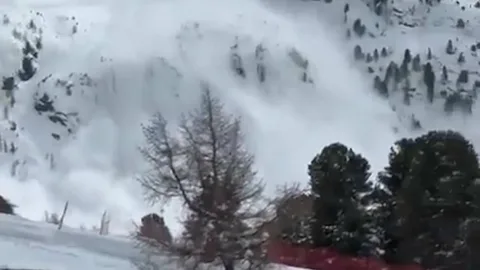
Avalanche deaths in the Alps have surged to alarming levels this season as mountain rescue teams across Austria, Switzerland, France, and Italy blame a combination of unusually unstable snowpack conditions and a growing wave of underprepared skiers venturing into off-piste terrain without adequate equipment, training, or avalanche awareness.
Avalanche deaths Europe figures for the current winter season are tracking significantly above the 5-year average — with rescue coordinators warning that the combination of warm weather followed by heavy snowfall creating particularly dangerous slab avalanche conditions has coincided with record numbers of recreational skiers and ski tourers entering backcountry terrain where avalanche deaths risk is highest.
US avalanche deaths data provides a comparative context — with American avalanche fatalities also showing an upward trend driven by similar factors of increased backcountry participation and inadequate avalanche safety preparation among a new generation of winter sports enthusiasts who lack the technical knowledge to assess and manage the risks that kill hundreds of people in avalanche deaths every year.
Background: Avalanche Deaths — Understanding the Crisis
What Causes Avalanche Deaths
Avalanche deaths occur when unstable snow masses release and travel downslope at speeds of up to 300 kilometres per hour — burying victims under snow depths that make self-rescue impossible and survival without rapid external intervention increasingly unlikely with every passing minute.
The physics of avalanche deaths is unforgiving. Snow burial victims face 3 primary survival threats simultaneously — trauma from the force of the avalanche itself, suffocation from snow burial that compresses breathing space and creates a CO2 buildup around the victim’s face, and hypothermia that begins affecting vital functions within minutes of burial in sub-zero snow.
Avalanche deaths statistics show that survival rates drop precipitously with burial duration — with approximately 90 percent of buried victims surviving if rescued within 15 minutes, falling to approximately 30 percent by 35 minutes, and declining steeply beyond that threshold. These survival statistics explain why the quality of immediate companion rescue — and the equipment that makes it possible — is the single most important determinant of avalanche deaths outcomes in backcountry incidents.
The Underprepared Skier Problem
Mountain rescue professionals across the Alps identify underprepared skiers and ski tourers as the primary driver of the current avalanche deaths surge — a phenomenon they connect directly to the explosion in backcountry skiing participation that followed the COVID-19 pandemic and has continued expanding in subsequent years.
Backcountry skiing participation has increased by an estimated 40 to 60 percent across Alpine nations since 2020 — driven by social media exposure to off-piste skiing content, improved lightweight touring equipment that makes backcountry access easier than ever, and a broader cultural shift toward adventure outdoor recreation among younger demographics.
The problem — as avalanche deaths statistics make brutally clear — is that participation growth has significantly outpaced safety education. A large proportion of new backcountry participants are entering terrain where avalanche deaths risk is real and present without carrying the 3-piece avalanche safety kit — transceiver, probe, and shovel — that represents the minimum equipment standard for backcountry travel. Many lack the training to use this equipment effectively even when they carry it. Fewer still have completed formal avalanche safety courses that teach terrain assessment, snowpack evaluation, and group decision-making skills that experienced mountaineers consider essential prerequisites for backcountry travel.
Why Avalanche Deaths Are Rising in the Alps
Weather Conditions Creating Dangerous Snowpack
The specific snowpack conditions driving the current avalanche deaths surge across the Alps have been described by snow science experts as among the most dangerous in recent memory — combining multiple layers of instability in ways that make terrain assessment extremely difficult even for experienced backcountry users.
The current dangerous snowpack developed through a specific meteorological sequence. An early season warm period created a weak, faceted snow layer at the base of the snowpack — a persistent weak layer that avalanche deaths experts describe as particularly treacherous because it can remain unstable for weeks or months, buried beneath subsequent snowfall and invisible to surface observation.
Subsequent heavy snowfall loaded this weak layer with significant additional weight — creating classic slab avalanche conditions where a dense upper slab sits on top of a weak layer that can collapse suddenly and catastrophically under the weight of a single skier. The avalanche deaths statistics for slab avalanches are disproportionately severe compared to loose snow avalanche deaths — because slabs release suddenly and completely, giving victims no warning and no time to escape.
Warm temperatures during the current season have added a third layer of instability — creating wet avalanche conditions in lower elevation terrain where melt-freeze cycles produce heavy, dense snow that travels at lower speeds than dry slab avalanches but buries victims under much greater weight, making self-extraction from wet avalanche burial essentially impossible.
Underprepared Skiers — The Human Factor in Avalanche Deaths
Mountain rescue teams across the Alps have documented a consistent pattern in the avalanche deaths and near-miss incidents of the current season — victims who entered avalanche terrain without adequate equipment, without local avalanche bulletin awareness, and without the decision-making framework that avalanche safety training provides.
Avalanche deaths investigations repeatedly reveal victims who were not carrying avalanche transceivers — making companion rescue impossible and reducing survival chances to near zero in deep burial scenarios. Cases where victims carried transceivers but companions lacked the training to use them effectively in the stress of a real burial situation have also contributed to avalanche deaths that better preparation could have prevented.
The avalanche bulletin system — which provides daily assessment of avalanche danger levels across the Alps from Level 1 Low through Level 5 Extraordinary — is a freely available resource that mountain rescue professionals consider essential reading before any backcountry excursion. Avalanche deaths investigations consistently show that victims either did not consult the avalanche bulletin or did not understand how to interpret its terrain-specific guidance in making go/no-go decisions.
Avalanche Deaths Europe — Country by Country
Avalanche Deaths Europe — Austria
Avalanche deaths Europe figures for Austria in the current season are among the highest in the Alps — reflecting the country’s extensive backcountry terrain, high ski touring participation rates, and the particularly dangerous snowpack conditions affecting Tyrolean and Vorarlberg mountain regions.
Austrian Alpine Club rescue statistics document avalanche deaths incidents across multiple regions — with the Arlberg, Ötztal, and Zillertal areas recording the highest concentrations of avalanche deaths Europe incidents in the current season. Austrian mountain rescue teams have conducted significantly more avalanche burials in the current season than in the equivalent period of the previous 3 years.
Avalanche Deaths Europe — Switzerland
Avalanche deaths Europe figures for Switzerland are tracked by the WSL Institute for Snow and Avalanche Research — SLF — which provides some of the most comprehensive avalanche deaths Europe data available from any Alpine nation.
Switzerland typically records between 20 and 30 avalanche deaths per season — a figure that the current season is tracking to exceed significantly. The SLF has issued multiple Level 4 High avalanche danger warnings across Swiss Alpine regions during the current season — the second highest level on the 5-point European Avalanche Danger Scale and the level at which avalanche deaths Europe statistics show the greatest concentration of fatalities.
Avalanche Deaths Europe — France and Italy
Avalanche deaths Europe figures for France and Italy have also risen in the current season — with the French Alps recording significant avalanche deaths incidents in the Chamonix Massif, Les 2 Alpes, and Isère regions. Italian avalanche deaths Europe incidents have been concentrated in the Aosta Valley and South Tyrol regions.
France’s Météo-France avalanche bulletin system and Italy’s AINEVA avalanche warning network have both issued elevated danger warnings throughout the current season — warnings that rescue professionals say too many backcountry users are ignoring or failing to consult before entering avalanche terrain.
Avalanche Deaths Per State — US Comparison
Avalanche Deaths Per State — The American Data
Avalanche deaths per state data from the Colorado Avalanche Information Center — CAIC — and the American Avalanche Association provides a detailed picture of where avalanche deaths are concentrated in the United States and which states face the greatest avalanche deaths per state risk.
Colorado records more avalanche deaths per state than any other US state — typically accounting for 25 to 35 percent of total annual US avalanche deaths. Colorado’s combination of extensive backcountry terrain, high skiing and ski touring participation rates, and a snowpack characterised by persistent weak layers similar to those driving the current Alps avalanche deaths surge makes it the epicentre of avalanche deaths per state statistics in the US.
Utah records the second highest avalanche deaths per state figures — with the Wasatch Mountains around Salt Lake City providing easily accessible backcountry terrain that attracts large numbers of skiers and ski tourers, many of whom lack adequate avalanche safety preparation. The proximity of world-class resort skiing to challenging backcountry terrain in Utah creates a particular avalanche deaths per state risk — with resort skiers venturing beyond ski area boundaries without the equipment and skills that backcountry terrain requires.
Alaska, Montana, Wyoming, Washington, and Idaho complete the top avalanche deaths per state rankings — each recording annual fatalities that reflect the combination of extensive mountain terrain, significant backcountry recreation participation, and the inherent instability of mountain snowpacks.
US Avalanche Deaths — The American Picture
US Avalanche Deaths — Annual Trends
US avalanche deaths figures compiled by the American Avalanche Association show an average of approximately 25 to 30 avalanche deaths per year over the past decade — a figure that has remained relatively stable in absolute terms while rising significantly relative to the growth in backcountry recreation participation.
US avalanche deaths statistics show a demographic pattern that mirrors the underprepared skier phenomenon driving avalanche deaths Europe — with a significant proportion of US avalanche deaths involving victims in their 20s and 30s participating in backcountry skiing, snowmobiling, and ski touring without adequate avalanche safety training or equipment.
US avalanche deaths by activity show that backcountry skiing and ski touring account for the largest single category — approximately 40 to 45 percent of total US avalanche deaths. Snowmobiling accounts for approximately 25 to 30 percent of US avalanche deaths — a significant and sometimes overlooked category in which high-powered modern snowmobiles allow riders to access extreme terrain that previous generations of equipment could not reach.
US Avalanche Deaths — What Is Being Done
The US avalanche deaths prevention infrastructure — centred on the network of regional avalanche centres including CAIC, the Northwest Avalanche Center, and the Utah Avalanche Center — provides daily avalanche forecasts, educational resources, and incident reporting that forms the backbone of US avalanche safety communication.
US avalanche deaths prevention advocates have pushed for mandatory avalanche safety education requirements for backcountry access at ski resorts — a measure that has been adopted in modified forms at some resorts but faces resistance from resort operators concerned about the impact on backcountry access revenue.
Quotes on Avalanche Deaths
Austrian Alpine Club mountain rescue coordinator Markus Ebster told reporters that the avalanche deaths surge in the Alps was not primarily a weather problem — it was a preparedness problem, adding that rescue teams were repeatedly finding avalanche deaths victims who were not carrying transceivers, had not checked the avalanche bulletin, and had entered terrain that the current danger level should have placed completely off limits for any recreational user.
Swiss SLF Director Jürg Schweizer stated that the snowpack conditions driving the current avalanche deaths Europe surge were among the most dangerous his organisation had recorded in 15 years — urging all backcountry users to treat Level 3 Considerable and above avalanche danger bulletins as a serious warning rather than a routine advisory.
Chamonix mountain guide and avalanche educator Pascal Tournaire told Le Monde that social media was contributing directly to avalanche deaths by creating a culture in which backcountry skiing access was presented as an aspirational lifestyle without adequate representation of the avalanche deaths risk — stating that the avalanche deaths statistics were the reality that Instagram never showed.
American Avalanche Association Executive Director Ethan Greene described US avalanche deaths trends as reflecting a participation growth that has significantly outpaced safety education — calling on the outdoor industry, resorts, and government agencies to invest substantially more in avalanche safety education to prevent US avalanche deaths from rising further as backcountry participation continues growing.
A surviving member of an Austrian party that lost 2 companions to avalanche deaths in the Ötztal this season described the experience as the most traumatic of his life — stating that the group had not checked the avalanche bulletin and had not been carrying avalanche probes, adding that he would spend the rest of his life trying to ensure that other backcountry users did not make the same deadly mistakes.
Impact: What Rising Avalanche Deaths Mean
Safety Education Imperative
The rising avalanche deaths Europe and US avalanche deaths figures create a compelling case for mandatory avalanche safety education as a condition of backcountry access — a measure that avalanche safety professionals have advocated for years but that has not been implemented at the scale the avalanche deaths statistics demand.
The economic cost of avalanche deaths and rescue operations is also significant — with Alpine rescue operations costing tens of thousands of euros per incident and the cumulative cost of the current season’s avalanche deaths Europe rescue operations running into the millions across all affected nations.
Climate Change and Future Avalanche Deaths
Climate change is adding a further dimension to the avalanche deaths Europe and US avalanche deaths outlook — with warmer winters creating more frequent melt-freeze cycles, more rain-on-snow events, and more unstable snowpack conditions of the kind driving the current avalanche deaths surge.
Snow science experts warn that the avalanche deaths per state and avalanche deaths Europe figures of the current season may represent a preview of conditions that will become more common rather than less as climate change reshapes Alpine and mountain snowpack dynamics in ways that increase avalanche deaths risk even as overall snow depths potentially decrease.
Frequently Asked Questions
How Many People Died in an Avalanche Each Year?
Globally, avalanche deaths kill approximately 150 to 250 people per year across all avalanche-prone mountain regions. Avalanche deaths Europe — primarily in the Alps — account for approximately 100 to 150 of these global avalanche deaths annually. US avalanche deaths account for approximately 25 to 30 per year. These avalanche deaths figures represent only reported fatalities in recreational and residential settings — avalanche deaths in remote areas and developing mountain nations are significantly undercounted in global totals. Avalanche deaths per state in the US are highest in Colorado, Utah, Alaska, Montana, and Wyoming — reflecting the combination of extensive backcountry terrain and high recreational participation in these states.
What Was the Deadliest Avalanche Ever?
The deadliest avalanche in recorded history occurred during World War One in the Austrian Alps in December 1916 — when a series of avalanches triggered by artillery fire killed an estimated 10,000 soldiers from both the Austro-Hungarian and Italian armies in a single day. This catastrophic avalanche deaths event — known as White Friday — remains the largest single-day avalanche deaths toll in history. In civilian avalanche deaths history, the 1970 Huascarán avalanche in Peru — triggered by an earthquake — killed approximately 20,000 people and remains the deadliest non-military avalanche deaths disaster ever recorded. In Alpine recreational avalanche deaths history, no single incident approaches these figures — with recreational avalanche deaths typically involving groups of 1 to 10 people rather than mass casualty events.
What Kills You First in an Avalanche?
The primary cause of avalanche deaths depends on the specific circumstances of the burial — but suffocation is the most common cause of avalanche deaths in burial scenarios where victims survive the initial impact. As avalanche snow settles and hardens around a buried victim, the snow compresses into a dense concrete-like mass that restricts chest expansion and prevents normal breathing. CO2 exhaled by the victim builds up in the small air pocket around their face — reducing oxygen available for breathing and accelerating loss of consciousness. Trauma from the force of the avalanche itself — including impact with trees, rocks, and other terrain features — is the second most common cause of avalanche deaths. Hypothermia becomes the primary cause of avalanche deaths in cases where victims survive the initial burial without fatal trauma or suffocation but are not rescued quickly enough — with core body temperature dropping to lethal levels within 30 to 90 minutes depending on burial depth, snow temperature, and victim clothing.
Conclusion
Avalanche deaths rising across the Alps and the US tell a story of a preventable crisis — where the combination of dangerous natural conditions and inadequate human preparation is producing fatalities that better education, better equipment, and better decision-making could significantly reduce.
Avalanche deaths Europe figures for the current season are a warning that the backcountry skiing boom has outpaced the safety education infrastructure needed to keep its participants alive. US avalanche deaths data tells the same story in a different geography. Avalanche deaths per state statistics show where the risk is concentrated — and where prevention efforts need to be most intensively focused.
The Alps mountains are not becoming more dangerous — but more people are entering them less prepared than ever before. Until avalanche safety education becomes as routine as the skiing equipment it accompanies, avalanche deaths will continue claiming lives that the right knowledge and the right decisions could have saved.