

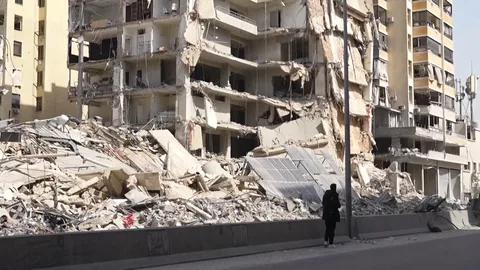

Israel attacks Beirut Lebanon with a devastating wave of strikes targeting the capital, the south, and the eastern Bekaa Valley — killing more than 24 people and wounding over 85 in one of the most intensive single-day Israel Lebanon attack operations since the broader Iran war began.
Israel attacks Beirut Lebanon operations focused on Hezbollah infrastructure in the southern Dahiya suburbs, weapons storage in the Bekaa Valley, and Hezbollah command positions in southern Lebanon near the Israeli border.
Lebanon Israel today death toll has reached over 24 confirmed killed — with Lebanese health authorities warning the figure will rise as rescue workers continue clearing rubble from multiple strike sites. According to the UN Office for the Coordination of Humanitarian Affairs, Lebanon’s humanitarian system was already at breaking point before the latest Israel attacks Beirut Lebanon wave. For full Iran war context see our Iran Attacks Live Tracker.
Background: Israel Attacks Beirut Lebanon — Why This Is Happening
Israel attacks Beirut Lebanon as part of a deliberate dual-front strategy running alongside the main US-Israel war on Iran — conducting simultaneous campaigns against Iranian nuclear infrastructure and Hezbollah military capabilities across Lebanese territory.
Lebanon Israel today confrontation is rooted in decades of conflict between Israel and Hezbollah — the Lebanese Shia militant organisation that Israel considers Iran’s most capable and dangerous regional proxy. Hezbollah has positioned itself as the primary defender of Lebanon against Israeli military operations since its formation in 1982.
Lebanon Israel War 2006 — Historical Context
Lebanon Israel war 2006 provides the essential historical context for the current Israel attacks Beirut Lebanon campaign. The 34-day conflict killed approximately 1,200 Lebanese civilians, displaced up to one million people, and destroyed significant Lebanese infrastructure before ending in a UN-brokered ceasefire.
Lebanon Israel war 2006 was widely considered a strategic failure for Israel — with Hezbollah’s survival framed as a victory that cemented its political dominance in Lebanon. The current Israel attacks Beirut Lebanon campaign reflects Israeli determination not to repeat the strategic ambiguity of the Lebanon Israel war 2006 outcome.
Unlike the Lebanon Israel war 2006, the current Israel Lebanon attack operations are being conducted within the broader context of an active US-Israeli war on Iran — giving Israel wider operational latitude and stronger US backing than it enjoyed in 2006. The international community’s ability to broker a ceasefire comparable to the one that ended the Lebanon Israel war 2006 is significantly constrained by the broader regional conflict environment.
Details: Israel Attacks Beirut Lebanon — What Happened
Israel Attacks Beirut Lebanon — The Strikes
Israel attacks Beirut Lebanon operations in the latest wave targeted 3 primary areas simultaneously.
The Dahiya southern suburbs of Beirut — Hezbollah’s political and military headquarters — received the most intensive Israel attacks Beirut Lebanon strikes. The Dahiya Doctrine — Israel’s explicitly stated strategy of targeting civilian infrastructure in Hezbollah-controlled areas — has governed Israel Lebanon attack operations since the Lebanon Israel war 2006 and frames the current campaign in both military and legal terms.
The Bekaa Valley in eastern Lebanon was struck in the Israel attacks Beirut Lebanon wave — with the IDF targeting what it described as Hezbollah weapons storage facilities and Iranian-supplied ballistic missile stockpiles. Southern Lebanon strikes in the Israel attacks Beirut Lebanon wave targeted Hezbollah command positions, anti-tank missile units, and forward deployment infrastructure along the Blue Line.
Lebanon Israel Today — Casualties
Lebanon Israel today confirmed casualties from the Israel attacks Beirut Lebanon wave include over 24 killed and 85 or more wounded across Beirut, southern Lebanon, and the Bekaa Valley.
Lebanese Red Cross and Civil Defence teams were deployed simultaneously across multiple Israel attacks Beirut Lebanon strike sites. Beirut’s southern district hospitals were placed on emergency footing to receive casualties.
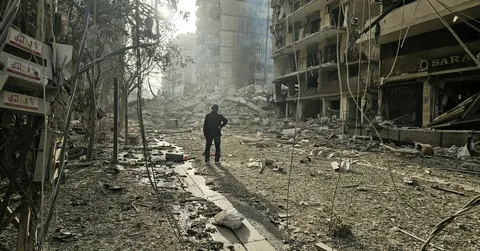
Lebanon Israel today damage assessment includes significant structural destruction in the Dahiya — with multiple residential and commercial buildings collapsed or severely damaged. The Bekaa Valley strikes caused damage to agricultural land and civilian infrastructure in the vicinity of targeted military facilities.
Israel Lebanon Attack — IDF Justification
The Israel Lebanon attack justification provided by the IDF rests on 3 core arguments consistently advanced for Israel attacks Beirut Lebanon operations.
First — every Israel Lebanon attack target is a legitimate military objective — specifically Hezbollah weapons storage, command infrastructure, and missile production facilities posing direct threats to Israeli civilians and US military installations across the Gulf.
Second — Hezbollah’s deliberate embedding of military infrastructure in civilian areas creates the conditions for civilian casualties in Israel attacks Beirut Lebanon operations — placing legal and moral responsibility on Hezbollah rather than Israel.
Third — the Israel Lebanon attack campaign is a necessary component of the broader US-Israel war on Iran — arguing that allowing Hezbollah to maintain capabilities while Iran is under attack would leave a dangerous threat on Israel’s northern border capable of activation against Israeli civilians at any moment.
Quotes on Israel Attacks Beirut Lebanon
IDF Spokesperson Rear Admiral Daniel Hagari confirmed the Israel attacks Beirut Lebanon wave stating that every target struck was a Hezbollah military asset — adding that the IDF had taken extensive precautions to minimise civilian casualties and that any civilian deaths resulted from Hezbollah’s use of populated areas as military infrastructure.
Lebanese Prime Minister Nawaf Salam condemned the Israel attacks Beirut Lebanon operations as a flagrant violation of Lebanese sovereignty and international humanitarian law — demanding that the UN Security Council take immediate action to halt Israeli strikes on Lebanese civilian areas.
Hezbollah’s media office vowed that Israel attacks Beirut Lebanon would be met with retaliation at a time and place of the resistance’s choosing — stating that every Israeli strike on Lebanese soil would bring a response the Israeli enemy would not anticipate.
UN Special Coordinator for Lebanon Jeanine Hennis-Plasschaert expressed grave concern about Israel attacks Beirut Lebanon civilian casualties — warning that the mounting Lebanon Israel today death toll was pushing the country’s already overwhelmed humanitarian system to breaking point and calling on all parties to respect international humanitarian law.
US Secretary of State Marco Rubio stated that the United States supported Israel’s right to defend itself against Hezbollah threats — but privately urged Israeli officials to minimise civilian casualties in Israel attacks Beirut Lebanon operations and avoid strikes on Lebanese state infrastructure that would complicate post-conflict reconstruction.
Lebanese Health Minister Firass Abiad confirmed that Lebanon Israel today hospitals were struggling to cope with casualties from the Israel attacks Beirut Lebanon wave — stating that the health system was at maximum capacity and international medical assistance was urgently needed.
Impact: What Israel Attacks Beirut Lebanon Means
Humanitarian Impact
The humanitarian impact of Israel attacks Beirut Lebanon is compounding a pre-existing crisis that had already pushed Lebanon’s fragile systems to the edge of collapse.
Lebanon Israel today displacement figures from the current conflict have reached hundreds of thousands — with families fleeing the Dahiya, southern Lebanon, and Bekaa Valley communities seeking refuge in central Beirut and the northern districts.
Lebanon Israel today medical system pressure is severe — with hospitals operating above capacity, medicine stockouts becoming critical, and road infrastructure destruction in southern Lebanon preventing Lebanon relief organisations from reaching isolated communities. For full Lebanon humanitarian coverage see our Lebanon Relief article.
Lebanon Israel War 2006 — History Repeating
The Lebanon Israel war 2006 comparison is being invoked with increasing frequency by analysts observing the current Israel attacks Beirut Lebanon campaign.
Like the Lebanon Israel war 2006, the current operations are producing significant civilian casualties and infrastructure destruction — while the fundamental question of whether Hezbollah’s military capabilities can be permanently eliminated through air power alone remains as contested now as it was in 2006.
Lebanon Israel war 2006 ended with UN Security Council Resolution 1701 — which called for Hezbollah’s disarmament and a southern Lebanon buffer zone. Neither condition was fully implemented — with Hezbollah substantially rearming in the years following the Lebanon Israel war 2006 to build the significantly larger arsenal it held at the outbreak of the current conflict.
Regional Implications of Israel Lebanon Attack
The Israel Lebanon attack campaign running parallel to the US-Israel war on Iran creates a dual-front operational challenge — requiring simultaneous management of a major air and naval campaign against Iran and a ground-air campaign against Hezbollah in Lebanon.
For Lebanon — already the most economically fragile state in the region — the Israel attacks Beirut Lebanon campaign represents an existential threat to whatever remnants of the Lebanese state and economy survived the 2019 financial crisis and 2020 port explosion.
Lebanon Israel today economic indicators show a country being pushed toward complete state failure by the combination of Israeli strikes, Hezbollah’s continued institutional control, and the collapse of international support that Lebanon’s reform programme was designed to unlock.
Frequently Asked Questions
Why Is Israel Attacking Lebanon?
Israel attacks Beirut Lebanon primarily to degrade Hezbollah’s military capabilities — targeting weapons storage, missile production, command networks, and operational positions that threaten Israeli civilian and military security. Israel frames the Israel Lebanon attack as a necessary component of the US-Israel war on Iran — arguing that Hezbollah as Iran’s most capable proxy must be simultaneously degraded to prevent a devastating second front. Israel also cites ongoing Hezbollah cross-border rocket and anti-tank missile attacks on northern Israeli communities as requiring military response.
Why Is Lebanon Being Attacked?
Lebanon is being attacked because Hezbollah has embedded its military infrastructure throughout Lebanese civilian areas including Beirut’s Dahiya suburbs, the Bekaa Valley, and southern Lebanon villages. The Lebanese state has limited ability to control Hezbollah’s military activities or prevent Israel Lebanon attack operations on Lebanese soil. Lebanon Israel today civilian casualties result from Hezbollah’s deliberate integration of military and civilian infrastructure — making Israeli strikes on Hezbollah assets inherently dangerous for Lebanese civilians living alongside that infrastructure.
Is Lebanon Allies With Israel?
No — Lebanon and Israel have no diplomatic relations and are technically in a state of war since 1948. Lebanon did not sign a peace agreement with Israel as Egypt did in 1979 and Jordan did in 1994. The Lebanon Israel war 2006 and the current Israel attacks Beirut Lebanon campaign are expressions of an active military conflict. Lebanon Israel today relations are defined by the coexistence of a weak Lebanese state that formally opposes Israeli strikes and a Hezbollah organisation that actively prosecutes military conflict with Israel from within Lebanese borders — a contradiction that has defined Lebanon’s impossible strategic position for decades.
Conclusion
Israel attacks Beirut Lebanon killing 24 or more people in a single wave of strikes across the capital, south, and east represents the latest and most deadly episode in a campaign whose trajectory raises fundamental questions about whether military force can achieve the lasting security outcomes that Israeli planners are seeking.
Lebanon Israel today is a country absorbing strikes it cannot militarily repel — governed by institutions too weak to control the armed organisation whose presence makes it a target, and burdened by a humanitarian crisis that the international community has inadequately addressed at every stage of its development.
The Israel Lebanon attack campaign will continue as long as the broader US-Israel war on Iran continues. Whether this conflict ends differently from the Lebanon Israel war 2006 — with Hezbollah genuinely disarmed rather than temporarily suppressed — or whether history repeats itself in a more devastating register remains the defining unanswered question at the heart of every Israel attacks Beirut Lebanon headline.