

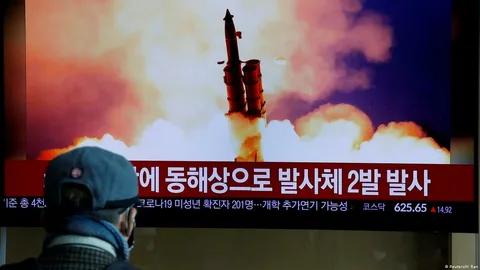

South Korea has confirmed that North Korea fired an unidentified North Korea projectile toward the sea — triggering immediate alert protocols across the Korean Peninsula and prompting urgent consultations between Seoul, Washington, and Tokyo about the nature and implications of the latest launch.
The North Korea projectile launch comes at a moment of acute regional tension — with Pyongyang continuing its weapons development programme at a pace that has alarmed the international community and raised fresh questions about the connection between North Korea Yemen weapons exports and the Iran war now convulsing the Middle East.
South Korea’s Joint Chiefs of Staff confirmed detection of the North Korea projectile and stated that military authorities were analysing the type, trajectory, and range of the launch — while placing South Korean forces on heightened alert across all military commands. North Korea missile Japan flight path concerns were immediately activated with Tokyo issuing precautionary alerts to its northern prefectures as analysis of the North Korea projectile trajectory continued.
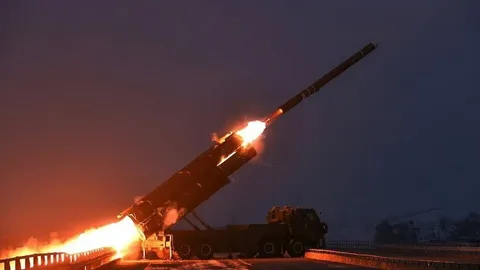
Background: North Korea Projectile — Understanding the Pattern
The latest North Korea projectile launch is not an isolated incident but part of a sustained and accelerating pattern of weapons testing that Pyongyang has pursued with increasing intensity since 2022.
North Korea has conducted more missile and projectile tests in the past 4 years than in the entire preceding decade — a pace of development that weapons analysts describe as reflecting a deliberate strategy of rapid capability advancement designed to achieve specific military and diplomatic objectives before international pressure or domestic resource constraints create new limitations.
North Korea projectile launches serve multiple simultaneous purposes for the Kim Jong-un regime. They advance the technical development of North Korea’s missile programme through real-world testing data that cannot be fully replicated in laboratory environments. They signal resolve and capability to potential adversaries — particularly the United States and South Korea — in ways that pure diplomatic statements cannot. They provide leverage for the sanctions relief and diplomatic recognition negotiations that Pyongyang periodically pursues.
The North Korea Yemen weapons connection adds a further dimension to the North Korea projectile testing pattern. Evidence documented by UN Panel of Experts reports and Western intelligence assessments indicates that North Korea has supplied ballistic missiles, components, and technical expertise to the Houthi movement in Yemen — whose missile capabilities have expanded significantly in recent years in ways that correlate directly with documented North Korea Yemen weapons transfer timelines.
North Korea attack Japan concerns have been a constant feature of regional security assessments since North Korea began demonstrating intercontinental ballistic missile capabilities in 2017. The North Korea missile Japan threat has become particularly acute as North Korea has demonstrated the ability to fly missiles over Japanese territory — with previous launches triggering J-Alert emergency notifications to Japanese civilians in affected prefectures.
What Was Fired — North Korea Projectile Details
North Korea Projectile — Initial Assessment
South Korea’s Joint Chiefs of Staff described the launch as an unidentified North Korea projectile — the standard initial designation used when military authorities have confirmed a launch but have not yet completed the analysis required to determine the specific weapons category involved.
North Korea projectile categories range from short-range ballistic missiles — SRBMs — with ranges of a few hundred kilometres, through medium-range ballistic missiles — MRBMs — with ranges of 1,000 to 3,000 kilometres, to intermediate-range ballistic missiles — IRBMs — with ranges up to 5,500 kilometres, to intercontinental ballistic missiles — ICBMs — with ranges exceeding 5,500 kilometres and theoretical capability to strike the continental United States.
The North Korea projectile fired in the current incident was detected by South Korean radar and satellite systems and tracked through its flight trajectory before impacting in the sea. The trajectory and flight time of the North Korea projectile provide the primary data points from which South Korean and US analysts determine the weapons category — with longer flight times and higher apogees indicating more capable missile systems.
North Korea Projectile — Possible Weapons Systems
Several North Korea projectile systems are candidates for the current launch based on the pattern of recent North Korean testing activity.
The Hwasong-15 and Hwasong-17 ICBMs represent North Korea’s most capable long-range systems — with the Hwasong-17 having demonstrated a theoretical range sufficient to reach any point in the continental United States on a standard trajectory. A North Korea projectile in the ICBM category would represent the most serious provocation in the current launch.
The Hwasong-12 IRBM — which has previously been fired over Japanese territory in the most alarming North Korea missile Japan incidents — is another candidate North Korea projectile for the current launch. A North Korea missile Japan overflight trajectory represents a deliberate escalation designed to maximise the political impact of the launch on both Tokyo and Washington.
Shorter-range systems including the KN-23 and KN-24 quasi-ballistic missiles — which mimic the flight characteristics of Russia’s Iskander missile and are capable of manoeuvring to evade missile defence systems — represent a further category of North Korea projectile that Pyongyang has tested extensively in recent years.
North Korea Attack Japan — The Regional Threat Dimension
North Korea Attack Japan — Historical Context
North Korea attack Japan concerns have defined Japanese security policy for decades — but the specific nature of the North Korea missile Japan threat has evolved significantly as Pyongyang’s capabilities have advanced.
Japan’s geographic position makes it the most immediately vulnerable US ally to North Korea projectile launches — with North Korean missiles fired on standard trajectories toward the Pacific passing over or near Japanese territory depending on the azimuth of the launch. North Korea attack Japan scenarios range from accidental overflight during testing to deliberate targeting of US military installations on Japanese soil in a conflict scenario.
Japan hosts approximately 54,000 US military personnel across multiple bases — including Kadena Air Base in Okinawa, Yokosuka Naval Base, and Misawa Air Base in northern Japan. These installations represent potential North Korea attack Japan targets in any military confrontation — making Japan’s security directly dependent on the effectiveness of the US-Japan alliance’s missile defence architecture.
North Korea Missile Japan — Defence Response
The North Korea missile Japan threat has driven significant Japanese investment in ballistic missile defence — with Japan operating Aegis-equipped destroyers capable of intercepting North Korea projectile launches in the mid-course phase and Patriot PAC-3 batteries providing terminal defence of key installations and population centres.
Japan’s recent decision to acquire Tomahawk cruise missiles and develop its own counterstrike capability — allowing Japan to strike North Korea missile Japan launch facilities in response to an attack — represents a significant evolution in Japanese defence posture directly driven by the North Korea projectile threat.
The latest North Korea projectile launch triggered immediate activation of Japan’s missile defence alert network — with J-Alert notifications issued to prefectures in the potential flight path and Aegis destroyers repositioned to optimal intercept positions in the Sea of Japan.
North Korea Yemen — The Weapons Export Connection
North Korea Yemen — What the Evidence Shows
The North Korea Yemen weapons connection represents one of the most concerning dimensions of North Korea’s weapons proliferation activities — linking the Korean Peninsula security crisis directly to the Middle Eastern conflict now engulfing the Gulf region.
North Korea Yemen weapons transfers have been documented in multiple UN Panel of Experts reports — which identified North Korean ballistic missile components, technical specifications, and weapons system designs in Houthi missile systems that struck Saudi Arabia, the UAE, and other targets in the Yemen conflict.
The North Korea Yemen connection operates through a network of intermediaries and front companies that obscure the direct financial and logistical relationship between Pyongyang and the Houthi movement. Revenue generated from North Korea Yemen weapons exports provides hard currency that partially funds North Korea’s continued missiles and nuclear programme — creating a self-reinforcing cycle in which North Korea’s weapons exports finance the development of the next generation of North Korea projectile capabilities.
North Korea Yemen — Iran War Implications
The North Korea Yemen weapons connection takes on additional significance in the context of the current Iran war. Iran has been the primary facilitator of weapons transfers from North Korea to the Houthis — using Iranian logistics networks and financial channels to move North Korean weapons components through Iran to Yemen.
With Iran now under active US-Israeli military assault, the North Korea Yemen supply chain has been disrupted — but Western intelligence agencies are monitoring carefully for attempts by North Korea to establish alternative logistics routes that could maintain Houthi access to North Korean weapons technology despite the disruption of Iranian facilitation networks.
Quotes on North Korea Projectile
South Korea’s Joint Chiefs of Staff stated that the military had detected the North Korea projectile launch and was conducting detailed analysis of its type and trajectory in close coordination with US Forces Korea — adding that South Korean forces had been placed on heightened alert and were monitoring the situation closely.
Japanese Chief Cabinet Secretary Yoshimasa Hayashi confirmed that Japan had detected the North Korea projectile and activated its missile defence network as a precautionary measure — stating that the government was collecting and analysing information as rapidly as possible and would provide updates to the Japanese public as the assessment was completed.
US Indo-Pacific Command stated that the North Korea projectile launch posed no immediate threat to US territory or US allies — while condemning the launch as a destabilising action that violated multiple UN Security Council resolutions and called on North Korea to refrain from further provocations.
South Korean President Yoon Suk-yeol convened an emergency National Security Council meeting following the North Korea projectile detection — with his office stating that South Korea would respond to any North Korea threat with an overwhelming and decisive response in close coordination with the US-South Korea Combined Forces Command.
A senior US State Department official described the North Korea projectile launch as another reminder of why denuclearisation of the Korean Peninsula remained a core US foreign policy priority — adding that the United States would continue to work with its allies to maintain maximum pressure on Pyongyang and defend against any North Korea attack Japan or North Korea attack South Korea scenario.
UN Secretary-General Antonio Guterres condemned the North Korea projectile launch through his spokesperson — calling on Pyongyang to comply with UN Security Council resolutions prohibiting ballistic missile tests and to return to dialogue aimed at achieving the complete and verifiable denuclearisation of the Korean Peninsula.
Impact: What the North Korea Projectile Launch Means
Korean Peninsula Security
The North Korea projectile launch adds to a pattern of provocations that have kept the Korean Peninsula in a state of sustained military tension throughout 2026. Each North Korea projectile test advances Pyongyang’s technical capabilities while simultaneously testing the response and resolve of the US-South Korea-Japan trilateral security partnership.
South Korea has responded to the intensifying North Korea projectile threat by accelerating its own military modernisation — including the development of a Kill Chain preemptive strike capability designed to destroy North Korea missile Japan launch assets before they can be fired, and a Korean Massive Punishment and Retaliation — KMPR — doctrine designed to threaten the North Korean leadership directly in response to any nuclear use.
Regional Security Architecture
The North Korea projectile threat has been the primary driver of the strengthening of the US-Japan-South Korea trilateral security partnership — with the 3 countries deepening intelligence sharing, coordinating missile defence architecture, and conducting increasingly sophisticated joint military exercises specifically designed around North Korea attack Japan and North Korea attack South Korea scenarios.
The North Korea Yemen weapons connection adds a further dimension to regional security implications — demonstrating that North Korea projectile proliferation creates threats that extend far beyond the Korean Peninsula and directly affect US interests and ally security across multiple theatres simultaneously.
Sanctions and Diplomatic Implications
The North Korea projectile launch is expected to trigger renewed calls at the UN Security Council for additional sanctions — though Russia and China’s consistent veto of strengthened North Korea sanctions resolutions has left the international sanctions architecture significantly weakened as a deterrent to continued North Korea projectile testing.
Frequently Asked Questions
How Far Can North Korea Shoot a Missile?
North Korea’s most capable missile — the Hwasong-17 ICBM — has a theoretical range exceeding 15,000 kilometres on a standard trajectory, sufficient to strike any point in the continental United States. North Korea missile Japan range threats are covered by multiple systems — the Hwasong-12 IRBM has a range of approximately 4,500 kilometres, more than sufficient to reach all of Japan. Shorter-range North Korea projectile systems including the KN-23 cover South Korea entirely with ranges of 400 to 700 kilometres. North Korea’s full missile arsenal therefore covers targets from South Korea and Japan through Guam and Hawaii to the continental United States.
How Far Away Would I Have to Be to Survive a Nuke?
Survival distance from a nuclear detonation depends on the weapon’s yield. For a typical North Korea nuclear device — estimated at 10 to 250 kilotons — the immediate blast radius causing near-total destruction extends approximately 1 to 3 kilometres from ground zero. Severe damage and lethal radiation exposure extends to approximately 3 to 8 kilometres. Moderate damage and survivable radiation exposure occurs at 8 to 15 kilometres. Beyond 15 to 20 kilometres, survival rates increase significantly though radiation fallout remains a serious risk depending on wind direction. Underground shelter at any distance significantly improves survival odds. The standard emergency guidance — get inside, stay inside, stay tuned — reflects the principle that any substantial building provides meaningful protection from radiation fallout even at distances where blast damage is survivable.
What Is North Korea’s Longest Range Missile?
North Korea’s longest range missile is the Hwasong-17 — also known as the Monster ICBM due to its exceptional size. The Hwasong-17 was first tested in March 2022 and demonstrated a range theoretically exceeding 15,000 kilometres — sufficient to reach the continental United States on a standard minimum-energy trajectory. The Hwasong-17 is believed to be capable of carrying multiple independently targetable re-entry vehicles — MIRVs — allowing a single missile to strike multiple targets simultaneously. The Hwasong-18 solid-fuel ICBM tested in 2023 represents a further advancement — with solid fuel propulsion making the missile faster to prepare for launch and therefore harder to destroy in a preemptive strike. North Korea missile Japan overflight capability is demonstrated by multiple shorter-range systems including the Hwasong-12 IRBM which has previously flown over Japanese territory.
Conclusion
The latest North Korea projectile launch is another data point in a pattern that the international community has failed to reverse — a sustained North Korean weapons development programme that is advancing capabilities faster than diplomacy, sanctions, or military deterrence has been able to constrain.
North Korea attack Japan scenarios are no longer hypothetical planning exercises — they are operational contingencies that Japanese and US military commanders plan for in detail. North Korea missile Japan overflight incidents have already demonstrated that Pyongyang is willing to use its missile testing programme in ways that directly threaten allied populations. The North Korea Yemen weapons connection demonstrates that North Korean projectile proliferation creates threats far beyond the Korean Peninsula.
The unidentified North Korea projectile fired today will be analysed, categorised, and condemned through the standard international response cycle. Whether that cycle produces any meaningful change in Pyongyang’s calculations — or whether North Korea’s weapons programme continues its upward trajectory unconstrained — remains the most consequential unanswered question in Asian security.