(Publish from Houston Texas USA)
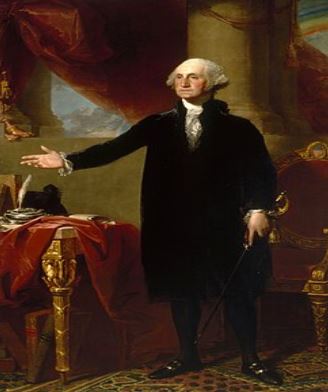
1. George Washington: The Indispensable Man
George Washington (1732-1799), widely considered the Father of His Country, was born in Pope’s Creek, Westmoreland County, Virginia, on February 22, 1732.
His early work life as a planter and a soldier in Virginia was leading the nascent United States of America, a monumental task at that time. He got married to Martha Dandridge Custis Washington on January 6, 1759, and they stood together throughout the difficult times of their nation.
Washington’s political career was primarily focused on the establishment of the United States. He was the presidential candidate from Virginia, and his unanimous success in the election of 1789 was a demonstration of the whole nation’s confidence in his leadership.
He served the United States two terms, from April 30, 1789, to March 4, 1797, thus covering almost eight years in the office. Although primarily viewed as non-partisan, his administration policies were in line with the Federalist perspective, thus setting the groundwork for American governance. George Washington died on December 14, 1799, at the age of 67, and left a legacy that is engraved in the annals of American history.
| Detail | Information |
|---|---|
| Name | George Washington |
| Spouse Name | Martha Dandridge Custis Washington |
| Birth Place | Pope’s Creek, Westmoreland County, Virginia |
| State Run For | Virginia |
| Time in Office | April 30, 1789 – March 4, 1797 (7 years, 10 months) |
| Terms | 2 |
| Party | Federalist (Associated) |
| Age at Death | 67 |
Washington applied several vital precedents during his presidency, including the establishment of the cabinet, the assertion of executive power, and the peaceful transfer of power.
A classic segment of political wisdom, his Farewell Address was against the dangers of political parties and getting involved in foreign conflicts, thus influencing American foreign policy in the near future. As a leader of the Revolutionary War and a stabilizing force during the fledgling years of the republic, Washington became a pivotal figure in the history of America.
2. John Adams: The Advocate for Independence
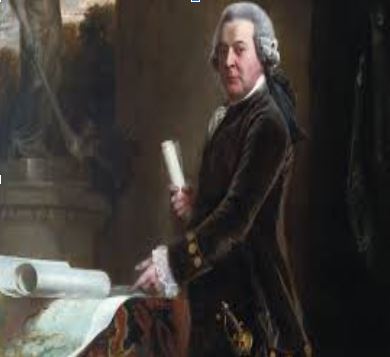
John Adams (1735-1826) was one of the most outstanding intellectuals and most ardent advocates of American independence. He was born in Braintree (now Quincy), Massachusetts, on October 30, 1735. Adams, a lawyer by profession and Harvard graduate, was instrumental in the American Revolution with his sharp legal mind and strong dedication to liberty. On October 25, 1764, he married Abigail Smith Adams and formed a union that significantly influenced American political reflection and social advancement.
Throughout his notable political career, Adams was a faithful representative of Massachusetts. He served the Continental Congress as a delegate, a diplomat in Europe, and was the first Vice President under George Washington.
He became the second President of the United States on March 4, 1797, and served one term from March 4, 1797, to March 4, 1801. As a passionate Federalist, Adams was confronted with several challenges, such as the escalation of partisan divisions and international tensions. He left the world at the age of 90 on July 4, 1826, coincidentally the same day as his former rival and friend, Thomas Jefferson.
| Detail | Information |
|---|---|
| Name | John Adams |
| Spouse Name | Abigail Smith Adams |
| Birth Place | Braintree (now Quincy), Massachusetts |
| State Run For | Massachusetts |
| Time in Office | March 4, 1797 – March 4, 1801 (4 years) |
| Terms | 1 |
| Party | Federalist |
| Age at Death | 90 |
Adams’s presidency was characterized by his attempts to keep the United States neutral during the time of European war and his endorsement of the divisive Alien and Sedition Acts.
Although there was a lot of political turmoil, Adams’s loyalty to the law and his intellectual contributions to American constitutionalism cannot be neglected. His correspondence with Abigail Adams reveals invaluable insights about the social and political landscape of that era, showing their mutual intellectual respect and shared commitment to the nation’s future.
3. Thomas Jefferson: The Pen of the Revolution
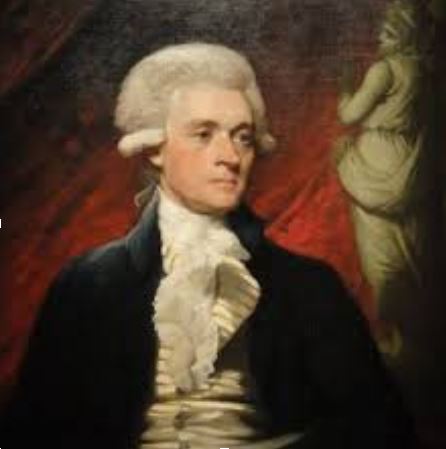
Born on April 13, 1743, at Shadwell plantation, Goochland County, Virginia, Thomas Jefferson was the leading figure of the Enlightenment and principal author of the Declaration of Independence. He was a polymath with interests in architecture, spanning law, philosophy, and science. His intellectual curiosity shaped his vision for America.
Jefferson’s wife was Martha Wayles Skelton, whom he married on January 1, 1772. Their union was tragically cut short by Martha’s early death, profoundly influencing Jefferson’s personal life and political philosophy.
His 2 term presidency from March 4, 1801, to March 4, 1809, as the third president of the United States, served as the leader of the Democratic-Republican party. He advocated states’ rights and a limited federal government. Jefferson died on July 4, 1826, at the age of 83, right fifty years after the adoption of the Declaration of Independence.
| Detail | Information |
|---|---|
| Name | Thomas Jefferson |
| Spouse Name | Martha Wayles Skelton Jefferson |
| Birth Place | Shadwell, Goochland County, Virginia |
| State Run For | Virginia |
| Time in Office | March 4, 1801 – March 4, 1809 (8 years) |
| Terms | 2 |
| Party | Democratic-Republican |
| Age at Death | 83 |
His presidency was notably marked by the Lewis and Clark Expedition, which explored the new western lands, and the Louisiana Purchase, which drastically expanded the nation’s territory.
His notion of an agrarian republic, associated with his emphasis on education and scientific inquiry, left an everlasting legacy on American society and political reflection.
4. James Madison: The Architect of the Constitution
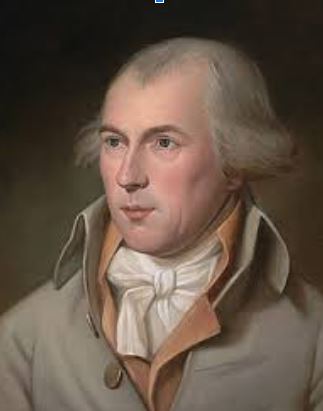
James Madison (1751-1836), known as “Father of the Constitution“, was born in Port Conway, Virginia, on March 16, 1751. Gifted mentally and politically, his intellectual prowess and deep understanding of political philosophy were evident from an early age, which led him to play a vital role in drafting the U.S. Constitution and the Bill of Rights.His excellent understanding of the theory of government marked him as a great leader of the time.
He married Dolley Payne Todd Madison on September 15, 1794. This couple radiated a warm and social grace in the presidential residence.
Representing Virginia, Madison was the 4th President of the United States and served two terms, March 4, 1809, to March 4, 1817. As a leader of the Democratic-Republican Party, he guided the young nation through the complexities of international relations, most notably the War of 1812.
James Madison died on June 28, 1836, at his home, aged 85. He left behind the legacy of profound constitutional speculation and devoted public service.
| Detail | Information |
|---|---|
| Name | James Madison |
| Spouse Name | Dolley Payne Todd Madison |
| Birth Place | Port Conway, Virginia |
| State Run For | Virginia |
| Time in Office | March 4, 1809 – March 4, 1817 (8 years) |
| Terms | 2 |
| Party | Democratic-Republican |
| Age at Death | 85 |
Madison’s presidency was significantly shaped by the War of 1812, a war that solidified American sovereignty and helped the country develop a spirit of national identity. Despite facing the difficulties, his intellectual contributions to the foundational documents of the United States and commitment to republican principles are still considered one of the main factors of American democracy.
His thorough notes from the Constitutional Convention offer priceless insights into the discussions and agreements that moulded the political system of the country.
5. James Monroe: The Era of Good Feelings
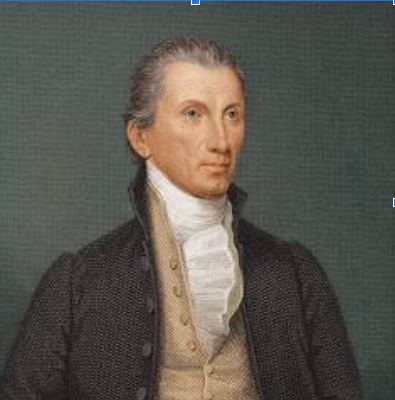
James Monroe (1758-1831), a native of Virginia, was the last President of the so-called “Virginia Dynasty“. His birth took place on April 28, 1758, in Westmoreland County, Virginia. He was engaged in a wide range of public duties, including his role as a soldier in the Revolutionary War, a diplomat, and a governor made him well prepared for the highest position in office as a president. He married Elizabeth Kortright on February 16, 1786, and their elegant presence graced the White House at the time of proximate national harmony.
Monroe was the fifth President of the United States. He served for the two terms of four years each; his tenure started on March 4, 1817, and ended on March 4, 1825. The period of his Presidency is recognized as the “Era of Good Feelings, ” marked by increased national pride and reduced political battle.
Monroe, as a leader of the Democratic-Republican Party, managed the enlargement of the nation’s territory and established a key foreign policy doctrine. He left the world on July 4, 1831, at the age of 73. He was the third former President to die on the day of the nation’s Independence.
| Detail | Information |
|---|---|
| Name | James Monroe |
| Spouse Name | Elizabeth Kortright Monroe |
| Birth Place | Westmoreland County, Virginia |
| State Run For | Virginia |
| Time in Office | March 4, 1817 – March 4, 1825 (8 years) |
| Terms | 2 |
| Party | Democratic-Republican |
| Age at Death | 73 |
The most enduring legacy of Monroe is the Monroe Doctrine, a historic foreign policy declaration made in 1823. It declared that the Western Hemisphere is no longer a place where Europe can come and colonize and intervene. Consequently, this doctrine established the USA as a leader of the Americas and became a cornerstone of U.S. foreign policy for generations.
His Presidency was also marked by the acquisition of Florida from Spain and the Missouri Compromise, which addressed the contentious issue of slavery’s expansion.
6. John Quincy Adams: The Diplomat President
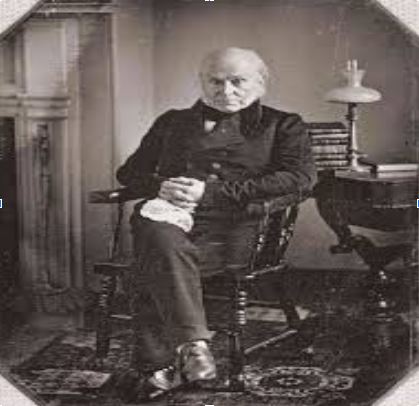
The son of John Adams, second President of the United States, John Quincy Adams was the sixth President of the United States and also one of the towering intellectual figures in American history.
He was born on July 11, 1767, in Braintree (now Quincy), Massachusetts. In his early life, John Quincy got involved in diplomacy and public service when he accompanied his father to Europe on diplomatic missions, which provided him with an unparalleled education in international affairs.
On July 26, 1797, Adams married Louisa Catherine Johnson, the First Lady, who was born outside the United States. Their marriage, however, eventually ended with four children. John Quincy Adams, throughout his political career, was closely linked with his native state, Massachusetts and served as a Senator and Secretary of State before ascending to the presidency.
His short presidency (March 4, 1825, to March 4, 1829) was marked by a commitment to the development of the country and a vision for a more unified America. He only served one term. The process of his election was quite controversial; it was a contingent election in the House of Representatives after no candidate was able to secure a majority of electoral votes in 1824. His opponents called this result a “corrupt bargain, ” and cast a shadow over his presidency.
| Detail | Information |
|---|---|
| Name | John Quincy Adams |
| Spouse Name | Louisa Catherine Johnson |
| Birth Place | Braintree (now Quincy), Massachusetts |
| State Run For Presidency | Massachusetts |
| Time in Office | 4 years (1825-1829) |
| Terms | 1 term |
| Party | Democratic-Republican (later National Republican/Whig) |
| Age at Death | 80 (1767-1848) |
Adams was a member of the Democratic-Republican Party. As soon as his political beliefs changed, he came to represent the National Republican faction and, subsequently, the Whig Party, advocating for a strong federal government and domestic improvements.
Even though Adams was brilliant with extensive experience, he had a hard time winning over the people. He had come up with some very ambitious plans for the development of the infrastructure, a national university, and scientific research. However, many of the projects he proposed were opposed very strongly by Congress.
Adams’ presidency had political disputes among the ministers and the growth of Jacksonian democracy, which ultimately led to his defeat in the 1828 election.
At the age of 80 years, John Quincy Adams left the world on February 23, 1848. He suffered a stroke on the floor of the House of Representatives, where he was a member after his presidency, and died shortly thereafter. His work in Congress after his presidency, where he became a staunch abolitionist often considered more impactful than his time in the White House.
About the Author