
(Publish from Houston Texas USA)
(Brig Sadiq Rahi, Sitara E Imtiaz Military, Retired)
Why No Defence Deals Materialised and What It Means for Pakistan
Russian President Vladimir Putin’s 4–5 December visit to India—his first since the start of the Ukraine war—was widely advertised by the Indian media as a breakthrough moment for New Delhi’s defence ambitions. In the lead-up to the 23rd Annual India–Russia Summit, Indian analysts predicted a “rain of defence agreements,” including additional S-400 air defence units, possible access to the S-500, acquisition of Su-57 fifth-generation fighters, upgrades to BrahMos, and even a multi-billion-dollar nuclear submarine lease.
Instead, the visit ended with zero defence agreements, zero MoUs, and zero strategic commitments on military hardware.
The optics were grand, but the outcomes were hollow.
This raises critical questions: Why did nothing materialise? What does this mean for India’s military credibility? And how does this impact Pakistan’s security environment?
- India’s Defence Inventory: A House Built on Mixed Foundations
India today operates one of the most heterogeneous military inventories in the world. Its platforms come from conflicting geopolitical camps—Russia, the U.S., France, Israel, and domestic R&D.
A. Russian Origin Systems
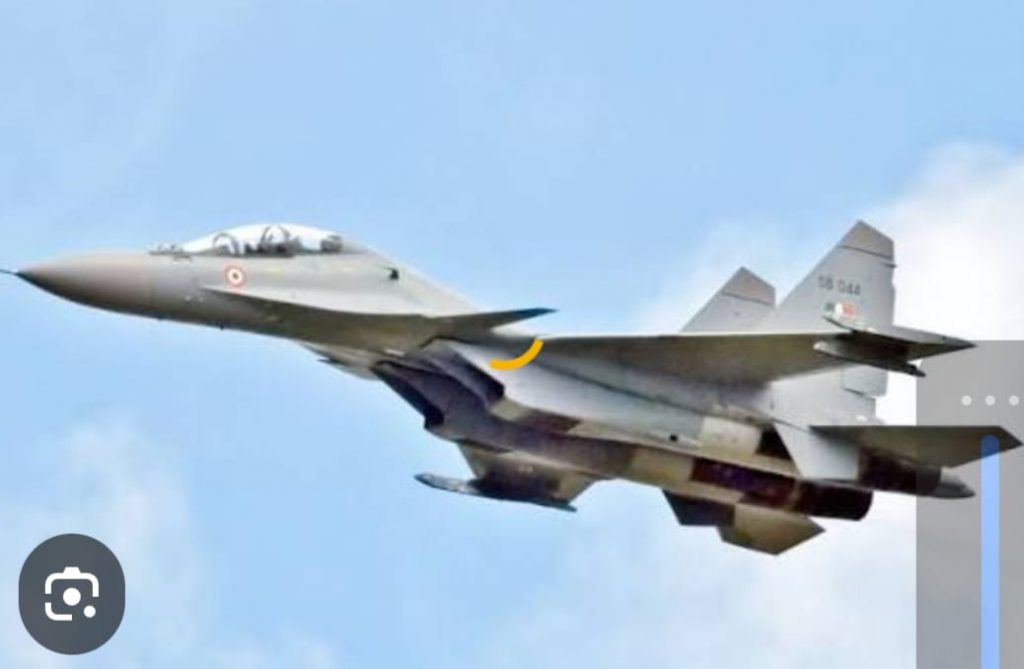
⦁ Su-30MKI (backbone fighter fleet)
⦁ MiG-29
⦁ T-90 tanks
⦁ S-400 air defence system
⦁ Ka-31 AEW
⦁ BrahMos (joint venture)
⦁ Multiple naval and missile systems
These platforms formed nearly 65–70% of India’s armed forces for decades.
B. Western Origin Systems
⦁ Rafale fighter jets
⦁ C-17, C-130
⦁ Apache and Chinook helicopters
⦁ P-8I maritime aircraft
⦁ M777 howitzers
⦁ NASAMS (in planning)
Western systems represent India’s new political alignment with Washington and Paris—but they also create interoperability and dependency problems. - Operational Viability Exposed: The Reality after Operation Sangoor/Sindoor
India’s recent operational engagements—including its highly advertised “Operation Sindoor” and failures during crises with Pakistan and China—have exposed the fragility of its imported hardware.
A. Failure of Russian Systems
⦁ S-400, once projected as India’s “invisible shield,” failed to deter or neutralize threats.
⦁ Mirage-2000, a long-trusted platform, was lost in operational mishaps.
⦁ Multiple Su-30 and MiG-29 crashes raised questions on maintenance and training.
B. Failure of Western Systems
⦁ Rafale, India’s most politically marketed aircraft, failed to deliver in real operational scenarios.
⦁ Embarrassingly, an LCA Tejas fighter crashed in Dubai during an international show, damaging India’s claim of being a rising aerospace power.
Net Result:
India’s hardware—Russian, American, or indigenous—fails under stress because the gaps lie not only in equipment but in training, doctrine, integration, and command culture.
This directly impacts the trust of foreign suppliers.
C. Why Russia Did Not Sign Defence Deals: The Real Reasons
Despite India’s pre-summit hype, Moscow refrained from giving New Delhi any advanced systems. The reasons are strategic, economic, and reputational.
A. Russia’s Global Reputation is at Risk
⦁ Russia cannot risk having:
⦁ S-500 (its most advanced air defence)
⦁ Su-57 (its newest stealth fighter)
⦁ used by India in potential escalation with Pakistan or China—and then fail like the S-400 did.
⦁ Any failure would damage Russian defence credibility at a critical global moment.
B. India is Now Too Close to the U.S.
India has signed:
⦁ LEMOA
⦁ COMCASA
⦁ BECA
These are foundational military agreements that essentially integrate India into the U.S. Indo-Pacific architecture. For Moscow, India is no longer a dependable long-term defence partner—it is a swing state leaning West.
C. China Factor
China is:
⦁ Russia’s largest military partner
⦁ The dominant power in Eurasia
⦁ A key ally in the Ukraine war context
Russia will not undermine China’s security calculus by arming India with next-generation weapons that could alter the regional balance.
D. Poor Indian Performance Lowers Buyer Credibility
Russia watched:
S-400 fails to protect Indian assets
⦁ Sukhois and Mirages crash
⦁ BrahMos accidentally fired into Pakistan
⦁ Tejas embarrasses India on foreign soil
For Moscow, this demonstrates:
⦁ poor training
⦁ weak maintenance culture
⦁ inability to handle sophisticated systems
⦁ It is bad business to give advanced tech to a client that mishandles it.
- U.S. Stance: A Quiet Block or Strategic Restraint?
Washington also monitored Putin’s visit closely.
In the backdrop:
⦁ India wants F-21
⦁ India wants Predator drones
⦁ India wants deeper tech transfer
But the U.S. also knows:
⦁ India performed poorly in Operation Sindoor
⦁ India lost credibility after the Rafale and Tejas failures
⦁ India cannot absorb advanced tech without compromising U.S. secrets
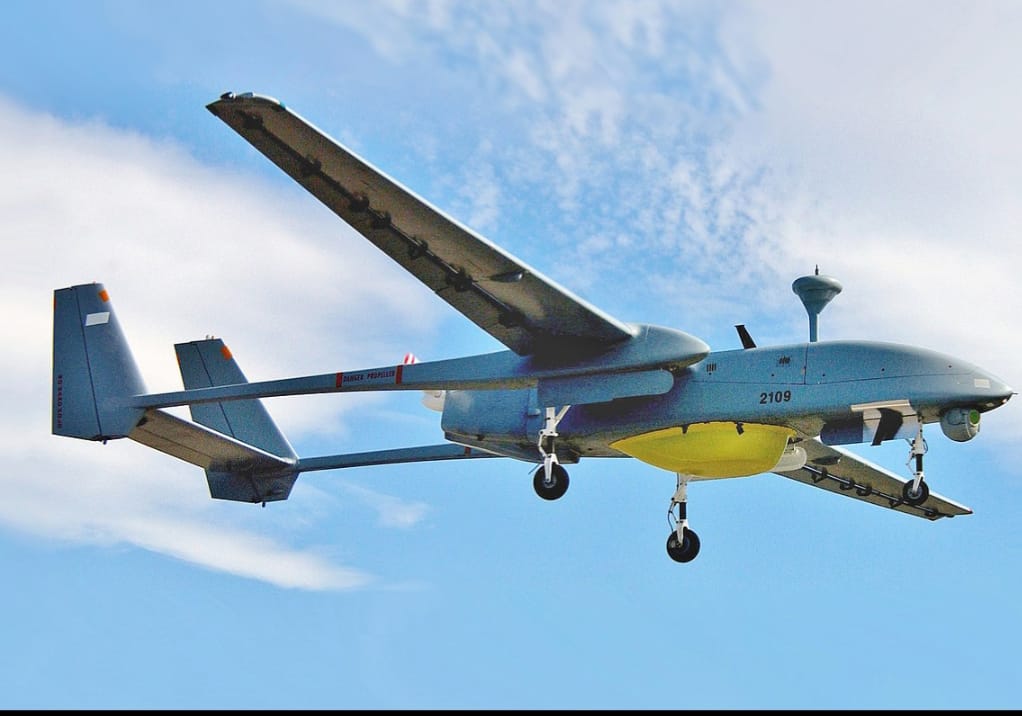
Thus, the U.S. quietly discouraged Moscow from major defence deals, aligning with its long-term goal of keeping India dependent but not empowered.
Why the Visit Yielded No Defence Outcomes
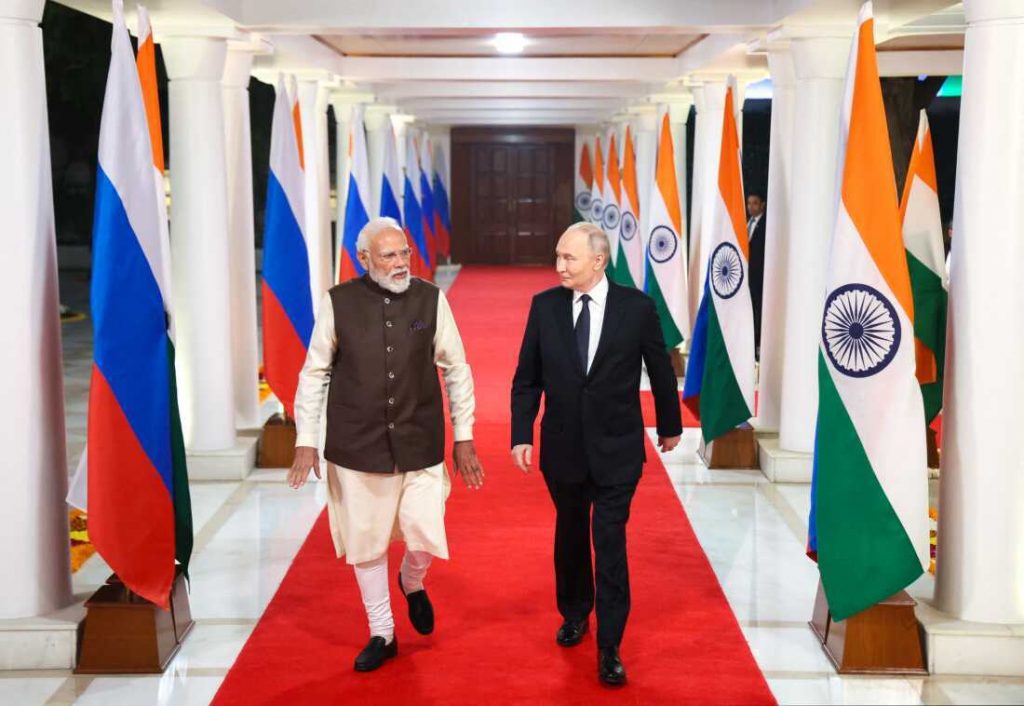
Key Reasons
1 India’s declining trust as a credible military user
Russia’s unwillingness to risk reputation with S-500 or Su-57
China’s opposition to arming India with fifth-generation systems
4 U.S. pressure on India to reduce Russian defence ties
5 India’s domestic economic crisis is limiting purchasing power
Modi’s two-boat strategy is angering both Moscow and Washington
This was a ceremonial visit, not a strategic breakthrough.
Impact on Pakistan: A Strategic Gain
For Pakistan, the failure of Indo-Russian defence deals brings multiple advantages.
India’s Defence Modernisation Has Stalled.
⦁ No new air defence
⦁ No new fighters
⦁ No new submarines
⦁ No new long-range strike assets
This widens the capability gap as Pakistan inducts:
⦁ J-10C
⦁ Chinese J-35 (announced)
⦁ PL-15 and PL-17 long-range missiles
⦁ Improved integrated air defence systems
Russia Remains Neutral or Slightly Tilting Away from India
Russia will not arm India at the cost of its China relationship.
U.S.–India alliance is political, not military
India cannot become a frontline military partner because its:
⦁ training standards
⦁ operational credibility
⦁ hardware integration
⦁ remain questionable.
Pakistan-China Collaboration Gains Strength
J-35, PL-17, and upgraded AEW platforms shift the air power equation.
Recommendations
For Pakistan
Strengthen China-Pakistan defence integration, particularly in next-gen fighters and long-range strike systems.
Expand diplomacy with Russia, focusing on energy, agriculture, and selective dual-use technologies.
Highlight India’s operational failures in regional and global forums to counter Indian narratives.
Accelerate indigenous defence production—drones, EW systems, and long-range precision weapons.
Use India’s procurement stagnation as a window to consolidate Pakistan’s deterrence posture.
For Global Stakeholders
Understand that India is no longer the “future superpower” narrative; Operation Sindoor has severely dented its military credibility.
Recognise that India’s defence diversification is politically driven, not capability-driven.
Conclusion
President Putin’s trip to India was not the strategic breakthrough New Delhi had hoped for. Instead, it exposed India’s weakening defence credibility, its confused geopolitical alignment, and its inability to secure advanced systems from either Russia or the United States.
For Pakistan, the visit is strategically favourable:
⦁ India is stuck, militarily overstretched, diplomatically confused, and operationally exposed.
⦁ In the shifting South Asian security landscape, this moment offers Pakistan an opportunity to consolidate capability, strengthen alliances, and maintain a clear regional advantage.
Author Biography:
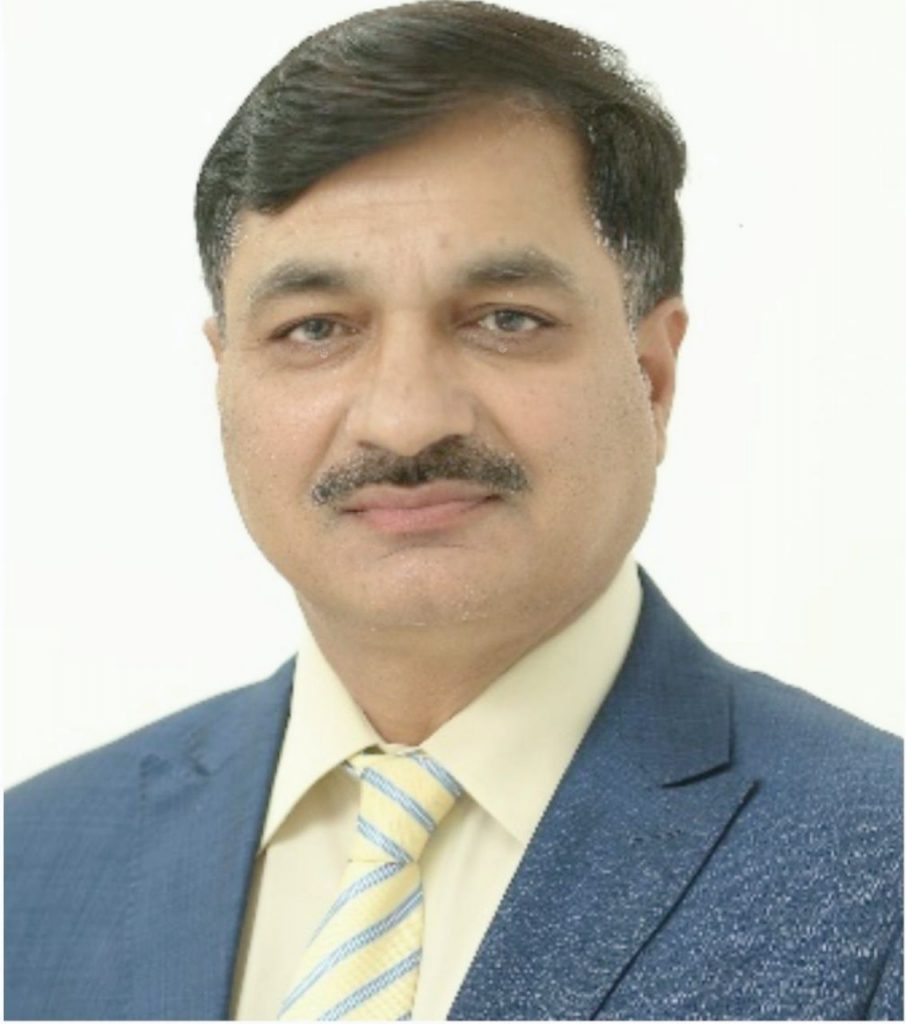
Brigadier (Retd) Sadiq Rahi, SI(M) is a graduate of the National Defence University Islamabad, Command and Staff College Quetta, and the Command and Staff College Cairo (Egypt). Over a distinguished 31-year military career, he held key command, staff, and instructional appointments. He also served as a Platoon Commander at the Pakistan Military Academy, Kakul, and as a Staff Officer (Logistics) with the United Nations Peacekeeping Mission in Somalia.
Brigadier Rahi represented Pakistan at eight international conferences under the auspices of the United Nations Office in Geneva, where he presented Pakistan’s national standards and protocols. He has also served as a guest speaker at the National University of Science and Technology (NUST), Islamabad, delivering lectures on UN and International Logistics.
Beyond his military and professional contributions, Brigadier Rahi is widely recognized as a poet and writer. His poetry, ghazals, and prose have been published in national newspapers and literary journals since his student days. He served as Editor of the college magazine Nakhlistan and later as Editor of the Pakistan Military Academy magazine Qiyadat. Presently, his columns appear regularly in Nawa-i-Waqt , The Nation, Pakistan Chrocile, Houston USA. He continues to write actively both in Urdu and English, maintaining a strong presence on social media as well.