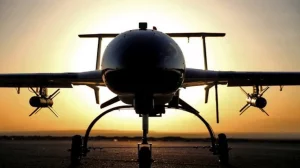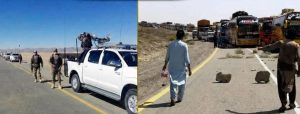

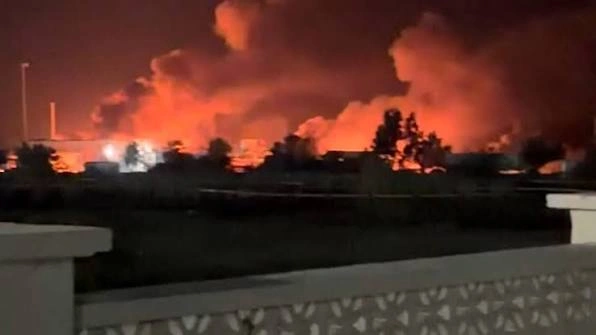
The United States has carried out its eighth consecutive night of airstrikes on Iran, marking a significant escalation in the ongoing conflict after two American service members were killed and another was reported missing following an Iranian missile and drone attack in Jordan.
The latest wave of strikes comes as a fragile ceasefire agreement between Washington and Tehran collapsed last week, raising fears of a broader regional conflict involving several Middle Eastern countries.
US Targets Iranian Military Infrastructure
According to the US Central Command (CENTCOM), the latest air operation began at 6:00 p.m. local time on Saturday under the direction of President Donald Trump.
CENTCOM stated that the operation targeted Iranian military coastal surveillance systems, air defense facilities, logistics infrastructure, underground weapons storage sites, and assets linked to operations in the Strait of Hormuz.
US officials said the objective was to weaken Iran’s ability to threaten international shipping and respond to attacks carried out by the Islamic Revolutionary Guard Corps (IRGC) against American personnel in Jordan.
Iran Reports Strikes in Southern Region
Iranian media confirmed that US airstrikes struck areas near Sirik in southern Iran and another location close to Shadegan near the Iraqi border.
Iran’s Mehr News Agency reported that no fatalities or major infrastructure damage had been recorded, while Tasnim News Agency acknowledged strikes near military-linked facilities.
Iran Responds with Drone Attacks
In response, Iran claimed responsibility for launching drone attacks targeting US military assets in Kuwait.
Iranian state television reported that military facilities, including Al-Adiri Camp and Ali Al Salem Air Base, were targeted as part of Tehran’s broader campaign against US military installations and allies across the Gulf.
Iran also claimed attacks against US-linked military sites in Bahrain and Jordan, although these reports have not been independently verified.
US Confirms Military Casualties
CENTCOM confirmed that two American service members were killed on Friday, while another remains missing.
The latest deaths bring the number of US military personnel killed since the conflict began to 16, with more than 420 service members reportedly injured.
US Defense Secretary Pete Hegseth paid tribute to the fallen troops, saying their sacrifice would strengthen America’s resolve.
Strait of Hormuz Remains Flashpoint
The conflict has increasingly focused on the Strait of Hormuz, one of the world’s most strategically important shipping routes through which nearly 20 percent of global oil supplies pass.
The United States says its military operations are aimed at protecting commercial shipping, while Iran has accused Washington of attempting to seize control of the vital waterway.
Iran’s Foreign Ministry warned that continued US military actions could further destabilize the region.
Gulf States on High Alert
Kuwait reported intercepting Iranian ballistic missiles and drones, while authorities confirmed that several oil facilities sustained damage during repeated attacks.
Saudi Arabia also issued emergency alerts for residents in Al-Kharj and Yanbu after reports of possible missile threats, although Iranian officials did not officially acknowledge attacks on Saudi territory.
Bahrain and Jordan also reported heightened military activity as regional security forces remained on high alert.
International Community Calls for Restraint
The growing conflict has prompted international concern over global energy security and regional stability.
The European Union and Gulf countries jointly urged Iran to halt attacks on shipping and ensure the Strait of Hormuz remains open to international navigation without restrictions.
Meanwhile, the US State Department issued a worldwide travel advisory warning American citizens about heightened security risks across the Middle East, citing the possibility of further military escalation, airspace closures, and flight disruptions.
As both Washington and Tehran continue military operations, international observers warn that the region faces one of its most dangerous periods in recent years, with the risk of a wider conflict continuing to rise.