
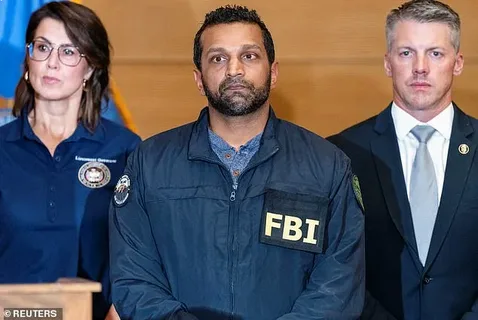
FBI Director Kash Patel welcomed Pakistan’s Interior Minister Mohsin Naqvi at the agency’s Washington headquarters this week, calling the relationship between the two countries “critical” for regional security. The meeting focused on expanding cooperation against terrorism financing and cybercrime.
Background
The FBI, short for the Federal Bureau of Investigation, is the domestic intelligence and security service of the United States. People searching FBI which country it belongs to often assume it operates internationally by default, but its jurisdiction is rooted in US federal law, even though it maintains partnerships and liaison offices with law enforcement agencies around the world, including in Pakistan.
Naqvi arrived in Washington after representing Pakistan at the Fifth United Nations Chiefs of Police Summit in New York. His visit to FBI headquarters builds on a security relationship between the two countries that has grown steadily over the past several years, particularly around counterterrorism and financial crime investigations.
This week’s meeting is the latest sign that Washington and Islamabad are looking to deepen practical cooperation, moving past diplomatic statements toward shared training programs and technical resources.
Details
Patel hosted Naqvi at FBI headquarters on Monday and later described the meeting on social media, saying it was an “honour” to welcome the Pakistani delegation and thanking Pakistan for its support in protecting US interests in the region. The two officials discussed what Patel called “important discussions surrounding facilitating resources and specialised training to combat counterterrorism financing and cyber investigations, both at home and abroad.”
The FBI operates through a nationwide structure of field offices, often referred to as FBI branches, spread across major American cities, along with international offices attached to US embassies known as legal attachés. These branches allow the bureau to coordinate directly with foreign law enforcement partners like Pakistan’s Interior Ministry on cases that cross borders, particularly those involving terrorism financing and cybercrime.
People often wonder what does the FBI investigate beyond the headline-grabbing cases. Beyond counterterrorism, the bureau handles cybercrime, public corruption, organized crime, civil rights violations, white-collar fraud, and weapons of mass destruction threats, making it one of the broadest law enforcement mandates of any single agency in the world.
For members of the public who need to reach the bureau, the FBI Headquarters phone number and general inquiries line are publicly listed on the agency’s official website, along with details on how to contact FBI anonymously through its online tip portal at tips.fbi.gov. The bureau’s well-known tip line, reachable through 1-800-CALL-FBI, remains the primary channel for the public to report suspicious activity without needing to visit a field office in person.
Quotes
Patel’s public statement following the meeting emphasized the strategic weight of the relationship. “Our partnership is critical and we look forward to more success ahead,” he wrote, describing the discussions as centered on facilitating both training and resources for joint counterterrorism and cyber investigations.
Naqvi’s visit followed his participation in the UN Chiefs of Police Summit, where security officials from multiple countries discussed shared approaches to transnational crime and terrorism financing, according to Pakistani government statements released around the trip.
Officials from both sides characterized the meeting as a continuation of an existing working relationship rather than the start of a new one, pointing to prior joint operations and information-sharing arrangements between Pakistani and American law enforcement.
Impact
For Pakistan, deeper cooperation with the FBI could translate into improved technical capacity for tracking terrorism financing networks, an area where Islamabad has faced sustained international scrutiny in the past. Enhanced cyber investigation training would also help Pakistani law enforcement respond to a growing volume of financial crime conducted online.
For the United States, the relationship supports broader regional security goals, particularly around monitoring militant financing networks that operate across South Asia. Strengthened ties with Pakistani law enforcement give US agencies an additional partner for cases that extend beyond American borders.
The meeting also comes at a moment when cybercrime and terrorism financing have become increasingly intertwined, with criminal and militant networks alike using digital platforms to move money and communicate. Cooperation between the FBI and Pakistani authorities on these fronts is likely to be tested by how effectively both sides can share intelligence in real time.
Conclusion
Neither side detailed specific next steps following the Washington meeting, but officials indicated further technical exchanges and training programs are expected to follow. Given the pattern of recent engagement between the two countries, additional joint initiatives on cyber investigations and counterterrorism financing appear likely in the coming months.
As global law enforcement cooperation leans more digital and cross-border, agencies like the FBI are likely to keep expanding these kinds of bilateral partnerships, with Pakistan positioned as one of several key regional partners going forward.
Frequently Asked Questions
Is the FBI still active?
Yes, the FBI remains fully active and is the primary domestic security and law enforcement agency of the United States federal government. It continues to investigate a wide range of cases, from terrorism and cybercrime to public corruption and organized crime, while also maintaining international partnerships like the one highlighted in this meeting with Pakistan’s Interior Minister. The bureau operates around the clock through its network of field offices and legal attaché posts stationed at US embassies worldwide.
How many FBI agents are in the USA?
The FBI employs several thousand special agents across the country, supported by tens of thousands of additional staff including analysts, forensic specialists, and support personnel. Exact staffing figures fluctuate based on budget allocations and hiring cycles, but the agency has consistently maintained one of the largest federal law enforcement workforces in the United States, spread across its headquarters and numerous FBI branches nationwide.
Who is the highest position in the FBI?
The highest position within the FBI is the Director, who is appointed by the President of the United States and confirmed by the Senate, typically serving a ten-year term to help insulate the role from political turnover. Kash Patel currently holds this position, overseeing the bureau’s operations, including its domestic field offices, international liaison work, and high-level meetings with foreign officials such as the recent one with Pakistan’s Interior Minister at FBI headquarters.