
United States Africa Command has carried out multiple airstrikes against al-Shabaab in Somalia this month, continuing a campaign that has run alongside a broader debate over what the U.S. military is doing in Africa. The latest strikes come as Washington shifts from traditional aid programs toward a security-first approach across the continent.
Background
United States Africa Command, widely known as AFRICOM, was established in 2007 and became fully operational the following year. It is headquartered at Kelley Barracks in Stuttgart, Germany, rather than on the African continent itself, a setup that has remained in place since the command’s founding.
The Africom mission statement is built around three pillars: countering transnational threats, strengthening the security forces of African partner nations, and responding to crises in ways that advance U.S. national interests. AFRICOM describes its approach as combining diplomacy, development, and defense to reduce the drivers of conflict and extremism across the region.
U.S. Army in Africa, along with U.S. Air Forces Africa and Marine Forces Africa, operates as one of AFRICOM’s service components, with much of that structure based outside the continent in Italy and Germany. AFRICOM has roughly 2,000 personnel assigned overall, with the majority stationed at its Stuttgart headquarters rather than deployed across Africa itself.
Details
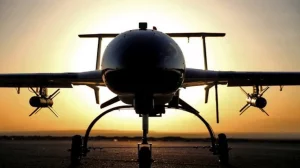
For anyone asking what the U.S. military is doing in Africa right now, the clearest answer is Somalia. AFRICOM confirmed a new airstrike on al-Shabaab near Sablaale, roughly 190 kilometers southwest of Mogadishu, and a separate strike near Qumbi, about 88 kilometers northwest of Kismayo, both carried out in coordination with Somalia’s federal government in the past two weeks.
These operations are part of a much larger pattern. According to AFRICOM’s own count, the command conducted 63 declared strikes in Somalia in 2026 through late May, following a record 125 airstrikes in 2025, itself the highest annual total in the command’s history. That surge followed a directive from the Defense Secretary that gave AFRICOM commanders greater authority to approve strikes without needing sign-off from Washington each time.
Us Africa Command strikes in Somalia have mainly targeted al-Shabaab, the al-Qaida affiliate that still controls large parts of southern and central Somalia, along with occasional strikes on ISIS-Somalia positions in the Puntland region’s Golis Mountains. AFRICOM maintains that its strike process is designed to comply with the law of armed conflict and includes a formal civilian harm assessment process, though independent verification is often difficult in areas al-Shabaab controls.
Beyond Somalia, AFRICOM has been expanding its security partnerships elsewhere on the continent. Morocco and AFRICOM recently signed an agreement to establish an Africa Multidomain Training and Experimentation Center, and the command has also been building out state partnership programs, including a recent agreement pairing the Ohio National Guard with Angola’s armed forces.
Quotes
AFRICOM’s public affairs office has kept its statements on the Somalia strikes narrow and consistent, saying the command “alongside the Federal Government of Somalia and Somali Armed Forces, continues to take action to degrade al-Shabaab’s ability to threaten U.S. forces and our citizens abroad.” The command has also said it will not release specific details about units or assets involved, citing operational security.
A retired AFRICOM official quoted in a 2012 Stuttgart briefing described the command’s original approach as maintaining a “light footprint” on the continent, favoring partnerships and training over permanent U.S. bases. That description still shapes how AFRICOM presents its work today, even as strike numbers have climbed well beyond what officials anticipated in the command’s early years.
Officials involved in the shift toward the “American First Global Health Strategy” have framed the move away from USAID as a matter of shifting responsibility rather than abandoning the continent, arguing that new bilateral health pacts represent “a near like-for-like replacement” for the programming USAID used to run.
Impact
The regional impact of sustained Us Africa Command strikes in Somalia is significant, both for the security situation and for civilians caught in contested areas. Reports have surfaced of civilian casualties tied to strikes in Lower Shabelle towns such as Farsoley and Kuntuwarey, though journalists have not been able to independently verify the claims because al-Shabaab restricts access to the areas affected.
The wider shift in U.S. Africa policy carries its own consequences. Washington effectively dismantled USAID in 2025, and by early 2026 it began ending remaining aid programs across seven African countries, including Somalia itself, on the grounds that the assistance lacked a clear link to U.S. national interests. Researchers have warned the cuts could push millions more Africans into poverty and increase preventable deaths from HIV, malaria, and tuberculosis.
At the same time, the administration has moved to replace some of that funding with new bilateral health agreements, now totaling roughly $16 billion across more than a dozen countries, with the largest deals signed with Nigeria and Kenya. This has fed into a broader conversation, echoed in recent Al Jazeera reporting on Africa’s shifting security priorities, about whether framing African development primarily through a security lens serves the continent’s long-term interests or simply reflects Washington’s own strategic calculations.
For those interested in AFRICOM careers, the command continues to recruit both military personnel and civilians, including Foreign Area Officers. The Africom FAO track trains officers in regional expertise, language skills, and political-military affairs, preparing them for work embedded with U.S. embassies and partner militaries across the continent. AFRICOM jobs in Somalia specifically tend to run through the Foreign Government of Somalia’s Somali National Army, U.S. embassy security cooperation offices in Mogadishu, or the wider East Africa Response Force footprint rather than large-scale troop deployments.
Conclusion
With strikes in Somalia continuing at a steady pace and USAID’s replacement programs still taking shape, AFRICOM’s posture over the next year will likely keep balancing two roles at once: a security-focused counterterrorism mission built around Somalia, and a slower rebuilding of America’s development relationships across the rest of the continent. Congress is expected to keep close watch on both the pace of strikes and the size of new health pacts as it reviews AFRICOM’s budget request later this year.
Expect that dual track to keep showing up in Africom news today coverage going forward: periodic strike announcements out of Somalia, alongside new partnership agreements and health deals rolled out state by state.
Frequently Asked Questions
What is the safest country in Africa?
Mauritius is consistently ranked as one of the safest countries in Africa on major global peace and safety indices, thanks to its low crime rates, political stability, and strong governance institutions. Other countries frequently cited among the continent’s safest include Botswana, Ghana, and Rwanda, each of which has built a reputation for relative political stability and effective policing compared to regional averages. It’s worth noting that safety rankings can vary depending on the index used, since some focus more heavily on violent crime while others weigh political stability, terrorism risk, or civil unrest more heavily.
What is the shield of Africa?
“Africa Shield” is not a single official program but a phrase increasingly used in security and development discussions to describe the growing trend of framing African development, infrastructure, and governance support primarily as a security priority for Western partners, including the United States. Recent reporting, including coverage from Al Jazeera, has examined how this shift changes the way aid, military cooperation, and development funding get justified and allocated, often tying assistance more explicitly to counterterrorism and strategic competition goals rather than humanitarian need alone. Critics argue this framing can distort priorities toward security-linked nations while others see it as a pragmatic response to real instability across parts of the continent.
What are the USAID projects in Africa?
Before its dismantling in 2025, USAID ran large-scale programs across sub-Saharan Africa covering HIV/AIDS treatment through PEPFAR, malaria and tuberculosis prevention, maternal and child health, food security, and democracy and governance support, with sub-Saharan Africa receiving over $12 billion in a single recent fiscal year alone. Many of these programs have since been terminated or scaled back significantly, with seven African countries, including Somalia, Mali, and Niger, losing their remaining USAID-funded programs entirely by early 2026. In their place, the U.S. has begun signing new bilateral health agreements under an “American First Global Health Strategy,” with deals already reached with countries including Nigeria, Kenya, Ethiopia, and Côte d’Ivoire, though researchers caution these new pacts have not yet fully replaced the scope of what USAID previously funded.