

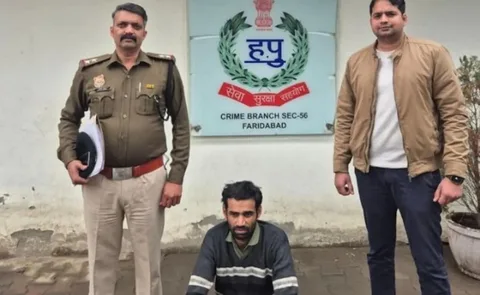
A man in Gujrat, Pakistan, who raped his own daughter, was later murdered by the very accomplices who helped him commit the crime. The case, reported by Dawn News, sent shockwaves across Pakistan and once again forced the public to confront brutal questions about criminal behavior, the failures of the justice system, and the deep problems that plague criminal investigation in Pakistan. This story is not just about one man’s fate. It is a mirror held up to a society where crimes go unreported, investigations stall, and justice often arrives too late or in the wrong hands.
Background: What Happened in Gujrat
According to reports published by Dawn, the accused had sexually assaulted his own daughter an act of depravity that shocked even those familiar with Pakistan’s rising crime statistics. What makes this case uniquely disturbing is that the man was not brought to justice by the state. He was killed by his own accomplices, the same individuals who had participated in or facilitated his crimes.
This vigilante outcome points to a system under severe strain. When people do not trust formal criminal investigation mechanisms, they seek their own conclusions. The Gujrat incident is not isolated. It reflects patterns seen repeatedly across Pakistan’s provinces, where the Crime Investigation Department struggles to respond effectively, victims remain silent out of fear, and criminals sometimes meet their end at the hands of those they once trusted.
Criminal Investigation in Pakistan: A Broken System?
To understand why cases like Gujrat happen, one must first understand what criminal investigation in Pakistan actually looks like and where it falls apart.
Criminal investigation definition, in its simplest form, refers to the official process of gathering facts, evidence, and information to identify, locate, and prove the guilt of a person suspected of committing a crime. It is a structured process guided by law, forensics, and interviewing techniques. But in Pakistan, this definition often collides head-on with ground realities.
The principles of criminal investigation in Pakistan objectivity, thoroughness, speed, and legality are taught in law enforcement academies and documented in training materials, including widely circulated criminal investigation PDFs used by the Police Service of Pakistan. However, the gap between what is taught and what is practiced remains alarmingly wide.
The Crime Investigation Department in Pakistan, often referred to as the CID, operates under provincial police setups. Each province has its own CID branch responsible for gathering intelligence, investigating serious crimes, and maintaining records on repeat offenders. Despite this structure, the CID frequently faces criticism for being understaffed, politically influenced, and poorly equipped to handle modern criminal behavior.
The Four Types of Crime And Where Pakistan Stands
When examining major crimes in Pakistan, criminologists typically refer to four broad categories of crime that define the introduction to criminal investigation frameworks used worldwide.
The first type is violent crime, which includes murder, assault, rape, and armed robbery. Pakistan’s violent crime rates, particularly in cities like Karachi, Lahore, and Quetta, remain a persistent concern. Cases like the Gujrat rape and murder fall squarely within this category and represent the most urgent demands on criminal investigation resources.
The second type is property crime, which covers theft, burglary, vehicle snatching, and fraud. Pakistan’s urban centers experience high rates of vehicle and mobile phone snatching, often linked to organized criminal networks.
The third category is white-collar crime, which includes corruption, embezzlement, money laundering, and financial fraud. Pakistan ranks poorly on global corruption indices, and the investigation of white-collar crime remains one of the most underdeveloped areas of the country’s law enforcement system.
The fourth is cyber crime, which has rapidly emerged as one of the most significant and fastest-growing categories of criminal activity in Pakistan. The rise of internet penetration, social media use, and digital financial services has created new opportunities for criminals and new challenges for investigators.
Cyber Crime Pakistan: The Digital Threat No One Is Ready For
Cyber crime in Pakistan has grown at a rate that law enforcement agencies have struggled to match. From online harassment and financial scams to hacking, child exploitation, and digital blackmail, the range of cyber offenses being reported to the Federal Investigation Agency has increased dramatically year on year.
Pakistan established the Prevention of Electronic Crimes Act (PECA) 2016 to address digital offenses. The FIA’s Cyber Crime Wing handles investigations under this law. But critics argue that the law has been unevenly applied sometimes used aggressively against journalists and political dissidents while failing to protect ordinary citizens from fraud, harassment, and extortion conducted online.
The investigation of cyber crime in Pakistan requires specialized training, digital forensics tools, and international cooperation three things that the current system provides only partially. Cases involving overseas perpetrators, encrypted communications, or cryptocurrency transactions are especially difficult to prosecute. The introduction to criminal investigation for cyber cases demands entirely different tools than traditional policing, and Pakistan’s law enforcement apparatus is still in the early stages of adapting.
Problems of Criminal Investigation in Pakistan
The problems of criminal investigation in Pakistan are well-documented in academic literature, legal reviews, and government reform reports. They are also, unfortunately, visible in almost every major criminal case that makes headlines.
Political interference remains one of the most damaging forces undermining criminal investigation. Powerful suspects are frequently shielded from accountability, cases against influential individuals are quietly closed, and investigators who push too hard sometimes find themselves transferred or threatened.
Forensic limitations are another critical challenge. Pakistan’s forensic science infrastructure is limited. Many districts do not have access to modern crime scene analysis tools, DNA testing facilities, or digital forensics laboratories. Evidence collected improperly or stored inadequately often fails to hold up in court, allowing guilty parties to walk free on technical grounds.
Witness intimidation is rampant, particularly in cases involving organized crime, tribal disputes, or crimes committed by politically connected individuals. Witnesses in murder and rape cases frequently retract their statements out of fear, leaving investigators without the testimonial support they need to secure convictions.
Delayed justice compounds every other problem. Pakistan’s judicial backlog means that cases can take years or even decades to reach a verdict. This delay demoralizes victims, emboldens criminals, and reduces public confidence in the formal investigation and prosecution system.
What Is the FBI Called in Pakistan?
Many people unfamiliar with Pakistan’s law enforcement structure ask: what is the FBI called in Pakistan? The closest equivalent to the American FBI is the Federal Investigation Agency (FIA). Established under the Federal Investigation Agency Act of 1974, the FIA operates at the federal level and handles cases involving national security, human trafficking, immigration violations, financial fraud, and cyber crime.
The FIA does not handle routine criminal cases, which remain under the jurisdiction of provincial police forces. However, for high-profile, cross-provincial, or internationally linked cases, the FIA takes the lead. Its Cyber Crime Wing is specifically tasked with investigating digital offenses under PECA 2016.
In addition to the FIA, Pakistan also has the National Accountability Bureau (NAB) for corruption-related investigations, the Intelligence Bureau (IB) for domestic intelligence, and the Inter-Services Intelligence (ISI) for military and strategic intelligence. Together, these agencies form Pakistan’s federal investigative framework though coordination between them is often fragmented.
Quotes and Expert Perspectives
Legal experts and criminologists who study criminal investigation in Pakistan have consistently pointed to the same core problems.
“The fundamental issue is not a lack of laws Pakistan has plenty of laws on paper,” said one Lahore-based criminal lawyer in a widely cited interview. “The issue is enforcement. Investigators lack training, resources, and independence. Until those three things change, no law will make a meaningful difference.”
A former senior official of the Crime Investigation Department, speaking on condition of anonymity, acknowledged that forensic evidence collection remains “decades behind” international standards. “We are solving murders with the same methods used fifty years ago,” he said. “The world has moved to digital forensics and data analysis. We are still relying on witnesses who can be bought or scared away.”
Human rights organizations have also raised alarm about the treatment of rape survivors within the criminal investigation process. Many victims, particularly in rural areas, face pressure not to report crimes, and those who do often find themselves subjected to humiliating and legally questionable medical examinations that violate their dignity rather than support their case.
Impact: Why This Case Matters Beyond Gujrat
The Gujrat case a rapist killed by his own accomplices carries implications that extend well beyond one district in Punjab.
At the most immediate level, it raises questions about vigilante justice and what happens when communities stop trusting formal institutions. When a criminal is killed outside the legal process, even if that criminal was guilty, it sets a precedent that undermines the rule of law. The accomplices who committed the murder are themselves criminals, and the fact that they may have had reasons to fear exposure does not make their act just.
At a broader level, the case highlights the failure of the criminal investigation system to intervene before violence escalates. If the original crime had been reported, investigated properly, and prosecuted under Pakistan’s rape laws which were strengthened through legislative reforms in 2021 — the story might have had a different ending. The victim might have received justice through the courts. The perpetrator might have faced imprisonment rather than a vigilante death.
At the policy level, this case is one of many that advocates use to argue for urgent reform in how Pakistan investigates crime, protects victims, trains investigators, and prosecutes offenders.
Conclusion: Justice Cannot Be Left to Criminals
The story of Gujrat is, at its core, a story about what happens when institutions fail. When the criminal investigation system in Pakistan cannot be trusted to act swiftly and fairly, when victims have no confidence that reporting a crime will lead to justice, and when perpetrators believe they can act without legal consequence the result is chaos dressed up as resolution.
Criminal investigation in Pakistan needs more than new laws. It needs political will, investment in forensic infrastructure, protection for witnesses and victims, depoliticization of the investigation process, and a serious national conversation about the crimes that communities are still too ashamed or too afraid to report.
The Gujrat case should not be remembered simply as a story about a bad man who met a bad end. It should be remembered as a warning and a demand that the state must do better. Every citizen, regardless of where they live or what they have suffered, deserves the protection of a functional, fair, and fearless criminal investigation system.
FAQs
What is the FBI called in Pakistan?
The closest equivalent to the FBI in Pakistan is the Federal Investigation Agency (FIA), established under the FIA Act of 1974. The FIA operates at the federal level and handles serious national-level crimes including human trafficking, financial fraud, immigration offenses, and cyber crime. Its dedicated Cyber Crime Wing investigates digital offenses under the Prevention of Electronic Crimes Act 2016. Unlike provincial police, the FIA is a federal body and often takes the lead in cases that cross provincial boundaries or involve international connections. While the FIA performs functions similar to the FBI, it operates within a significantly more resource-constrained environment and has faced its own share of criticism regarding selective enforcement and political pressure.
What are the 4 types of crime?
Criminologists and law enforcement professionals generally classify crime into four main categories. The first is violent crime, which includes murder, rape, assault, and robbery offenses that cause direct physical harm to individuals. The second is property crime, which covers theft, burglary, vehicle snatching, and vandalism offenses that target possessions rather than people. The third category is white-collar crime, referring to financially motivated offenses committed by individuals in positions of trust or authority, such as corruption, embezzlement, and fraud. The fourth, and increasingly significant, category is cyber crime, which encompasses all criminal activity conducted through digital devices or the internet, including hacking, online fraud, digital harassment, and child exploitation. Each type requires different investigative techniques, legal frameworks, and enforcement resources.
What are the major crimes in Pakistan?
Pakistan faces a wide and complex range of serious crimes that place significant strain on its criminal investigation system. Murder and violent crime remain among the most frequently reported serious offenses, with Punjab and Karachi recording particularly high numbers. Rape and sexual violence are severely underreported due to social stigma but represent a significant and deeply concerning category of crime, as the Gujrat case illustrates. Kidnapping and abduction, including for ransom and in the context of domestic or tribal disputes, are regularly reported across all provinces. Drug trafficking remains a major challenge given Pakistan’s geographic proximity to Afghanistan, the world’s largest opium producer. Corruption and financial crime affect both public and private sectors and are investigated by the FIA and NAB. Finally, cyber crime has emerged as one of the fastest-growing categories, with the FIA’s Cyber Crime Wing recording thousands of complaints annually related to fraud, blackmail, and online harassment.