
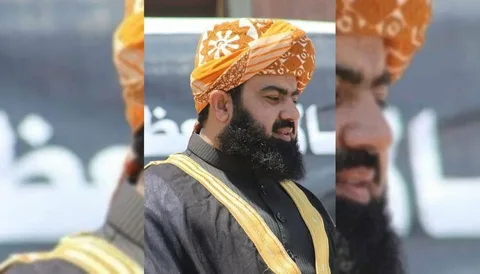
Maulana Fazlur Rehman is one of the most recognizable and influential religious-political figures in Pakistan. As the long-serving chief of Jamiat Ulema-e-Islam-Fazl (JUI-F), he has spent more than three decades shaping the country’s political landscape from coalition governments to opposition movements, from madrassah politics to national economic debates. In 2026, Maulana Fazlur Rehman remains a sitting Member of the National Assembly and continues to command significant political clout across Khyber Pakhtunkhwa and Balochistan.
Who Is Maulana Fazlur Rehman?
Maulana Fazlur Rehman was born on 19 June 1953 in Abdul Khel, in what was then the North-West Frontier Province of Pakistan. He grew up in a deeply religious and politically active household, inheriting both the scholarly traditions and the political ambitions that would come to define his career.
He currently serves as the Emir of Jamiat Ulema-e-Islam (F), a position he has held since 1995, and is a sitting Member of the National Assembly from constituency NA-265, Pishin, having assumed office on 29 February 2024. His political journey stretches back to the late 1980s, and his influence today is arguably stronger than it has ever been in terms of his party’s ideological reach.
Over the years, Maulana Fazlur Rehman has served in almost every major political role Pakistan has to offer opposition leader, parliamentary committee chairman, coalition partner, and protest movement organizer. He is a politician who plays a long game, and that patience has kept him relevant through governments of all kinds.
Maulana Fazlur Rehman Father: The Legacy of Mufti Mahmud
To understand Maulana Fazlur Rehman, you have to understand his father. His father was Mufti Mahmud, the founding figure of the original Jamiat Ulema-e-Islam, who served as Chief Minister of the then-NWFP. Mufti Mahmud was one of the most respected Islamic scholars and politicians of his era, and his death in 1980 left a significant void in Pakistan’s religious-political landscape.
Maulana Mufti Mahmood had two marriages. From his first wife, he had two sons Maulana Fazlur Rehman and Maulana Ataur Rehman. From his second wife, he had three daughters and three sons including Maulana Lutfur Rehman, Hafiz Ziaur Rahman, and Maulana Obaidur Rahman. Maulana Mufti Mahmood passed away on October 14, 1980.
Maulana Fazlur Rehman essentially stepped into his father’s political shoes in the years following Mufti Mahmud’s death. He served as General Secretary of Jamiat Ulema-e-Islam (F) from 1980 to 1995, succeeding his father Mufti Mahmud in that role, before becoming the party’s Emir. His rise was not handed to him he built it steadily, constituency by constituency.
Maulana Fazlur Rehman Firqa: What Sect Does He Belong To?
This is one of the most searched questions about Maulana Fazlur Rehman, and the answer is clear. He belongs to the Deobandi school of Islamic thought, which is the firqa associated with JUI-F and the wider Jamiat Ulema movement across Pakistan. The Deobandi tradition has deep roots in the subcontinent, tracing its origin to the Darul Uloom Deoband seminary established in India in the nineteenth century.
Within Pakistan, the Deobandi firqa has significant representation particularly in Khyber Pakhtunkhwa, Balochistan, and parts of Punjab. Maulana Fazlur Rehman has for decades been its most prominent political voice. His party JUI-F runs an extensive network of madrassahs across the country, and the Deobandi religious identity forms the ideological backbone of both the party’s organization and its voter base.
It is important to note that Maulana Fazlur Rehman himself presents his political positions in broadly Islamic terms rather than exclusively sectarian ones, often engaging across different Muslim schools of thought when political circumstances call for it.
Maulana Fazlur Rehman Wife and Family Life
Maulana Fazlur Rehman is known to be an intensely private person when it comes to his personal and family life. He has not publicly disclosed detailed information about his wife, and there is very little verified information available about her in the public domain. This is consistent with the conservative traditions of many religious-political families in Pakistan, where the private sphere — particularly regarding women — is kept carefully separate from public life.
What is well known, however, is that Maulana Fazlur Rehman has children who have themselves entered public and political life, most notably his son Asad Mehmood. His family comes from the Abdul Khel area of what is now Khyber Pakhtunkhwa, and the family’s political and religious standing in that region spans multiple generations.
Maulana Fazlur Rehman Son: Asad Mehmood
Asad Mehmood, born in 1985 in Abdul Khel, Khyber Pakhtunkhwa, is the son of Maulana Fazlur Rehman and serves as the Muhtamim (Chancellor) of Jamia Qasim-ul-Uloom a position he has held since 2016. He is the most prominent of Maulana Fazlur Rehman’s sons in Pakistani public life.
Asad Mehmood served as the Federal Minister for Communications from April 2022 to August 2023 under Prime Minister Shehbaz Sharif, and was a Member of the National Assembly from August 2018 until August 2023, representing constituency NA-37, Tank.
He also served as Chairman of the National Assembly Standing Committee on Religious Affairs and Inter-faith Harmony and is an alumnus of Khair al-Madaris. Asad Mehmood is widely seen as the political heir to his father’s legacy within JUI-F.
Maulana Fazlur Rehman also has another son, Asjad Mehmood, who contested from NA-41 Lakki Marwat in the 2024 general elections. The presence of both sons in electoral politics underscores the family’s commitment to maintaining a political dynasty in the region.
Maulana Fazlur Rehman Current Position in 2026
Maulana Fazlur Rehman currently holds the position of Emir of Jamiat Ulema-e-Islam (F) and is a sitting Member of the National Assembly of Pakistan from NA-265, Pishin, Balochistan. He assumed this seat on 29 February 2024 following the general elections held earlier that month.
In his current role, Maulana Fazlur Rehman has continued to be vocal on national political matters. He announced that JUI-F would launch peace marches across all four provinces, aiming to bring Pakistanis together on a single platform to safeguard their rights.
He has also rejected the federal Budget 2025-26, stating that imposing multiple taxes does not make a budget admirable and emphasising the need for genuine economic reforms in Pakistan. He remains one of the most active opposition voices in the current parliamentary session, consistently challenging government policy on taxation, economic management, and governance.
Maulana Fazlur Rehman Net Worth
The net worth of Maulana Fazlur Rehman is a subject of considerable public interest and, at times, political controversy. No officially verified or court-declared figure for Maulana Fazlur Rehman’s net worth is publicly available. His asset declarations submitted to the Election Commission of Pakistan include properties, vehicles, and other assets, as required by law for all candidates contesting elections in the country.
His family has been involved in religious education through an extensive network of madrassahs, and his political position has spanned decades in national government and opposition. Critics, including opposition political figures, have at various times alleged that Maulana Fazlur Rehman has accumulated significant wealth over his political career, though these claims remain unverified and disputed by his party.
What can be said with confidence is that Maulana Fazlur Rehman comes from a family that has wielded significant political and religious influence for over half a century in Pakistan, and that influence itself carries considerable social and institutional capital in Pakistani politics.
Maulana Fazlur Rehman Political Party: JUI-F
The political party of Maulana Fazlur Rehman is Jamiat Ulema-e-Islam-Fazl, widely known as JUI-F. It is one of Pakistan’s major religious political parties and has been particularly dominant in the tribal belt areas of Khyber Pakhtunkhwa and in Balochistan.
Maulana Fazlur Rehman also served as President of the Pakistan Democratic Movement from September 2020 to September 2023 the broad opposition alliance that united multiple parties against the PTI government of Imran Khan. That coalition, which included the Pakistan Muslim League-Nawaz and the Pakistan Peoples Party among others, was one of the most significant opposition configurations in recent Pakistani political history.
Earlier in his career, he served as Leader of the Opposition in Pakistan’s National Assembly from March 2004 to November 2007, during the government of President Pervez Musharraf and Prime Minister Shaukat Aziz.
Maulana Fazlur Rehman Latest News 2026
Maulana Fazlur Rehman has recently met with Jamaat-e-Islami chief Hafiz Naeem ur Rehman at JI headquarters Mansoorah in Lahore. During the meeting, the two leaders discussed the overall political situation of the country. This meeting reflects ongoing efforts by religious-political parties to coordinate their positions on Pakistan’s current governance challenges.
He has also been critical of the PTI-led government in Khyber Pakhtunkhwa, stating that the provincial administration has lost all significance and is failing its citizens. His criticism of governance in KP remains a consistent theme in his current political messaging.
On the foreign policy front, Maulana Fazlur Rehman had previously visited Kabul to meet with top Taliban leaders in an attempt to revive ties between Pakistan and Afghanistan, a visit that underscored his unique position as a religious and political bridge figure between the two countries.
Maulana Fazlur Rehman Contact Number
Many people search for Maulana Fazlur Rehman’s personal contact number online. It must be stated clearly that no verified personal contact number for Maulana Fazlur Rehman is publicly available or should be publicly circulated. Sharing personal phone numbers of public officials without authorization raises serious privacy and security concerns.
If you need to contact Maulana Fazlur Rehman or JUI-F for official, journalistic, or political purposes, the appropriate channel is through the official JUI-F party office in Islamabad or Dera Ismail Khan, or through formal correspondence addressed to his National Assembly office. His party maintains official communication channels through registered party offices in Khyber Pakhtunkhwa and Balochistan.
Impact and Legacy
Maulana Fazlur Rehman’s political relevance after more than three decades in national politics is a remarkable story in Pakistani politics, where careers often end abruptly. He has survived military governments, coalition partnerships, opposition movements, and shifting electoral winds. His ability to mobilize street power was demonstrated strikingly during the 2019 Azadi March, which brought hundreds of thousands of supporters to Islamabad and sustained a sit-in for weeks.
His influence within the Deobandi religious establishment, combined with his grassroots network of madrassahs, gives him a political base that is not easily replicated by other parties. As Pakistan faces continued economic challenges and political instability in 2026, Maulana Fazlur Rehman and JUI-F remain central actors in determining the shape of opposition politics in the country.
Conclusion
Maulana Fazlur Rehman is far more than a religious cleric who entered politics. He is a multi-generational political institution in his own right the son of Mufti Mahmud, the father of Asad Mehmood, the chief of JUI-F, and a figure who has served in virtually every major political role available in Pakistan’s parliamentary system. His current position as a sitting MNA and JUI-F Emir keeps him at the center of Pakistani politics in 2026, where his voice on economic policy, provincial governance, and foreign affairs continues to carry weight. Whether in government or in opposition, Maulana Fazlur Rehman remains one of the most durable and consequential political figures in modern Pakistani history.
Frequently Asked Questions (FAQs)
Who was Fazlur Rahman?
Maulana Fazlur Rehman is a Pakistani Islamic scholar and politician born on 19 June 1953 in Abdul Khel, Khyber Pakhtunkhwa. He is the son of the legendary Mufti Mahmud, founder of Jamiat Ulema-e-Islam. Fazlur Rehman has served as a Member of the National Assembly multiple times since 1988, held positions including Leader of the Opposition and PDM President, and remains one of the most influential voices in Pakistani religious-political life. His career spans more than four decades, making him one of the longest-serving active politicians in the country’s history.
What is the political party of Molana Fazal Rehman?
Maulana Fazlur Rehman’s political party is Jamiat Ulema-e-Islam-Fazl, commonly known as JUI-F. It is a major religious political party in Pakistan rooted in the Deobandi school of Islamic thought. JUI-F has strong electoral support primarily in Khyber Pakhtunkhwa and Balochistan, where it has won National Assembly and provincial assembly seats across multiple general elections. The party also operates an extensive network of Islamic seminaries (madrassahs) across Pakistan, which forms the foundation of its grassroots political organization and voter mobilization.
Who was Fazlur Rahman minister of Pakistan?
Maulana Fazlur Rehman himself has not formally held a federal ministerial portfolio, but his party JUI-F has been part of ruling coalitions that have brought his family members into ministerial roles. Most notably, his son Asad Mehmood served as Federal Minister for Communications from April 2022 to August 2023 in the coalition government of Prime Minister Shehbaz Sharif. Maulana Fazlur Rehman himself has served as Chairman of the Parliamentary Special Committee on Kashmir and Chairman of the Standing Committee on Foreign Affairs, and was Leader of the Opposition in the National Assembly from 2004 to 2007.