Oceans are absorbing more heat than at almost any point on record, and that’s turning into one of the more overlooked pieces of the climate story. Most of the extra warmth trapped by greenhouse gases isn’t staying in the air it’s going straight into the water.
That has real consequences: stronger storms, stressed marine life, and coastal communities dealing with effects that build up slowly and then hit all at once.
Why Ocean Temperatures Matter
Oceans cover most of the planet, and they don’t just sit there they’re doing a lot of the climate’s heavy lifting, soaking up heat like a giant thermal battery.
Researchers have been tracking sea temperatures for decades, and the trend line isn’t subtle. It’s been climbing steadily, and the last several years show up as some of the warmest ever recorded.
This isn’t purely an ocean problem, either. Warmer seas shift rainfall patterns, feed stronger storms, and directly affect the millions of people who live along coastlines.
Why Are Sea Temperatures Rising?
Short answer: greenhouse gases. Burning fossil fuels, industrial pollution, deforestation all of it pushes more carbon dioxide into the atmosphere, and that gas traps heat that would otherwise escape back into space.
A huge chunk of that trapped heat ends up in the ocean. Researchers estimate the ocean has absorbed something like 90% of the extra heat generated by global warming so far. In a strange way, that’s bought land ecosystems some breathing room — but it’s put the ocean itself under serious strain.
Shifting weather patterns compound the problem. Heat waves, weaker ocean cooling cycles, and changing currents can all push regional sea temperatures even higher.
What the Long-Term Temperature Records Show
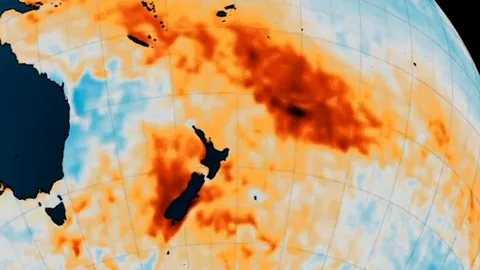
Ocean temperature records paint a fairly stark picture: sea temperatures now sit well above where they were a few decades ago, and recent years keep setting new highs.
The warming shows up most obviously at the surface, right where marine life is most sensitive to it. Warmer surface water also means more evaporation, which feeds into storm intensity and rainfall patterns.
This is exactly why climate scientists lean so heavily on ocean temperature data it’s one of the clearest signals available for predicting where the climate is headed.
What Recent Coverage Has Highlighted
Recent reporting on ocean temperatures including coverage from outlets like the BBC has kept the spotlight on just how unusual current sea temperatures really are.
Rising ocean heat has become one of the go-to indicators researchers point to when discussing climate change, largely because its effects are so visible: bleached coral reefs, shifting fish populations, and weather patterns that don’t behave the way they used to.
The open question researchers are still working through is how fast this warming will continue, and what interventions could realistically slow it down.
Explaining Ocean Warming Simply
Think of the ocean as a massive water tank that stores heat for the whole planet. When the Earth warms up, that tank warms up right along with it — it just takes longer to notice because water heats and cools more slowly than air.
Understanding that connection matters for younger readers too. Pollution, energy use, and protecting natural ecosystems are all tied together, and small habits cutting back on electricity use, planting trees, reducing waste genuinely add up over time.
Extreme Heat’s Global Reach
Extreme heat isn’t an abstract concept anymore in a lot of places. It’s showing up as longer, more intense heat waves across much of the world, with real effects on human health, agriculture, and ecosystems.
Countries like Pakistan and India have already seen heat events serious enough to raise public health concerns heat-related illness isn’t a future risk in these regions, it’s a current one.
The Basics of Global Warming
Strip it down to the essentials: human activity is pumping heat-trapping gases into the atmosphere faster than natural systems can absorb them, and the planet is warming as a result.
Sunlight reaches Earth as normal, but greenhouse gases keep more of that heat from radiating back out into space than they used to. Over time, that traps enough extra energy to shift global temperatures upward.
The knock-on effects are familiar by now warmer oceans, faster glacier melt, and weather patterns that are getting harder to predict.
How Ocean Heat Shapes the Weather
Oceans don’t just sit passively under the atmosphere they actively feed it energy. Warm water is basically fuel for storms, and when sea temperatures climb, that fuel supply gets bigger.
That’s a big part of why storms can intensify faster than they used to over warmer waters, and it’s exactly why meteorologists watch sea surface temperatures so closely when trying to forecast storm behavior.
How Rising Sea Temperatures Affect the Planet
Coral bleaching is one of the most visible casualties corals lose their color and weaken under sustained heat stress, sometimes beyond the point of recovery.
Marine species are feeling it too. A lot of fish and other sea life are adapted to fairly narrow temperature ranges, and as waters warm, they’re forced to migrate toward cooler areas which disrupts entire food chains along the way.
There’s also a less obvious effect: warmer water physically expands, which adds to sea level rise on top of whatever’s coming from melting ice. Combine that with stronger storms, and coastal communities are looking at compounding risks, not just one problem at a time.
What Scientists Are Saying
The consistent message from climate researchers is that continued emissions mean continued ocean warming there’s not much ambiguity left in the data on that point.
Cutting emissions remains the single biggest lever available for slowing this down. Beyond that, protecting marine ecosystems and reducing pollution can limit some of the damage, even if it can’t reverse what’s already happened.
Where This Is Headed
How bad things get from here really does depend on decisions still being made by governments, industries, and individual communities.
If emissions keep climbing, expect more extreme weather, hotter average temperatures, and mounting pressure on ecosystems that are already stretched thin. Cutting emissions and investing seriously in clean energy would change that trajectory, though the window for that keeps narrowing.
This isn’t just about temperature records on a chart. It’s about food supplies, public health, wildlife, and communities that are already dealing with the consequences.
Conclusion
Sea temperatures are rising because human activity keeps adding greenhouse gases to the atmosphere, and the ocean is absorbing most of the resulting heat. The effects are already visible in weather patterns, marine ecosystems, and coastal communities.
Scientists aren’t done tracking this. The trend lines will keep getting updated, and so will the urgency of the conversation around what to do about it.
FAQs
Can a human survive 40°C?
Yes but it’s not comfortable, and it can turn dangerous fast, especially with high humidity, dehydration, prolonged exposure, or physical exertion added in. The body has to work harder to regulate its temperature, and without enough water or shade, heat exhaustion or heat stroke become real risks.
Is the Earth hotter now than 100 years ago?
Yes, clearly. Global temperature records show a steady rise tied to increasing greenhouse gas emissions, and that warming shows up across oceans, land, and ice. Several of the hottest years on record have happened recently.
Which is the hottest sea on Earth?
The Red Sea is usually the one that comes up its location in a hot climate zone combined with limited water exchange pushes its temperatures higher than most other seas. That said, sea temperatures shift with the seasons and location, so this isn’t a fixed ranking.