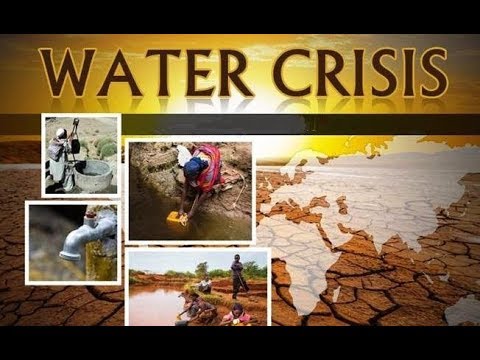
Pakistan Is Running Out of Time and Water
Pakistan is facing one of the most severe water crises in its history. Annual per capita water availability has plummeted from about 5,600 cubic meters in 1947 to just 930 cubic meters in 2023 dangerously below the internationally recognized water scarcity thresholdThe water crisis in Pakistan is no longer a future warning it is a present emergency hitting millions of families every single day.
Background: How Bad Is Pakistan’s Water Crisis?
The water crisis in Pakistan has been building for decades, but recent years have pushed it to a breaking point. Pakistan ranks third in the world among countries facing acute water shortages, and reports by the UNDP and Pakistan Council of Research in Water Resources (PCRWR) warn that the country is approaching absolute water scarcity.
The country ranks 14th among the 17 ‘extremely high water risk’ countries in the world a list that includes hot and dry nations like Saudi Arabia. Over 80 percent of the total population faces severe water scarcity for at least one month of the year.
Pakistan water scarcity statistics paint a deeply alarming picture. Per capita annual water availability has reduced from 1,500 cubic meters in 2009 to 1,017 cubic meters in 2021, and the demand-supply gap is projected to reach approximately 83 million acre-feet.These figures make the water crisis in Pakistan one of the most critical governance and survival challenges of our era.
Major Causes of the Water Crisis in Pakistan
1. Population Explosion
One of the biggest causes of the water crisis in Pakistan is unchecked population growth. Between 1972 and 2020, Pakistan’s population increased by 2.6 times, moving it in rank from 9th to 5th most populous. Total water resources remained static at 246.8 billion cubic meters, resulting in a steep decline in per capita water resources.
More people means more demand but the supply has stayed the same. This mismatch is at the core of Pakistan’s water scarcity crisis.
2. Climate Change and Extreme Weather
Climate change is drastically worsening the water crisis in Pakistan. Climate change is amplifying Pakistan’s water stress, making dry seasons drier and wet seasons wetter a recipe for sustained crisis. Floods devastate infrastructure, displace millions, and contaminate freshwater supplies.Last winter was one of the driest in the country’s history, with Pakistan Meteorological Department reporting 67% less rainfall than usual.Sindh recorded a 90% rainfall reduction a catastrophic blow to an already struggling region.
3. Governance Failure and Mismanagement
Experts consistently highlight poor governance as a root cause. The Asian Development Bank placed Pakistan near the bottom of regional water security rankings, underscoring that the country’s water crisis stems less from absolute scarcity and more from persistent governance failure.
As one prominent economist stated, “We do not have a water crisis; we have a failure of governance with regard to water issues.”Policies are made but rarely implemented leaving millions without reliable water access year after year.
4. Extremely Low Water Storage Capacity
Pakistan’s dam infrastructure is dangerously inadequate. Pakistan has dams that reserve water only for 30 days, while in other South Asian countries it is far more in India, for example, storage capacity covers 220 days.This critical weakness means floodwater is lost to the sea rather than stored for dry spells.
5. Agricultural Overuse
Agriculture consumes about 90% of Pakistan’s freshwater withdrawals, according to the World BankMost of this water is used inefficiently through flood irrigation methods that waste enormous amounts. The water crisis in Pakistan is deeply linked to how the agricultural sector uses and misuses its most precious resource.
6. Indus Waters Treaty Suspension
A major new trigger has worsened the water crisis in Pakistan dramatically. India’s Prime Minister Narendra Modi suspended the 1960 Indus Waters Treaty following military tensions in April 2025, pledging that India’s water would be used for India’s interests alone.
The treaty gave Pakistan exclusive rights to the Indus, Jhelum, and Chenab rivers, which together provide over 80 percent of Pakistan’s irrigation water and around one-third of its electricity generation capacity.This suspension has sent shockwaves through Pakistan’s economy, agriculture, and national security.
Effects of the Water Crisis in Pakistan
Food and Agriculture at Risk
Water scarcity in Pakistan directly threatens food production. About 90 percent of Pakistan’s agricultural production comes from land irrigated by the Indus Basin Irrigation System, firmly linking national food security to water availability.
As Pakistan relies on the Indus Basin’s water for around 90% of its agriculture, any disruption to this supply could severely limit farming, causing people to lose both livelihoods and access to indispensable crops.
Public Health Collapse
The water crisis in Pakistan is also a public health crisis. In rural Sindh, women and children travel long distances to collect saline and contaminated water. In cities, reliance on water tankers has surged beyond affordability. Only about a quarter of Sindh’s population has access to safely managed drinking water, while waterborne diseases are increasing silently.
Economic Damage
Because of an unstable hydropower system, Pakistan relies heavily on coal imports. A lack of water could increase coal imports further at a time when around 60% of Pakistan’s GDP is already burdened by debtThis additional economic strain makes recovery even harder for an already fragile economy.
Energy Crisis
The Indus rivers provide around one-third of Pakistan’s electricity generation capacity.Any reduction in water flows directly hits hydropower output, leading to greater load shedding and energy poverty problems Pakistan has struggled with for years.
Inter-Provincial Tensions
The water crisis in Pakistan is also tearing at national unity. Long-standing inter-provincial distrust over water allocation erupted into mass protests in 2025, as Sindh confronted an existential crisis spanning agriculture, access to drinking water, coastal survival, and deteriorating infrastructure.
Expert Quotes on Pakistan’s Water Crisis
Michael Kugelman, a leading South Asia policy analyst, warned: “Simply blaming previous governments, or blaming India, for the crisis won’t solve anything. Pakistan’s leaders and stakeholders need to take ownership of this challenge.”
The Asian Water Development Outlook report reinforced this: Pakistan’s water crisis stems not just from scarcity, but from the “growing unsafety of its water and the inequitable, opaque systems through which it is governed.”
Solutions to the Water Crisis in Pakistan
Build New Dams and Reservoirs
Pakistan urgently needs more water storage. Given the alarming water crisis situation, building new dams cannot be ignored procrastination would prove a death-knell.More dams would allow seasonal floodwaters to be stored and used throughout the year.
Adopt Efficient Irrigation
Drip and sprinkler irrigation techniques have shown high effectiveness in conserving water. However, it remains a challenge to make their use widespread across all agricultural areas Expanding these technologies is one of the most impactful solutions to water scarcity in Pakistan.
Strengthen Water Governance
Water must be recognized and governed explicitly as a natioal security issue with country-level consensus not merely as a sectoral or engineering concern.Transparent data, constitutional consensus, and enforceable policies are essential.
Community-Level Interventions
NGOs are already playing a role. Ek Plate Biryani installed more than 600 hand pumps across Thar by end of 2024, each providing 50 to 100 people with safe drinking water daily. WaterAid Pakistan also announced a 2023–2028 strategy to accelerate water and sanitation progress across the country.
Diplomatic Solutions for the Indus Treaty
Imperative next steps include community mobilization, practical legislation, dam building, water conservation, and diplomatic negotiations between Pakistan and India to restore or renegotiate the Indus Waters Treaty framework.
Impact: Regional and Global Consequences
Pakistan’s water crisis does not stop at its borders. Water scarcity in Pakistan is not just a domestic issue but a regional geopolitical flashpoint.With over 220 million people at risk, a collapse of Pakistan’s water system could trigger mass displacement, regional conflict, and a global food supply disruption as Pakistan is a major agricultural exporter.
Per the International Organisation for Migration, Pakistan is predicted to slip into absolute water scarcity by 2035 a frightening prospect for the world’s fifth most populous country.
Conclusion: Pakistan’s Water Future Depends on Action Now
The water crisis in Pakistan is a compound emergency rooted in climate change, poor governance, population growth, and geopolitical tension. Without urgent and coordinated action, Pakistan water scarcity statistics will only get worse. Every delayed decision costs lives, livelihoods, and Pakistan’s long-term stability.
The lesson of 2025 is clear: Pakistan’s water crisis is no longer defined by scarcity alone, but by the growing unsafety of its water and the inequitable, opaque systems through which it is governed.The time for half-measures is over. Pakistan needs bold water policy, strong governance, modern infrastructure, and regional diplomacy starting now.
FAQs
Why is there a water crisis in Pakistan?
The water crisis in Pakistan is caused by a combination of rapid population growth, climate change, extremely low dam storage capacity, inefficient agricultural water use, poor governance, and increasing geopolitical tensions over the Indus Waters Treaty. Pakistan water scarcity statistics show per capita water availability has dropped from 5,600 cubic meters in 1947 to just 930 cubic meters in 2023.
How did India stop water to Pakistan?
In April 2025, following military tensions triggered by the Pahalgam attack in Indian-occupied Kashmir, India’s Prime Minister Modi announced the suspension of the 1960 Indus Waters Treaty. This treaty historically guaranteed Pakistan’s right to water from the Indus, Jhelum, and Chenab rivers. While India currently lacks the infrastructure to fully cut off water flows immediately, the suspension poses a serious long-term threat to Pakistan’s agriculture, hydropower, and drinking water supply.
Will Pakistan face a water shortage?
Pakistan is already facing a water shortage. According to the International Organisation for Migration, Pakistan is projected to reach absolute water scarcity by 2035. With demand outpacing supply, groundwater being rapidly depleted, and the Indus Waters Treaty now suspended, the water crisis in Pakistan is expected to worsen significantly unless major structural reforms and diplomatic solutions are implemented.