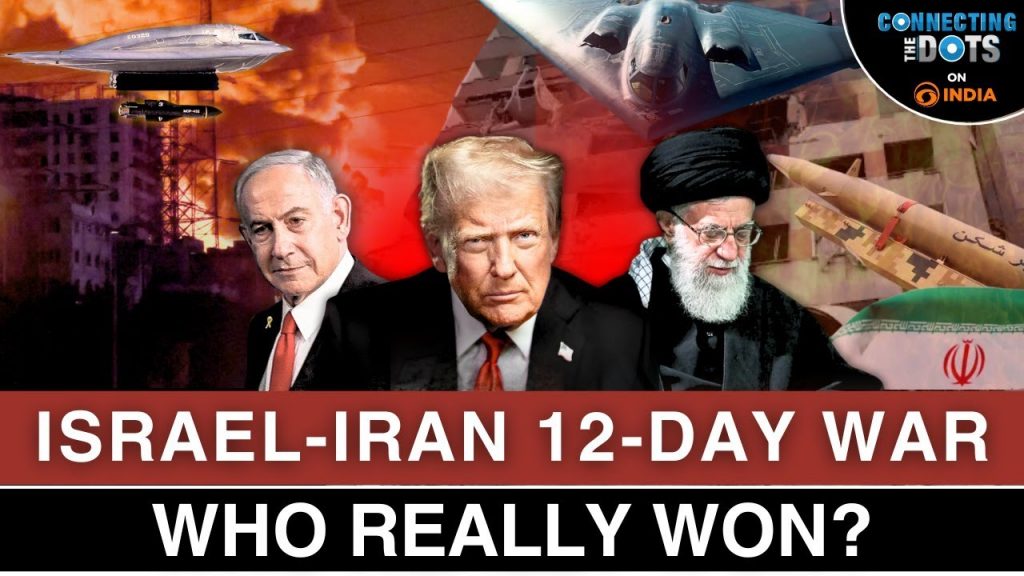

Forty days into one of the most consequential military conflicts of this century, the US-Iran war has reached a fragile ceasefire and both sides are already claiming victory. The United States and Iran agreed to a two-week truce on Tuesday, just an hour before Trump’s deadline to escalate the conflict expired.The real question gripping the world right now is simple and brutal: in the Iran vs USA live confrontation that has shaken global markets, closed a critical waterway, and killed thousands who is actually winning?
The answer, as this opinion piece argues, is deeply uncomfortable for Washington.
BACKGROUND
How This War Started
The road to the US-Iran war did not begin on February 28, 2026. Tensions had been building for years through the 2023 Gaza crisis, the 2024 missile exchanges between Iran and Israel, and the Twelve-Day War of June 2025. In January 2026, Iranian security forces massacred thousands of protesters in a crackdown on the largest Iranian protests since the 1979 Islamic Revolution.
US President Donald Trump responded by threatening military action against Iran and starting the largest US military buildup in the region since the 2003 invasion of Iraq.Then, on February 28, the dam broke. The United States and Israel launched airstrikes on Iran, targeting military and government sites, assassinating Supreme Leader Ali Khamenei and several other Iranian officials, and inflicting civilian casualties.Iran did not crumble. It hit back hard and the world has not been the same since.
DETAILS
The Ceasefire: Victory or Retreat?
The United States and Iran separately claimed victory after President Donald Trump agreed to pause strikes against Iran for two weeks. The White House insisted the campaign was a success. White House Press Secretary Karoline Leavitt said the military campaign achieved its goals, rejecting the idea of a retreat, and described the ceasefire as a calculated move that created leverage for diplomacy.
Iran told a very different story. Iranian leaders in Tehran projected a feeling of pride, telling the public that the conflict was ending “on Iran’s terms.” Street celebrations broke out in Tehran and Baghdad. Analyst Trita Parsi had a blunter read: he described the ceasefire as a strategic retreat by Trump, arguing the conflict had become an absolute disaster and forced the White House to seek a way out.
The Iran war news update today does not point to a clean American win. It points to a messy stalemate with enormous costs on all sides.
The Strait of Hormuz: Iran’s Most Powerful Weapon
If there is one moment that crystallized who holds leverage in the Iran vs USA live confrontation, it was Iran’s closure of the Strait of Hormuz. Iran responded to US-Israeli airstrikes by closing the Strait of Hormuz, disrupting global trade.This single act sent oil prices surging and rattled economies from Tokyo to Frankfurt.
The Iran war bridge between military power and economic warfare was built precisely here in those narrow waters through which a fifth of the world’s oil flows. Under the ceasefire agreement, safe passage through the strategic waterway will be ensured for two weeks, with Iran and Oman allowed to charge transit fees on passing ships, and Tehran planning to use the revenue for post-war reconstruction.
Iran essentially extracted a fee from the world’s shipping lanes and got it written into a ceasefire deal.
The Iran War Pilot Rescue: A Story of Limits
One of the most dramatic episodes of the entire conflict was the Iran war pilot rescue story that gripped the world in early April. On April 3, an American F-15E Strike Eagle was shot down by Iran with a shoulder-fired missile over western Iran. The two crew members ejected and landed in Iranian territory.
The pilot was rescued by US forces hours after the crash. The weapon systems officer, who held the rank of colonel, escaped into the Zagros Mountains, and was later recovered on April 5 after a heavy firefight involving hundreds of US soldiers and dozens of aircraft described as one of the most challenging rescue operations in US military history.
The fact that a shoulder-fired missile a relatively low-tech weapon brought down a frontline US fighter jet was not lost on military analysts. Some US analysts considered the downing of the F-15E, followed by the destruction of several rescue aircraft, as evidence of the limitations of US air superiority. The Iran war pilot drama underscored a painful truth: technological dominance does not guarantee immunity.
US Casualties: The Numbers Washington Doesn’t Want to Shout
The US-Iran war live casualty picture is more serious than official briefings suggest. Thirteen American service members have died in the war since the US and Israel launched initial military strikes on February 28, with approximately 373 more US service members wounded in the conflict.
However, independent reporting suggests the real figure may be higher. At least 15 US troops in the Middle East have died since the beginning of the Iran war, with more than 520 US personnel also injured. The Pentagon has continued to peddle what one defense official described as misleading casualty figures from the Iran war, even after reporting on what was called a casualty cover-up.
Secretary of War Pete Hegseth revealed that Iran fired hundreds of missiles and one-way attack drones at a US aircraft carrier, the USS Abraham Lincoln, and never got close with every shot being intercepted miles away.That is a genuine American success. But it does not erase the dead, the wounded, or the $44 billion price tag.
Iran’s Own Costs
Iran has paid a devastating price. At least 2,076 people have been killed by US-Israeli attacks on Iran since February 28, with over 26,500 injured, including at least 4,000 women and 1,621 children.Airstrikes damaged military bases, government facilities, schools, hospitals, and cultural heritage sites.
Supreme Leader Ali Khamenei is dead. Iran’s nuclear facilities have been struck. Its air force has been dramatically degraded. By any purely military measure, the United States and Israel have hit Iran harder than Iran has hit them. The question is whether that military damage translates into the political and strategic victory Washington claimed it sought.
QUOTES
“Trump is a military moron. His war, with a price tag of $44 billion and $4+ gas, made us worse off today than we were when he started it.” Senate Minority Leader Chuck Schumer, April 8, 2026
“Fundamentally, we’re in a good spot. They’re reopening the straits. We have a ceasefire. And frankly, if they break their end of the bargain, they’re going to see some serious consequences.” Vice President JD Vance, April 8, 2026
“The scale of the killing and destruction in Lebanon today is nothing short of horrific. Such carnage, within hours of agreeing to a ceasefire with Iran, defies belief.” UN High Commissioner for Human Rights Volker Türk, April 8, 2026
IMPACT
Global and Regional Consequences
The US-Iran war has shaken the world far beyond the battlefield. Oil prices have surged, global shipping costs have risen sharply, and supply chains across Asia and Europe have been disrupted by the Hormuz closure. In China, gasoline and diesel prices rose significantly following regulatory changes linked to the crisis, as Beijing urged all parties to find a diplomatic resolution.
Qatar warned that the war was approaching a stage where it could no longer be contained, with its Foreign Ministry urging all parties to find a resolution before it was too late.Gulf states that host US military bases have been caught in the crossfire. The UAE reported that 17 Iranian missiles and 35 drones targeted its territory despite the ceasefire, while Kuwait reported that at least 28 Iranian drones damaged power and desalination plants as well as oil facilities, hours after the truce came into effect.
The ceasefire is fragile. The region is exhausted. And the broader question of who controls the Middle East’s security architecture remains completely unresolved.
CONCLUSION
When Will the Iran War End?
The Iran war when will it end question has no clean answer today. Tehran’s ten-point peace proposal includes lifting sanctions, creating a war-loss fund, a potential US troop withdrawal from the Gulf, and recognition of Iran’s right to enrich uranium in exchange for a pledge not to build nuclear weapons and it is unclear whether the US has agreed to any of these proposals.
Talks are set to begin in Islamabad, mediated by Pakistan. The two-week ceasefire window is narrow, tense, and already under strain. Israel’s continued strikes on Lebanon explicitly excluded from the ceasefire risk pulling everything apart before diplomacy can even begin.
As for who is winning the Iran war: the honest answer is that no one is. The US has spent $44 billion, lost 13 or more soldiers, seen gas prices spike above $4, and failed to achieve regime change. Iran has lost its supreme leader, thousands of its citizens, and significant military infrastructure but has survived, closed the Strait of Hormuz, and forced America to the negotiating table on Iranian terms. In that narrow but important sense, survival itself is Iran’s victory.
The world is watching Islamabad. A lot depends on what happens in the next fourteen days.
FAQs
Can the US withdraw from NATO?
Technically yes the United States could withdraw from NATO, though it would be legally and politically complicated. There is no formal mechanism in the NATO treaty that prevents a member from leaving, though the process would require significant diplomatic and legislative steps. President Trump has repeatedly questioned US commitment to NATO, and the Iran war has intensified debate in Washington about the costs of overseas military commitments. As of April 2026, the US remains a full NATO member, and NATO chief Mark Rutte is meeting Trump in Washington this week to discuss the Iran situation and the ongoing war in Ukraine.
How many US soldiers died in the Iran war in 2026?
The US military has officially confirmed 13 American service members killed in the Iran war since operations began on February 28, 2026, with approximately 373 more wounded.However, independent investigators and journalists have reported the true figure may be higher. At least 15 US troops have died according to cross-referenced reports, with more than 520 personnel injured across the region.Critics have accused the Pentagon of undercounting casualties for political reasons.
Why is the US so against Iran?
The US-Iran confrontation has deep roots stretching back to the 1979 Islamic Revolution, when Iran’s new government seized American hostages for 444 days. Since then, the two nations have been in a state of sustained hostility driven by several key factors: Iran’s support for militant groups across the Middle East, its nuclear program, its role in arming groups that have attacked US troops, and its fundamental opposition to US-allied Israel. The Trump administration added several new justifications for the 2026 war from preventing a nuclear weapon to securing Iran’s oil resources and achieving regime change though critics argued many of these justifications shifted repeatedly and lacked a consistent strategic basis.