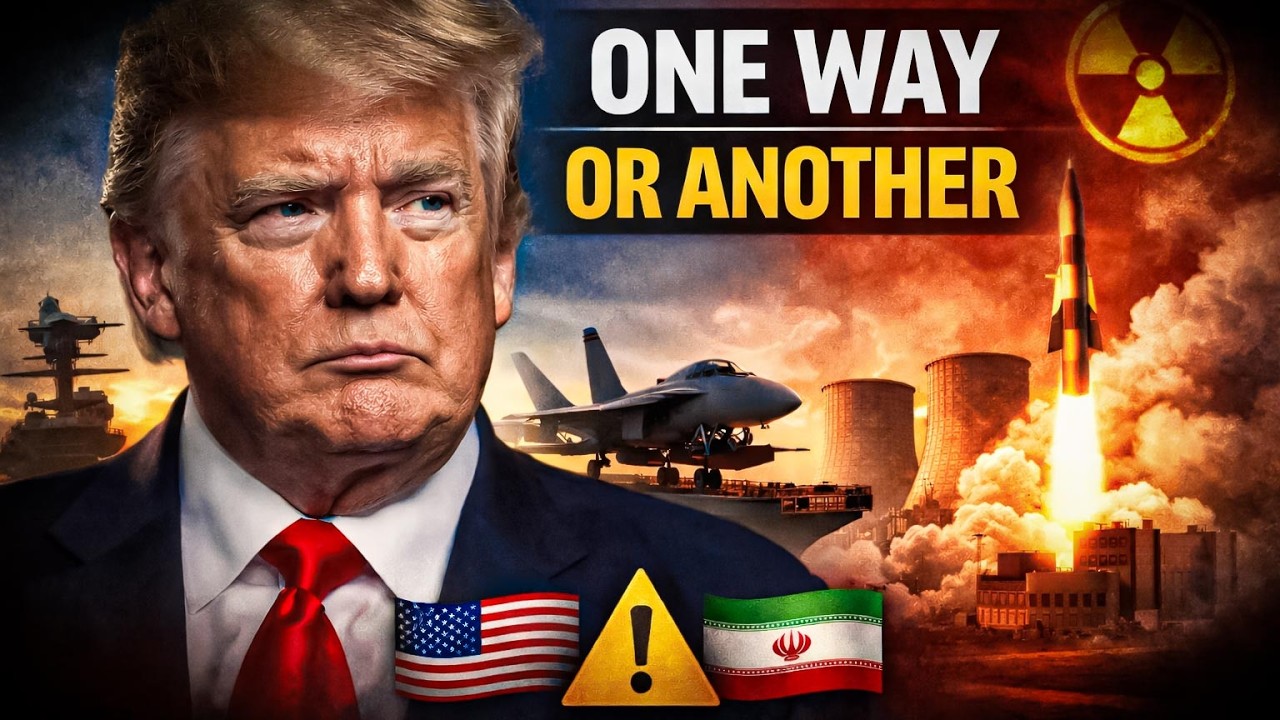
The Trump Iran nuclear deal is back in the headlines, and the timing is not accidental. Renewed political discussions in Washington and growing anxiety over nuclear activity in the Middle East have pushed the question back onto the table should the United States try to revive negotiations with Iran, or stay the course with the pressure-based approach that replaced the agreement years ago?
The debate has sharpened dividing lines in foreign policy circles on both sides of the Atlantic. Diplomacy advocates argue that restoring meaningful communication with Tehran is the only realistic path to reducing regional tension and preventing further escalation. Their critics are just as firm in the opposite direction the previous agreement, in their view, did not stop Iran’s nuclear ambitions, only paused them, and the window for a better outcome is closing.
Background of the JCPOA Iran Deal
The JCPOA Iran deal the Joint Comprehensive Plan of Action came into force in 2015 after years of painstaking multilateral negotiation. The parties were the United States, the United Kingdom, France, Germany, Russia, and China, alongside Iran itself. The core bargain was relatively straightforward in concept, even if the details were anything but: Iran would accept meaningful limits on its nuclear program, and in return, it would get sanctions relief and the economic cooperation that came with it.
For those looking for an “Obama Iran deal explained” summary, the fundamental logic was this rather than risk military confrontation with an Iran that was steadily advancing its nuclear capabilities, the Obama administration chose the diplomatic path, accepting a deal that imposed real but time-limited restrictions in exchange for bringing Iran back into engagement with the international community.
Under the agreement, Iran committed to reducing its uranium enrichment levels and opening its nuclear facilities to regular international inspection. The International Atomic Energy Agency took on the monitoring role, and its early reports generally confirmed that Iran was meeting its core obligations. Critics, however, were never fully satisfied they pointed to expiration clauses on key restrictions and what they characterized as deliberate gaps in the agreement’s scope.
Trump Iran Nuclear Deal Withdrawal Changed Global Politics
Whatever one thought of the JCPOA Iran deal, the Trump Iran nuclear deal decision of 2018 fundamentally changed the game. When former President Donald Trump announced the US withdrawal and the reimposition of comprehensive sanctions against Iran, he was not just walking away from a specific agreement he was signaling a completely different approach to how Washington would handle Iran going forward.
Trump’s language was characteristically direct. He called the JCPOA “the worst deal ever negotiated” and pointed to what he saw as its failure to address Iran’s ballistic missile program and its broader regional military activities areas the agreement had deliberately left untouched. His administration’s position was that economic maximum pressure, rather than diplomatic accommodation, was the only approach Iran would take seriously.
The global reaction was immediate and significant. European allies who had worked to broker the original deal scrambled to keep it alive without American participation. Iran accused Washington of violating its international commitments. Research institutions began documenting the fallout in reports on the impact of U.S. withdrawal from Iran nuclear deal, cataloguing consequences that ranged from oil market instability and renewed diplomatic tensions to escalating economic hardship inside Iran itself.
Tehran’s response was gradual but deliberate — as sanctions bit deeper, Iran began rolling back its compliance with various parts of the nuclear agreement, a process it framed not as aggression but as a proportional response to American bad faith.
Did Iran Violate the JCPOA?
This is probably the most politically charged question in the entire debate, and the honest answer is that it depends significantly on where you start the clock and which political framework you are working from.
Through the early years of the agreement from 2015 through 2018 international inspectors broadly confirmed that Iran was meeting its major obligations. The IAEA’s reports during this period did not indicate significant violations of the core terms.
The picture shifted after the US withdrawal in 2018. Facing reimposed sanctions that were cutting off its access to international banking and oil revenues, Iran began progressively exceeding the enrichment levels and stockpile limits set by the agreement. Western governments characterized this as a clear violation of the JCPOA’s terms. Iranian officials characterized it as a legally justified response to the United States having already violated its own obligations by pulling out.
Experts who have studied the period closely remain divided on how to interpret this sequence. Was Iran’s expansion of enrichment activity a defensive reaction to economic strangulation, or was it evidence of nuclear ambitions that the agreement had only temporarily contained? The answer to that question shapes everything about how someone evaluates the prospects for future negotiations.
Who Negotiated the Iran Nuclear Deal?
The question of who actually sat across the table and built this agreement is worth understanding, because it helps explain both the deal’s strengths and some of the reasons it has proven so politically vulnerable.
On the American side, Secretary of State John Kerry became the public face of the negotiations, putting in an enormous amount of personal diplomatic time and energy into getting the deal across the line. On the Iranian side, Foreign Minister Mohammad Javad Zarif emerged as his counterpart two experienced diplomats who managed to sustain a working relationship through years of difficult and often publicly hostile negotiations.
But the deal was not just a bilateral achievement. European diplomats from the UK, France, and Germany collectively known as the E3 — played an active bridging role throughout. Russian and Chinese representatives brought their own perspectives and leverage to the table. The negotiations themselves moved across multiple locations, with extended sessions in Switzerland becoming particularly associated with the final stretch of talks.
What is often underappreciated is how much domestic political pressure all of the negotiators were operating under throughout this process. Opposition was fierce and vocal in both Washington and Tehran, and bringing a deal home that could survive political scrutiny on both sides was a challenge that shaped every compromise reached along the way.
Was the Iran Nuclear Deal Successful?
Genuinely thoughtful people disagree sharply on this one, and the disagreement is not going to be resolved by pointing to a single metric.
Those who argue the deal worked point to the inspection records. During the period of active implementation, Iran’s enrichment levels came down, its stockpile of enriched uranium was reduced, and IAEA inspectors had access that they had not previously enjoyed. From this perspective, the deal did what it said it would do reduce near-term nuclear risks and create space for diplomacy.
Those who argue it failed make a different kind of argument. The deal did not permanently resolve Iran’s nuclear ambitions it postponed certain capabilities for a defined period while leaving others untouched. It did not address Iran’s missile program, which continued to develop throughout the agreement’s active years. And it did not survive a change of administration in Washington, which raises questions about whether any agreement that depends on sustained US domestic political consensus can be considered durable.
Some analysts make a third argument that cuts across both positions: the deal succeeded on its own terms but was made unsustainable by domestic political conditions in the United States. In this reading, the problem was not the agreement itself but the political environment that surrounded it — an environment in which a hard-fought diplomatic achievement could be unilaterally reversed by the next administration.
Iran Nuclear Deal Obama Legacy Still Shapes US Politics
It is impossible to understand current debates about the Trump Iran nuclear deal without recognizing that the Iran nuclear deal Obama legacy has become something of a Rorschach test for how different groups think about American foreign policy more broadly.
For people who believe in multilateral diplomacy, the JCPOA represents the kind of painstaking international cooperation that prevents wars an imperfect but meaningful achievement that the Trump administration threw away for reasons that had more to do with domestic politics than strategic calculation. For people who believe in maximum pressure and strength-based foreign policy, it represents exactly the kind of wishful accommodation that emboldened adversaries rather than containing them.
These two views have hardened into something close to fixed positions in American political debate, which means the Iran nuclear question is unlikely to get any less contentious regardless of what actually happens in the region. Candidates on both sides continue using Iran policy as a way to signal their broader foreign policy identities to their respective bases.
Regional Impact of Renewed Iran Deal Discussions
The countries watching these developments most carefully are not Washington and Tehran they are the governments in between and around them whose security and economic interests are directly affected by what the two primary antagonists decide to do.
Gulf countries, acutely aware of how quickly Iranian nuclear capabilities could shift the regional balance of power, are monitoring diplomatic movements with a combination of concern and strategic calculation. Israel has been the most vocal external critic of any agreement that does not permanently and verifiably eliminate Iran’s enrichment capabilities, and that position has not softened. European governments continue to advocate for diplomacy, driven partly by principle and partly by the economic stakes of sustained instability in the region.
Asian economies that depend heavily on Gulf oil exports have their own concerns. Sanctions policy shifts can affect global supply levels and shipping route stability in ways that ripple through energy markets far from the original source of the dispute.
Experts Call for Diplomatic Clarity
The consensus among foreign policy analysts, whatever their views on the original deal, is that the current state of ambiguity is not serving anyone well. Markets are uncertain. Diplomatic institutions lack clear direction. And the absence of a defined framework for engagement means that miscalculations on either side carry higher risks than they would if channels of communication were more clearly established.
Some experts have proposed a phased approach incremental sanctions relief tied to verifiable steps toward renewed nuclear compliance — as a way of building the trust that would be necessary for broader negotiations. Others argue that nuclear-specific talks cannot be divorced from wider regional security questions, and that any durable agreement would need to address the whole picture rather than just the enrichment program in isolation.
The domestic political obstacles on both sides remain the most serious practical barriers. In Washington, any agreement with Iran faces fierce opposition from significant parts of the political establishment. In Tehran, hardliners view compromise with the United States as politically dangerous. Neither government operates in a vacuum, and the domestic constraints on both are real.
Conclusion
The Trump Iran nuclear deal debate is not going away, and in 2026 it feels more live than it has in some time. Questions about whether Iran actually violated the JCPOA, whether the Obama Iran deal was the success its architects claimed or the failure its critics insisted, and what a realistic path forward might look like are all running simultaneously and none of them has a clean answer.
What is clear is that trust between Washington and Tehran is genuinely fragile, and rebuilding it if it can be rebuilt will require political will that is not yet visibly present on either side. The JCPOA Iran deal, whatever its merits and flaws, represented a moment when that kind of will existed simultaneously in enough capitals to make something happen. Whether such a moment can come again is the central question hanging over everything else.
For now, the Iran nuclear issue sits where it has sat for much of the past decade one of the most consequential unresolved challenges in global diplomacy, with consequences that extend well beyond the region and the two primary governments involved.
FAQs
Who is negotiating the Iran deal for the US?
American delegations handling Iran-related diplomacy have typically been led by senior State Department officials, special envoys appointed specifically for the Iran portfolio, and national security advisers working in close coordination with European partners. During the Obama administration, Secretary of State John Kerry was the most visible American negotiator. In subsequent years, the configuration of the American team has reflected the foreign policy priorities of each administration with the Trump years characterized by pressure-focused officials and the Biden years by a return to engagement-focused diplomacy. Any renewed talks in 2026 would involve officials whose identities and mandates reflect whoever holds executive power in Washington at the time.
Who is Iran’s biggest ally?
China and Russia are widely considered Iran’s most significant global partners, though the nature and depth of those relationships varies by domain. China has been Iran’s largest trading partner during the sanctions years, maintaining economic ties that have helped Tehran weather financial pressure from the West. Russia and Iran have aligned on several regional issues and have deepened military coordination in recent years. Neither relationship is without tensions Iran has its own national interests that do not always align perfectly with Beijing or Moscow but in the context of global geopolitics, these partnerships represent Iran’s most important sources of external support and diplomatic cover.
Which countries are banned from US visas?
US visa restrictions have changed considerably over time and continue to reflect shifting national security policies and diplomatic circumstances. Countries including Iran, North Korea, Syria, and others have faced varying degrees of travel restriction or outright visa limitation under different administrations. These policies have been subject to legal challenges, diplomatic negotiations, and presidential orders that can alter them relatively quickly. Anyone seeking current and accurate information about which countries face restrictions should consult official US government immigration and State Department sources directly, since this is an area where the rules can change with limited public notice.