
Background: How Did the Hormuz Strait Crisis Begin?
Shipping traffic through the Strait of Hormuz has been largely blocked by Iran since February 28, 2026, when the United States and Israel launched an air war against Iran and killed its supreme leader Ali Khamenei.In retaliation, Iran launched missile and drone attacks on Israel, US military bases, and US-allied Gulf states, while its Islamic Revolutionary Guard Corps (IRGC) issued warnings forbidding passage through the strait, halting almost all shipping traffic.
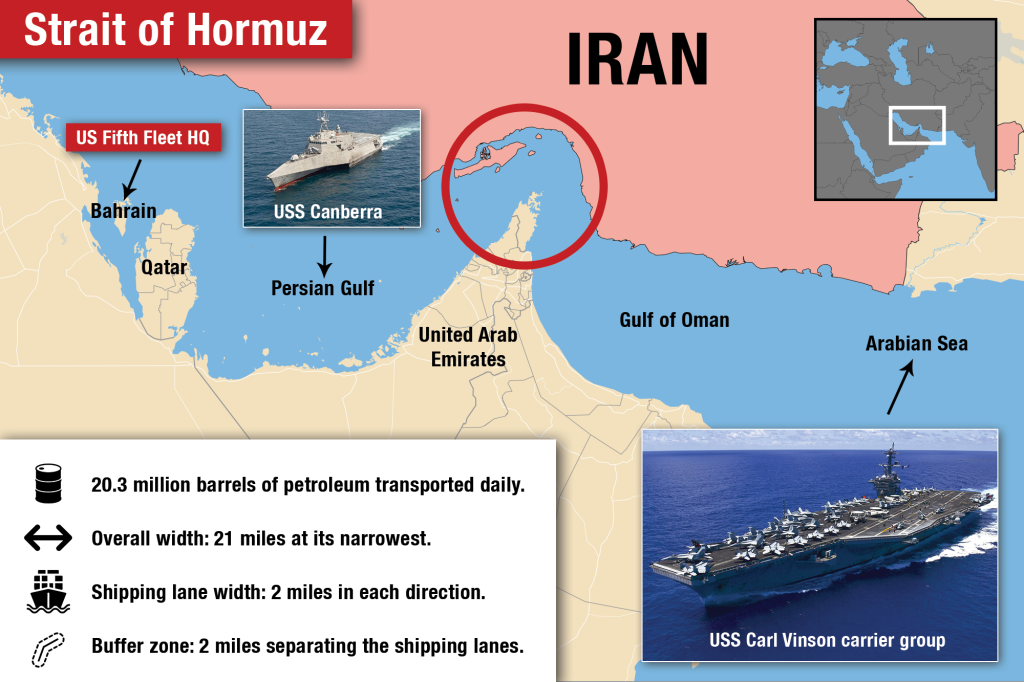
Before the conflict, this narrow waterway was one of the busiest in the world. The Strait of Hormuz is a narrow maritime corridor between Iran and Oman, just 39 kilometres at its narrowest point, through which countries including Saudi Arabia, Iraq, and the United Arab Emirates export oil and gas.
Strait of Hormuz Status Today: What Is Happening Right Now?
As of April 9, 2026, the Strait of Hormuz status today is one of cautious, minimal activity following the ceasefire but it is far from fully operational.
Iran is requiring ships to obtain its permission to pass through the Strait of Hormuz. “The Strait of Hormuz is not open,” said Sultan Ahmed Al Jaber, CEO of the United Arab Emirates’ state-owned oil company ADNOC, warning that the oil shock will deepen the longer the strait remains closed.
Traffic through the key shipping route remains tightly throttled, despite the US and Iran reaching a fragile ceasefire. Just two tankers one of which was Iranian have transited the waterway since the ceasefire was announced, according to Kpler oil analyst Matt Smith.
How Many Ships Pass Through the Strait of Hormuz Today?
The contrast between pre-war and current Strait of Hormuz ship traffic is stark. Before the conflict, this was among the world’s busiest maritime chokepoints.
Between 100 and 120 commercial vessels, mostly tankers, passed through the strait each day before the war, according to data from Kpler. Ship transits through the strait started picking up slightly before the ceasefire, with some 72 vessels making the trip during one week in March.
Today, that number has collapsed. MarineTraffic confirmed that two ships the Greek-owned NJ Earth and the Liberia-flagged Daytona Beach transited the strait overnight following the ceasefire announcement. Those movements, however, do not represent a post-ceasefire breakthrough.
Shipping and maritime experts say traffic through the critical energy artery will not normalize anytime soon with some analysts predicting disruption lasting “weeks, if not months.”
Strait of Hormuz Open for Which Countries?
One of the most critical questions during this crisis has been: is the Strait of Hormuz open for which countries? Iran’s answer has been selective and politically driven.
On March 26, Iranian Foreign Minister Abbas Araghchi announced that ships from five “friendly nations” could transit the Strait of Hormuz: China, Russia, India, Iraq, and Pakistan. Since then, the list has quietly expanded to include Turkey, Malaysia, Thailand, the Philippines, France, Japan, and Oman.
The IRGC announced that movement through the strait for any vessel going “to and from” the ports of the US, Israel, and their allies is prohibited.
A Turkish-owned ship that had been waiting near Iran was allowed to pass through the strait after authorities received permission from Tehran, according to Turkish Transport and Infrastructure Minister Abdulkadir Uraloglu.
Strait of Hormuz Closed Map: Alternative Routes Being Used
With the Strait of Hormuz effectively closed for most of the crisis, oil-producing Gulf nations were forced to find alternative export routes a difficult task given the strait’s irreplaceable volume.
Saudi Arabia increasingly diverted oil to the Red Sea port of Yanbu via the East–West Crude Oil Pipeline, while the UAE diverted oil via the Abu Dhabi Crude Oil Pipeline to the port of Fujairah on the Arabian Sea. Iraq used the Kirkuk–Ceyhan Oil Pipeline going to the Mediterranean coast through Turkey.
However, the capacity of these pipelines cannot match the amount of oil shipped through the strait a combined 9 million barrels per day compared to 20 million and the Red Sea route remains vulnerable to potential Houthi attacks.
Strait of Hormuz Closure Reports: Ceasefire but Still Not Safe
The latest Strait of Hormuz closure reports confirm that even with a ceasefire in place, the situation on the water remains dangerous and uncertain.
The IRGC said all vessels must use a new navigation map due to “the likelihood of the presence of various types of anti-ship mines in the main traffic zone.”
Iran has launched 21 confirmed attacks on merchant ships and has reportedly laid sea mines in the strait.
A shipping executive with boats currently stuck in the Persian Gulf told CNBC: “We have no information about how we could transit the Strait of Hormuz during the ceasefire. We are not in contact with the Iranian authorities. The most important for us is the safety of our crew members.”
Official Quotes: Contradictory Signals from All Sides
The question of whether the Hormuz Strait is open now has drawn contradictory answers from officials at the highest levels.
US Defense Secretary Pete Hegseth declared at a press briefing: “The strait is open.” Joint Chiefs of Staff Chairman Dan Caine, asked at the same briefing if the strait is open right now, said: “I believe so, based on the diplomatic negotiation.”
But the UAE’s top energy official directly contradicted that statement. “This moment requires clarity,” said ADNOC CEO Sultan Ahmed Al Jaber. “So let’s be clear: the Strait of Hormuz is not open.”
The International Maritime Organization’s Maritime Safety Division Director Damien Chevallier said: “The ceasefire is welcome news for the 20,000 seafarers who are awaiting evacuation on the ships which remain in the Persian Gulf. They have spent more than one month in a tense and volatile situation, unable to leave their ships.”
Global Impact: Energy, Economy, and Diplomacy
The Strait of Hormuz closure reports have shaken global energy markets, supply chains, and diplomatic relationships worldwide.
On March 27, Brent crude increased to $114 per barrel after negotiations failed to produce a ceasefire and the IRGC declared the strait closed. The US defense industry has been affected by near-total disruption of critical minerals supply, particularly sulfur, through the strait.
The strait has become a global flashpoint that has driven up the price of oil, threatened the safety of ships and seafarers, and rocked regional stability.
Pakistan, in particular, finds itself at the center of diplomatic efforts. The first round of US-Iran negotiations during the ceasefire is set to take place in Islamabad, led by US Vice President JD Vance, Special Envoy Steve Witkoff, and Jared Kushner.
Conclusion: What Comes Next for the Strait of Hormuz?
The announcement of a shaky two-week ceasefire between the US and Iran has raised hopes that the strategically important Strait of Hormuz may reopen. Early signs are mixed, with the US and Iran due to hold negotiations on solidifying the truce in Pakistan this weekend.
Iran is also pushing plans to tax ships passing through the strait Tehran’s plans to collect toll fees are already seeing pushback from the international community.
The Strait of Hormuz status today remains one of the most critical geopolitical flashpoints in the world. Whether the Hormuz Strait is open now truly and safely will depend on what emerges from the fragile negotiations in Islamabad and whether Iran removes its sea mines from the waterway.
FAQs
What is the conflict in the Strait of Hormuz?
The current Strait of Hormuz conflict began on February 28, 2026, when the United States and Israel launched joint air strikes on Iran. In retaliation, Iran’s IRGC blocked the strait to shipping particularly vessels linked to the US, Israel, and their allies triggering the worst maritime energy disruption in modern history.
Who has rights over the Strait of Hormuz?
The Strait of Hormuz is shared between Iran and Oman. Under international law specifically the UN Convention on the Law of the Sea (UNCLOS) all nations have the right of “transit passage” through international straits. However, Iran is not a signatory to UNCLOS, and currently controls access through its IRGC naval forces, creating a legal and geopolitical standoff.
What happens to us if the Strait of Hormuz is closed?
A full closure of the Strait of Hormuz affects the entire world. Around 20% of global oil and 20% of LNG passes through it daily. A prolonged closure raises fuel prices globally, triggers inflation, disrupts airline and shipping industries, and puts enormous pressure on energy-importing economies including Pakistan, India, and across Europe and Asia.