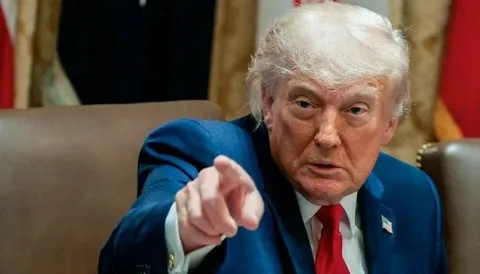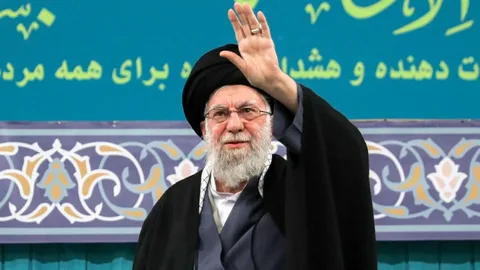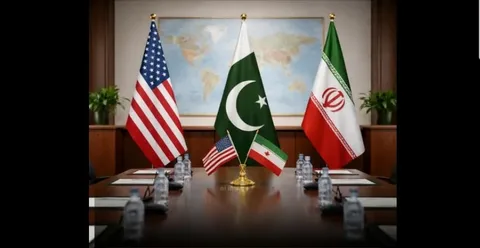
Islamabad is hosting quiet diplomacy that could matter well beyond Pakistan’s borders. US-Iran talks Pakistan have moved through backchannel meetings that both sides appear willing to continue, with Pakistan taking on a facilitation role that few would have predicted a year ago. Reports indicate the discussions have covered ceasefire frameworks, prisoner exchanges, and broader security guarantees.
The development is significant for Pakistan’s own standing as much as for the talks themselves. Pakistan brokers ceasefire efforts of this profile mark a different kind of diplomatic engagement for a country that has more often been on the receiving end of international pressure than the generating end of international solutions.
Background of US-Iran Tensions
The US-Iran relationship has been broken at the formal level since 1979 and has passed through cycles of confrontation, indirect engagement, and near-agreement since then. Sanctions, nuclear negotiations, proxy conflicts, and periodic military exchanges have defined the relationship across multiple American administrations and Iranian governments.
What makes Islamabad an interesting venue for any of this is geography and dual access. Iran Pakistan relations are grounded in a shared border, trade ties, and energy interests Pakistan is one of the few countries that maintained working relations with Tehran through decades of Western sanctions. At the same time, Pakistan has sustained its relationship with Washington despite periods of serious friction. That dual access is exactly what backchannel diplomacy requires.
US Iran News 2026 has been dominated by military escalation and ceasefire fragility. The question being tested in Islamabad is whether a neutral platform can create enough political space for something more durable.
Details of Talks in Islamabad
The Iran delegation in Pakistan arrived for consultations structured to minimize public visibility. That discretion is deliberate talks of this sensitivity require both sides to have room to explore positions without being locked in by public statements.
Discussions during US-Iran talks Pakistan reportedly covered the core issues: ceasefire parameters, the treatment of prisoners on both sides, and what security guarantees could look like in practice. These are not easy subjects, and the fact that discussions are happening does not guarantee outcomes. But diplomatic insiders have described the atmosphere as cautiously productive rather than performative.
Pakistan US-Iran diplomacy at this level requires Pakistan to be scrupulously even-handed in how it presents itself to both sides. Anything that looks like Pakistan tilting toward Washington risks Iranian confidence. Anything that looks like sympathy with Tehran risks the American side. Maintaining that balance while actually facilitating substantive movement is the operational challenge.
Pakistan’s Role as a Mediator
Pakistan’s history in regional diplomacy is relevant context here, even if Afghanistan and the Middle East are different problems. Pakistan played a facilitation role in Afghan peace discussions that never reached a clean conclusion but demonstrated that Islamabad has institutional capacity for exactly this kind of sensitive multi-party engagement.
The Pakistan mediation role in the current US-Iran context is built on three things: geography, bilateral relationships, and the perception of non-alignment on the specific conflict. Pakistan is not a party to the US-Iran dispute in the way that Gulf states or European powers are. That creates a kind of neutrality that is genuinely useful when both sides need a place to meet without the meeting itself being interpreted as a concession.
Iran Pakistan relations provide the access to Tehran. Pakistan’s ongoing engagement with Washington including military, economic, and diplomatic ties provides the access on the other side. Whether those relationships are deep enough to carry the weight of a serious mediation push is what the current round of talks is testing.
Officials in Islamabad have been careful in their public statements, emphasizing regional stability and conflict prevention rather than claiming credit for outcomes that have not materialized yet. That restraint is itself part of managing the mediation role.
Statements from Officials and Analysts
The official Pakistani position has been deliberately limited in detail. “Constructive but sensitive” is the kind of language that appears in diplomatic readouts when both sides want the process to continue but neither wants to be pinned down on specifics.
Regional security analysts observing the Pakistan brokers ceasefire effort have noted that Islamabad’s value in this role is precisely its lack of direct stake in the outcome. A country with no territorial claims, no proxy forces, and no active military involvement in the US-Iran confrontation can offer a space for dialogue that other potential mediators Oman has played this role in the past can also provide.
One analyst quoted in regional media said Pakistan’s involvement could “reduce the miscalculations that often drive military escalation” which is a specific and important function. When two adversaries have no direct communication and every action is interpreted through the lens of maximum threat, accidents become more likely. Anything that creates a channel reduces that risk.
The limitation is that backchannel diplomacy of this kind rarely produces binding agreements on its own. It creates conditions for agreement but cannot substitute for the political decisions that only the principal governments can make.
Global and Regional Impact
The potential upside of successful US Iran peace talks Islamabad is considerable. A durable ceasefire between the US and Iran would relieve pressure on oil markets that have been pricing in conflict risk, reopen regional trade routes that have been disrupted, and reduce the security burden on Gulf states that have been managing the fallout from the conflict.
It would also strengthen Pakistan US-Iran diplomacy as a model demonstrating that Islamabad has the capacity and the credibility to play a constructive role in major international disputes. That is a significant enhancement to Pakistan’s diplomatic standing at a time when the country is navigating complex relationships with multiple major powers.
The risk of failure is that it deepens the perception that the conflict has no diplomatic solution, which encourages escalation. For Pakistan, a failed mediation attempt that becomes public could also create domestic political complications given the sensitivity of relationships with both the US and Iran.
Iran Pakistan relations are positioned to benefit from this engagement regardless of the immediate outcome. The fact of Pakistan’s involvement signals that Islamabad is willing to engage on Iran’s behalf at the international level, which has value beyond any specific negotiation outcome.
Conclusion
The US-Iran talks Pakistan initiative is one of the more interesting diplomatic developments of 2026. Pakistan has positioned itself as a useful intermediary at a moment when useful intermediaries are genuinely scarce and the fact that both sides appear willing to engage through this channel says something about the current appetite for de-escalation.
Whether US Iran peace talks Islamabad produce a lasting ceasefire, a partial agreement, or nothing visible depends on decisions that will be made in Tehran and Washington, not in Islamabad. Pakistan’s role is to keep the channel open and the conversation moving. That is what Pakistan brokers ceasefire efforts are designed to do.The coming weeks will show whether the cautious optimism in the room translates into anything on the ground.
FAQs
Who offered the ceasefire between Iran and Israel?
The ceasefire proposals that have circulated in 2026 have come through multiple channels rather than a single actor. Oman has historically served as a back-channel between the US and Iran. Qatar has also played a facilitating role in regional diplomacy. The current Pakistan-hosted discussions are part of this broader ecosystem of indirect engagement. No single country can claim sole credit for pushing the ceasefire framework, and the language of “offer” is misleading these processes typically involve proposals floated through intermediaries, tested informally, and refined before any formal presentation.
How many ceasefires has Pakistan broken?
Pakistan has not broken ceasefires in the context of US-Iran or Middle East diplomacy Pakistan is not a party to those conflicts and has no ceasefire agreements to break in that context. The question likely refers to India-Pakistan ceasefire arrangements, where the Line of Control in Kashmir has historically been a site of violations attributed by both sides to the other. Those are a completely different context from the current Islamabad-hosted US-Iran discussions, where Pakistan is operating as a neutral facilitator rather than a party.
Who is Pakistan’s biggest friend?
China is consistently described as Pakistan’s closest strategic partner the relationship is grounded in the China-Pakistan Economic Corridor, defence cooperation, and decades of political alignment. Gulf states, particularly Saudi Arabia and the UAE, are critical economic partners through remittances, investment, and energy supply. Turkey has become an increasingly significant political relationship under Erdoğan. The United States is a complicated long-term relationship involving military assistance, economic ties, and persistent friction over regional policy. Pakistan navigates all of these simultaneously, which is partly what makes it useful as a mediator it has working relationships across a wide range of geopolitical positions.