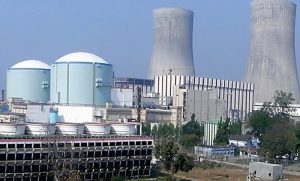
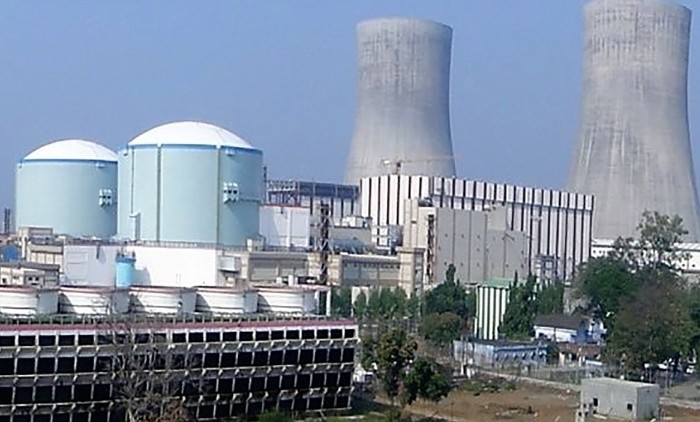

India is rapidly expanding its nuclear energy sector as part of a long-term strategy to meet growing electricity demands and reduce dependence on fossil fuels. With multiple operational reactors and several ambitious projects underway including the much-discussed Jaitapur Nuclear Power Plant nuclear power in India is at a defining moment.
India’s Nuclear Energy at a Glance
Nuclear power in India currently contributes around 3% of the country’s total electricity generation. The country operates 24 nuclear reactors spread across 7 nuclear power plants in India, with a total installed capacity of approximately 7,480 MW. The government has set a target to expand this to 22,480 MW by 2031, making India one of the fastest-growing nuclear energy markets in the world.
The Nuclear Power Corporation of India Limited (NPCIL) manages all operational nuclear power plants in India. India’s nuclear energy development Wikipedia pages and official energy reports highlight that the country has been consistently increasing reactor count since its first plant became operational in 1969.
List of Nuclear Power Plants in India
Below is the complete and updated list of nuclear power plants in India, including their location, state, and capacity:
- Tarapur Atomic Power Station (TAPS) Maharashtra Tarapur is the oldest and one of the most significant nuclear power plants in India. Located in Palghar district, Maharashtra, it was commissioned in 1969. It currently operates 4 reactors with a total capacity of 1,400 MW. Tarapur holds a historic place in India’s nuclear energy development.
- Rajasthan Atomic Power Station (RAPS) Rajasthan Located in Rawatbhata near Kota, Rajasthan, this plant operates 6 reactors with a combined capacity of 1,180 MW. It is one of the largest nuclear power plants in India by number of reactors. The plant has been operational since 1973 and continues to expand.
- Madras Atomic Power Station (MAPS) Tamil Nadu Situated in Kalpakkam, Tamil Nadu, MAPS has been operational since 1984. It houses 2 reactors with a total capacity of 440 MW. The Kalpakkam site is also home to India’s first Fast Breeder Reactor, currently under construction.
- Narora Atomic Power Station (NAPS) Uttar Pradesh Located in Narora, Bulandshahr district, Uttar Pradesh, this plant has been operational since 1991. It runs 2 reactors with a combined capacity of 440 MW and is a key contributor to the northern power grid of India.
- Kakrapar Atomic Power Station (KAPS) Gujarat Situated in Surat district, Gujarat, Kakrapar is a growing nuclear power plant in India. It currently operates 4 reactors 2 older units of 220 MW each and 2 newer units of 700 MW each bringing its total capacity to 1,840 MW. The newer 700 MW PHWR reactors are India’s indigenous design achievements.
- Kaiga Generating Station (KGS) Karnataka Located in Uttara Kannada district, Karnataka, the Kaiga plant runs 4 reactors with a capacity of 880 MW. It started operations in 2000 and is known for setting a world record in continuous operation of a PHWR reactor.
- Kudankulam Nuclear Power Plant (KKNPP) Tamil Nadu Kudankulam, located in Tirunelveli district, Tamil Nadu, is the newest and the largest nuclear power plant in India. Built with Russian assistance under a bilateral agreement with Rosatom, it currently has 2 operational reactors of 1,000 MW each (total 2,000 MW). Two more units are under construction, and plans for additional units are in advanced stages.
Jaitapur Nuclear Power Plant India’s Most Ambitious Project
The Jaitapur Nuclear Power Plant, proposed to be built in Ratnagiri district, Maharashtra, is set to become the world’s largest nuclear power plant by installed capacity. With a planned capacity of 9,900 MW through 6 EPR (European Pressurized Reactor) reactors developed by France’s EDF and Framatome, the Jaitapur project has been in planning for over a decade.
The Jaitapur nuclear power plant has faced delays due to land acquisition issues, environmental concerns, and project cost negotiations between India and France. However, as of 2024–2025, both governments have reaffirmed their commitment to moving the project forward. When complete, the Jaitapur plant alone would more than double India’s current nuclear capacity.
How Many Nuclear Power Plants Are in India?
India currently has 7 operational nuclear power plants with 24 reactors producing approximately 7,480 MW of electricity. Additionally, several new reactors are under construction at existing sites such as Kakrapar and Kudankulam, and new greenfield projects like Jaitapur are in the pipeline.
When comparing how many nuclear power plants India has with global standards, the country ranks among the top 15 in terms of installed nuclear capacity, but has significant room to grow, especially with the proposed expansion to over 22,000 MW by 2031.
Nuclear Power Plant in the World Where Does India Stand?
Globally, nuclear power accounts for about 10% of total electricity generation. The United States leads the world in nuclear power with 93 operational reactors, followed by France, China, and Russia. France generates nearly 70% of its electricity through nuclear energy — the highest share of any country.
India currently ranks 7th in the world by number of reactors under construction. China is rapidly expanding its nuclear fleet, while India’s strategy focuses on Pressurized Heavy Water Reactors (PHWRs) and a three-stage nuclear program designed to eventually use thorium, of which India has the world’s largest known reserves.
Expert Quote
Dr. M.V. Ramana, a nuclear policy researcher, has noted that India’s three-stage nuclear program is “uniquely ambitious” in its long-term vision, specifically designed to exploit thorium reserves and achieve energy independence. Indian officials from the Department of Atomic Energy (DAE) have consistently described nuclear power as a “clean baseload energy source” critical to India’s net-zero commitments by 2070.
Impact: Regional and Global Significance
India’s nuclear energy development carries significant regional and global implications. Domestically, expanding nuclear capacity helps reduce coal dependence, which currently accounts for over 70% of India’s electricity. Nuclear power plants in India produce zero carbon emissions during operation, aligning with India’s climate goals.
Globally, India’s nuclear expansion signals a new phase of civil nuclear cooperation, particularly with Russia (Kudankulam), France (Jaitapur), and potentially the United States through the 2008 Indo-US Civil Nuclear Agreement. India’s growing nuclear energy footprint also reshapes regional energy geopolitics in South Asia.
Future Outlook
India’s nuclear energy future looks ambitious. With 10 new reactors approved for construction and projects like Jaitapur, Gorakhpur (Haryana), and Bhimpur (Madhya Pradesh) on the horizon, the nuclear power plant count in India is expected to rise significantly by 2035. The government is also investing in Small Modular Reactors (SMRs) as part of next-generation nuclear technology.
Nuclear power in India is no longer just a supplement to the national grid — it is becoming a strategic pillar of India’s energy security and climate strategy for the coming decades.
FAQs
Is nuclear energy growing in India?
Yes, nuclear energy is growing steadily in India. The government has approved plans to expand installed nuclear capacity from around 7,480 MW to over 22,480 MW by 2031. New reactors are under construction at Kudankulam and Kakrapar, and major new plants like Jaitapur are in the approval pipeline. India’s nuclear energy development is backed by both domestic investment and international partnerships.
Which country is No. 1 in nuclear energy?
The United States is the world’s number one country in nuclear energy, operating 93 reactors with a total installed capacity of over 95,000 MW. The US generates more nuclear electricity than any other nation. France ranks second and produces the highest share of its electricity around 70% from nuclear power, making it the leader in nuclear energy dependency.
Why is India not signing the NPT?
India has not signed the Nuclear Non-Proliferation Treaty (NPT) because it views the treaty as fundamentally discriminatory. The NPT allows the five original nuclear-weapon states (US, Russia, UK, France, China) to retain their weapons while prohibiting others from acquiring them. India developed nuclear weapons independently and argues that the NPT does not address global disarmament equitably. India also wants recognition as a legitimate nuclear-weapon state, which the NPT framework does not allow for non-signatories. Despite not signing the NPT, India has a strong record of non-proliferation and signed a landmark civil nuclear deal with the US in 2008.