
Khyber Pakhtunkhwa is facing one of its most dangerous security moments in years. Khyber Pakhtunkhwa terrorism, cross-border insurgency, and violent crime are rising simultaneously placing enormous pressure on an already overstretched police force. The people of KPK deserve better protection, better governance, and a police system that works for them.
This opinion piece examines the Khyber Pakhtunkhwa attack patterns, the ongoing Khyber Pakhtunkhwa insurgency, the role of the Khyber Pakhtunkhwa Afghanistan border in fuelling instability, and what digital reforms including KPK Police online apply 2026 and Police Sahulat Markaz Khyber Pakhtunkhwa are doing to modernise an institution under fire.
BACKGROUND
A Province That Has Carried Pakistan’s Heaviest Burden
No province in Pakistan has sacrificed more in the fight against extremism than Khyber Pakhtunkhwa. For over two decades, KPK has been on the frontline of Pakistan’s war against militancy absorbing the consequences of regional conflict, hosting millions of Afghan refugees, and burying thousands of its sons and daughters in the process.
The Khyber Pakhtunkhwa Afghanistan border stretches across some of the most rugged and ungoverned terrain on earth. This border has historically served as a corridor for arms, fighters, and ideology fuelling the Khyber Pakhtunkhwa insurgency that continues to claim lives in 2026. Despite military operations, peace deals, and billions in security spending, the violence has not stopped.
What has changed in recent years is the nature of the threat. Attacks are now more frequent in urban centres, more coordinated in their planning, and broader in their targets. The Khyber Pakhtunkhwa police website records dozens of incidents monthly from targeted killings to mass casualty bombings and the numbers are not improving.
DETAILS
The Attack Pattern: What the Data Tells Us
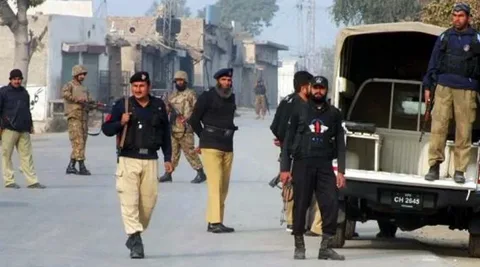
The pattern of Khyber Pakhtunkhwa attack incidents in 2025 and early 2026 reveals a disturbing trend. Militants are no longer limiting operations to tribal districts or remote mountain passes. Peshawar, Bannu, Lakki Marwat, and Dera Ismail Khan have all seen significant violence in recent months. Police stations, government buildings, and crowded markets have all been struck.
The Khyber Pakhtunkhwa terrorism problem has also evolved tactically. Suicide bombings remain a core method, but targeted assassinations of police officers, politicians, and community leaders have increased sharply. This represents a deliberate strategy to decapitate local governance and demoralise security forces who are already underpaid and under-resourced.
According to reports compiled from the Khyber Pakhtunkhwa police website and open-source security databases, over 200 security personnel were killed in KPK in 2025 alone. These are not statistics they are fathers, brothers, and neighbours who put on a uniform and paid the ultimate price.
The Afghanistan Factor
No honest analysis of Khyber Pakhtunkhwa insurgency can ignore the Khyber Pakhtunkhwa Afghanistan dynamic. Since the Taliban takeover of Afghanistan in 2021, cross-border militant activity has increased significantly. The Tehreek-e-Taliban Pakistan (TTP) which operates from Afghan soil has claimed responsibility for the majority of major attacks on Pakistani security forces in KPK.
Pakistan has repeatedly raised this issue at the diplomatic level, urging the Afghan Taliban government to prevent TTP from using Afghan territory as a launchpad for attacks. Those appeals have produced little visible result. The Khyber Pakhtunkhwa Afghanistan border remains dangerously porous, and communities on both sides live in fear of violence that respects no boundary.
The situation places KPK police in an impossible position asked to hold a domestic security line against a threat that originates beyond their jurisdiction and outside their reach.
Violence Against Women: A Crisis Within the Crisis
Among the most disturbing dimensions of the KPK security collapse is the surge in violent crimes against women and children. A recent Dawn report highlighted another case of a minor girl being assaulted in Lakki Marwat a district that has seen repeated incidents of this nature in recent years.
These crimes are not isolated. They are symptoms of a broader breakdown in social order, weak rule of law, and a culture of impunity in which perpetrators too often escape serious consequence. The Khyber Pakhtunkhwa police must be held accountable for the speed and quality of its response to gender-based violence and the record, so far, leaves much to be desired.
Communities in KPK deserve a police force that investigates these crimes seriously, prosecutes offenders effectively, and makes women and children feel safe reporting abuse without fear of retaliation or shame.
Police Reforms: Digital Progress Amid Operational Crisis
Not everything about KPK policing in 2026 is bleak. The Khyber Pakhtunkhwa police website has been significantly upgraded, offering citizens access to a range of digital services that were previously unavailable or required lengthy in-person visits. The introduction of Police Sahulat Markaz Khyber Pakhtunkhwa service centres designed to bring police closer to the public has improved access to routine services across the province.
Citizens can now use the Khyber Pakhtunkhwa police website to apply for verification, file complaints, and access information about ongoing cases. The KPK Police online apply 2026 system allows new recruits to submit applications entirely online, reducing corruption in the hiring process and widening access to candidates from remote areas who previously had no realistic path to joining the force.
The Police Clearance Certificate KPK PDF Free Download facility is another meaningful step forward. Citizens applying for jobs abroad, visa applications, or institutional admissions can now download their Police Clearance Certificate KPK PDF free of charge saving time, money, and the frustration of dealing with unnecessary bureaucracy.
These are genuine improvements worth acknowledging. But digital reforms alone cannot substitute for adequate funding, proper training, competitive salaries, and a political commitment to rule of law that goes beyond press statements.
QUOTES
“Our officers are fighting a war with the equipment and pay of a peacetime police force. We need resources, we need support, and we need political will not just words.” Senior KPK Police Officer (identity withheld for security)
“The terrorism challenge in Khyber Pakhtunkhwa cannot be solved by police alone. It requires regional diplomacy, economic development, and a genuine commitment from Islamabad to treat KPK as more than a security problem.” Security analyst, Islamabad Policy Research Institute (paraphrased position)
“Every time a girl is assaulted in Lakki or Bannu and the case fades into silence, we lose another generation’s trust in the state. Justice delayed is justice denied and in KPK, justice is too often denied entirely.” Human rights advocate, HRCP (paraphrased position)
IMPACT
Regional and National Consequences
The Khyber Pakhtunkhwa terrorism and insurgency crisis has consequences that extend far beyond the province’s borders. Instability in KPK threatens investment across Pakistan, undermines the country’s international reputation, and strains relations with China whose CPEC infrastructure passes through or near conflict-affected zones.
For ordinary KPK residents, the impact is deeply personal. Families are afraid to send children to school, businesses operate under constant threat, and the talented young people the province needs most are leaving for Islamabad, for Karachi, or for abroad because they see no future in a place where security cannot be guaranteed.
The Khyber Pakhtunkhwa insurgency also has a generational dimension. Young men in impoverished border districts, with no jobs and no prospects, are precisely the demographic that militant recruiters target. Without economic investment and educational opportunity, the security problem will reproduce itself indefinitely.
CONCLUSION
Reform Is Not Optional It Is Survival
Khyber Pakhtunkhwa stands at a crossroads. The province has the talent, the resilience, and the determination to build a safer future but it cannot do so without a police force that is properly equipped, fairly paid, and genuinely accountable to the public it serves.
The Khyber Pakhtunkhwa attack statistics will not improve through digital portals alone. KPK Police online apply 2026 reforms are welcome, Police Sahulat Markaz Khyber Pakhtunkhwa centres are useful, and the Police Clearance Certificate KPK PDF free download is a genuine convenience. But none of these things stop a bomb or protect a child.
What will make the difference is political courage the courage to demand accountability from Afghanistan, to fund KPK police properly, to prosecute gender-based violence without compromise, and to treat the people of Khyber Pakhtunkhwa as full citizens of Pakistan deserving of security, dignity, and justice.
The sleeping giant of KPK’s potential will only awaken when the province is finally, genuinely, safe.
FAQs
Which city in Pakistan has the lowest crime rate?
Based on available data and consistent reporting, Islamabad is generally considered to have the lowest crime rate among Pakistan’s major cities. As the federal capital, it benefits from a higher concentration of security personnel, better infrastructure, and more effective law enforcement coordination. However, no Pakistani city is entirely free from crime, and rising urban populations are placing pressure on security systems everywhere, including the capital.
What are the 5 main crimes?
The five most commonly recorded serious crimes in Pakistan and in Khyber Pakhtunkhwa specifically are theft and robbery, murder and attempted murder, kidnapping for ransom, drug trafficking, and gender-based violence including assault and harassment. In KPK, terrorism-related offences form an additional category that distinguishes the province from most other parts of the country. Khyber Pakhtunkhwa terrorism statistics place it among the most conflict-affected regions in South Asia.
Which city has the highest crime rate today?
Karachi has historically recorded the highest absolute crime numbers in Pakistan, owing to its size as the country’s largest city and commercial hub. However, in terms of per capita violence and terrorism-related incidents, cities within Khyber Pakhtunkhwa particularly Peshawar, Bannu, and Dera Ismail Khan often record higher rates of violent crime and militant attacks. The ongoing Khyber Pakhtunkhwa insurgency makes the province disproportionately dangerous relative to its population size.