
The Karakoram Highway has reopened today after days of complete blockade caused by a mass sit-in protest in Diamer district. Thousands of stranded passengers and cargo vehicles can now resume travel on this iconic route. The Karakoram Highway reopened today following a breakthrough between federal authorities and the Diamer-Bhasha Dam affectees who had been staging a sit-in protest at Thore Das.
Background
The Karakoram Highway remained closed for multiple consecutive days as affectees of the Diamer-Bhasha Dam continued their sit-in protest at Thore Das, bringing traffic between Gilgit-Baltistan and Rawalpindi to a complete halt.
The protest was launched by the Diamer-Bhasha Dam land-affected committee under the banner of the “Huqooq Do, Dam Banao” movement meaning “Ensure Rights, Then Build the Dam.” The agitation began over what organisers described as the government’s failure to implement an agreement reached with protesters last year.
The closure severely disrupted travel, trade, and tourism along one of Pakistan’s most critical highways. The Karakoram Highway reopened today only after prolonged pressure from stranded commuters, traders, and civil society groups urging a swift resolution through dialogue.
Details
Protesters blocked the Karakoram Highway at several points in Diamer district after demonstrators warned of a long march towards the dam construction site if their demands were not accepted. The sit-in in Chilas and Thore had been ongoing for five days, intensifying pressure on both the government and highway authorities.
Organisers said residents from Chilas, Goner Farm, Goharabad, and neighbouring areas attempted to march towards Thore valley to join the sit-in. However, police and security forces blocked the KKH near Ghichi and Hudor, stopping convoys from reaching the protest site.
Hundreds of passenger and cargo vehicles were stranded on both sides of the highway, with long queues stretching across multiple areas. A large number of travellers and tourists remained stuck, facing increasing difficulties amid the continued road closure.
The Karakoram Highway reopened today brings major relief to thousands of passengers and businesses that depend on this lifeline route connecting Gilgit-Baltistan with the rest of Pakistan.
The Thakot to Raikot Motorway A Critical Section
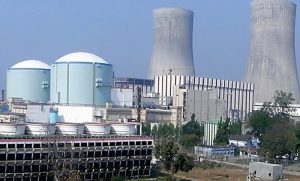
Understanding the Thakot to Raikot Motorway map is essential to grasp the significance of this disruption. The 279 kilometres of two-lane roadway between Thakot and Raikot spans an area where the government of Pakistan is currently either planning or actively constructing several major hydropower projects, most notably the Diamer-Bhasha Dam and the Dasu Dam.
The Thakot to Raikot distance is approximately 241 kilometres according to official project records. The Central Development Working Party sanctioned the construction of the Thakot-Raikot 241-kilometer section of the Karakoram Highway at a cost of Rs 567.5 billion, or roughly $2 billion, under the China-Pakistan Economic Corridor (CPEC).
The Thakot to Raikot Motorway map reveals this section as one of the most challenging segments of the entire KKH. The Thakot-Raikot section is known for its sharp bends and limitations, and is set for an overhaul that will include state-of-the-art tunnels to reduce travel time and enhance safety.The Thakot to Raikot distance remains a concern for travellers due to the difficult terrain and ongoing infrastructure work in the region.
Quotes
Addressing the demonstrators before the sit-in was called off, chief organiser Maulana Hazratullah declared that if protesters’ convoys were not allowed to reach Thore immediately, they would be forced to move towards the dam site and Thore colony. He accused the Water and Power Development Authority (Wapda) of obstructing the implementation of the 2025 agreement signed in the presence of Prime Minister Shehbaz Sharif’s committee.
Protest leaders alleged that despite the agreement being more than a year old, not a single clause had been implemented particularly the regularisation of local contingent and contractual workers.
Stranded passengers urged authorities to take immediate steps to reopen the highway and resolve the issue through dialogue before the situation could further escalate.
The Protesters’ Demands
The protest was not without legitimate grievances. The 31-point charter includes demands for 80 per cent royalty from the Diamer-Bhasha Dam and 30 per cent royalty from the Dassu Dam for Gilgit-Baltistan, free electricity for Diamer district, compensation for 18,000 acres acquired for the project, and a financial package for the remaining 3,000 affected families.
Other demands include commercial and residential plots, education, health and sewerage projects, employment for local people from grade one to grade sixteen, and the regularisation of contingent and daily wage workers.
A seven-member federal committee formed last year to address these grievances had failed to deliver results, according to earlier reports.
What Is the Karakoram Highway?
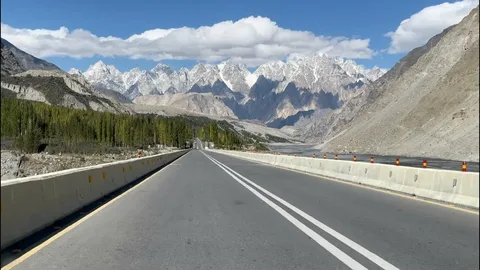
The Karakoram Highway often called the KKH is far more than a road. It is a 1,300 km long national highway extending from Hasan Abdal in Punjab province of Pakistan to the Khunjerab Pass in Gilgit-Baltistan, where it crosses into China and becomes China National Highway 314. Due to its high elevation and the difficult conditions under which it was constructed, it is sometimes referred to as the Eighth Wonder of the World.
The highway was started in 1962, completed in 1979, and opened to the public in 1986. About 810 Pakistanis and about 200 Chinese workers died, mostly in landslides and falls, while building the highway.
The Thakot to Raikot Motorway map forms a vital central section of this legendary route. Any disruption on the Karakoram Highway as seen during this protest has immediate and far-reaching consequences for tourism, trade, and daily life across Gilgit-Baltistan.
Regional and Economic Impact
The blockade of the Karakoram Highway had a cascading effect on the entire region. Gilgit-Baltistan relies on this route for the supply of food, medicine, fuel, and essential goods. With the Karakoram Highway reopened today, supply chains can be restored and stranded travellers can finally reach their destinations.
The Thakot to Raikot distance roughly 241 kilometres may appear manageable on paper, but this section involves some of the most rugged mountain terrain in the world. Even a short disruption here can strand thousands of passengers and stall millions of rupees worth of cargo. The Thakot to Raikot Motorway map shows how this section acts as the gateway between the plains of Pakistan and the high-altitude regions of Gilgit-Baltistan.
Tourists heading to popular destinations such as Hunza, Skardu, and the Khunjerab Pass are also heavily affected when the Karakoram Highway is closed. The tourism industry, which contributes significantly to the local economy, suffers immediate losses during such closures. The Karakoram Highway reopened today is therefore welcome news not just for daily commuters but for the broader regional economy.
Opinion: A Recurring Crisis That Demands a Lasting Solution
From an opinion standpoint, the repeated closure of the Karakoram Highway over dam-related grievances exposes a deeper governance failure. The 2025 agreement between the federal government and Diamer-Bhasha Dam affectees was supposed to prevent exactly this kind of disruption. Yet more than a year later, none of its key clauses had been acted upon.
The people of Diamer have a legitimate case. Their land was acquired, their livelihoods disrupted, and their rights remain unfulfilled. However, blocking the Karakoram Highway a national lifeline places an enormous burden on thousands of innocent commuters, patients, tourists, and traders who have no role in the dispute.
The federal government must treat this not as a law-and-order issue, but as a development justice issue. The Thakot to Raikot Motorway map is already at the centre of billions of dollars in planned CPEC investment. Ensuring that the communities along this route are treated fairly is not just morally right it is strategically necessary for the success of these projects.
Conclusion
The Karakoram Highway reopened today brings temporary relief, but the underlying issues remain unresolved. Protesters had vowed to continue the sit-in until their demands were formally accepted and implemented, stating they had shown patience for over a year with no meaningful progress.
The government must now move swiftly to honour its 2025 commitments to the Diamer-Bhasha Dam affectees. The Thakot to Raikot distance of 241 kilometres must not become a recurring flashpoint. Lasting peace along the Karakoram Highway depends on lasting justice for the communities it passes through.
Frequently Asked Questions (FAQs)
When was the Karakoram Highway opened?
The Karakoram Highway was started in 1962, completed in 1979, and officially opened to the public in 1986.It was a joint construction project between Pakistan and China and took nearly two decades to build through some of the world’s most difficult mountain terrain.
What is the 8th wonder of the world highway?
The Karakoram Highway (KKH) is widely regarded as the 8th Wonder of the World. It is considered an architectural masterpiece because of the extraordinary altitude and harsh conditions under which it was built, which made it a landmark achievement in human engineering.
What is the 8th Wonder of the World the Karakoram Highway?
The Karakoram Highway is a 1,300 km national highway that passes through the Karakoram mountain range at a maximum elevation of 4,714 metres near Khunjerab Pass, making it one of the highest paved roads in the world.Its dramatic elevation, stunning scenery, and the immense human cost of its construction have earned it the informal title of the 8th Wonder of the World. The Thakot to Raikot section along this highway remains one of its most challenging and iconic stretches.