
The US-Iran war began on February 28, 2026, when US and Israeli forces launched joint air strikes on Iran. After 40 days of devastating conflict, both sides are now sitting at the negotiating table in Islamabad, Pakistan.
Iran’s 10 point proposal, which led to the announcement of a temporary two-week ceasefire between the United States and Iran, was released by Iranian state media outlet IRNA.
The Iran ceasefire 10 point plan came at a critical moment. Iran proposed the 10 point peace plan to end the war as the United States and Israel intensified their attacks on Tehran and a deadline loomed set by US President Donald Trump for Iran to open the Strait of Hormuz.
Trump initially called it a “significant step” but said it was “not good enough.” Eventually, he accepted it as a basis for talks.
Iran’s 10 Point Plan: What’s in It?
This is what Iran presented to the world as its framework for ending the US-Iran war. Iran’s Supreme National Security Council laid out key parts of the plan, which was also reported on by multiple Iranian state media outlets.
Here are the major points, drawn from multiple verified sources:
Point 1 — US Non-Aggression Commitment The first of Iran’s points was the US committing to a stance of non-aggression towards the Iranian regime.Tehran wants a formal guarantee that the US will not attack Iran again.
Point 2 — Strait of Hormuz Under Iranian Coordination Tehran’s 10 point plan demands reopening the Strait of Hormuz under Iranian military coordination, along with a secure transit protocol.Iran insists it must have a role in controlling who passes through the waterway.
Point 3 — End All Attacks on Iran and Its Allies The plan includes terminating attacks on Iran and its regional proxy forces.This means an end to Israeli strikes on Hezbollah in Lebanon and US strikes in Iraq as well.
Point 4 — US Military Withdrawal from the Region The plan also calls for the withdrawal of US forces from the region.This is one of the most controversial demands and is considered a red line for Washington.
Point 5 — War Reparations and Compensation The Iran 10 point plan demands compensation for the destruction caused by the war.Iran wants financial accountability for the damage done to its cities, infrastructure, and population.
Point 6 — Lifting of All Sanctions The publicly available plan demands that the US end all primary and secondary sanctions against Tehran.This is a core economic demand that Iran has insisted on for years.
Point 7 — Release of Frozen Assets The proposal calls for the release of frozen assets.held in banks across the world. Iran views this as a test of US seriousness in the peace process.
Point 8 — Right to Nuclear Enrichment Some versions of the security council’s statement that were widely distributed by Iranian state media also include a claim by Iran of a right to nuclear enrichment Iran’s embassy in India explicitly included “acceptance of enrichment” in its published version of the plan.
Point 9 — End to the Axis of Resistance Conflict The proposal also calls for ending the war against the Axis of Resistance.This refers to Iran-backed groups in Lebanon, Iraq, Yemen, and Gaza.
Point 10 — Binding UN Resolution The plan calls for a binding UN resolution to secure any ultimate peace deal.Iran wants international legal guarantees not just a verbal agreement with the United States.
The US Response: 15-Point Counter-Proposal
Iran’s 10 point plan did not go unanswered. The US had its own demands on the table during the Iran-US talks.
An unnamed high-ranking diplomatic source told Al Jazeera that Iran had received a 15-point plan drafted by the US, delivered through Pakistan. Tehran described the US proposal as “extremely maximalist and unreasonable.”
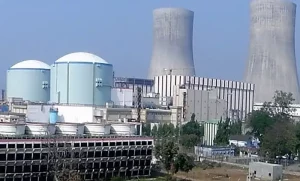
The US 15-point plan included a 30-day ceasefire, the dismantling of Iran’s nuclear facilities, limits on Iran’s missiles, and the reopening of the Strait of Hormuz. In return, the US offered to remove all sanctions imposed on Iran and provide support for electricity generation at Iran’s Bushehr Nuclear Power Plant.
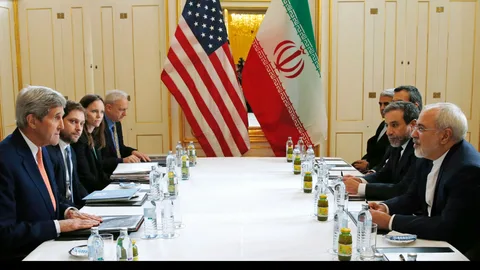
Iranian Foreign Minister Abbas Araghchi said both the Iranian 10-point and the US 15-point proposals would form the “basis” of discussions in Islamabad.
Iran-US Talks in Islamabad: Who Is There
The Iran-US talks in Islamabad represent the most significant face-to-face diplomacy between the two nations in decades.
White House Press Secretary Karoline Leavitt confirmed that Trump was sending a negotiating team led by Vice President JD Vance to Islamabad.
Iran’s ambassador to Pakistan briefly announced on X that the Iranian delegation would arrive on April 9.Iran’s Foreign Minister Araghchi is leading Tehran’s side of the negotiations.
Pakistan has played the role of host and mediator. Pakistan’s ties with both sides made it a natural choice for a mediator, with backchannel talks led by Islamabad resulting in the temporary ceasefire after weeks of fighting.
The Frozen Assets Question
A major sticking point in the Iran-US peace talks is the issue of Iran’s frozen money held abroad.
The US has reportedly agreed to release approximately $6 billion in frozen Iranian assets as part of ongoing negotiations to end the conflict and restore freedom of navigation in the Strait of Hormuz.
Sources close to the Iranian leadership stated that the move to unfreeze the funds currently held in Qatari banks is being viewed by Tehran as a crucial sign of Washington’s “seriousness” during the talks in Islamabad.
The exact value of Iran’s total frozen assets is unclear, but several estimates place the total over $100 billion. Before the war broke out, Iran was already in a full-blown economic emergency, with year-on-year inflation at 68.1% in February the highest since World War II.
Expert Quotes on Iran-US Peace Talks
Analysts tracking the Iran-US talks have offered cautious but hopeful assessments.
Alex Vatanka, director of the Iran programme at the Middle East Institute, said: “They’re talking in a way that you at least have the ability to agree on a basic framework that you then have to build on.” He added that he was “relieved by the breakthrough” after a troubling day. “You have a window here to prevent disaster and we were very close to it.”
Another analyst told Al Jazeera that “lack of trust is the biggest obstacle,” noting that “both Washington and Tehran are trying to demonstrate that they ‘won’ by making maximalist demands.”
Iran expert Trita Parsi observed that even if the Islamabad talks could fail, “the terrain has shifted” a significant acknowledgment that the US-Iran war has changed the diplomatic landscape permanently.
Global Impact of the US-Iran War and Peace Talks
The US-Iran war and the Iran ceasefire 10 point plan negotiations have had enormous consequences far beyond the two countries directly involved.
The near-closure of the Strait of Hormuz triggered a global energy crisis, sending oil prices soaring past $100 per barrel. Nations across Asia, Europe, and Africa faced fuel shortages and inflation surges.
Iran was already facing a full-blown economic emergency before the war, with inflation at 68.1% in February the highest since World War II. This underscores why the frozen assets are a key demand in the ongoing Iran-US peace talks.
The Iran news from Islamabad is being watched closely by world powers, energy markets, and regional governments. A failed deal could reignite the US-Iran war and trigger another Hormuz closure. A successful deal could reshape Middle East politics for a generation.
Conclusion: What Comes Next
The Iran-US talks in Islamabad are still at an early and fragile stage. The Iran 10 point plan sets high demands. The US counter-proposals are equally demanding. But the fact that both sides are talking at all is seen as progress.
Since the ceasefire declaration, it has been violated by both sides. Lebanon remains a flashpoint, with Israeli strikes on Hezbollah continuing despite the broader truce.
A final settlement remains unlikely in the short term, with deep mistrust on both sides, and Lebanon emerging as the central faultline of any lasting peace deal.
The world is watching the Iran news closely. Whether the Iran ceasefire 10 point plan becomes the foundation of a lasting peace or a footnote in a resumed US-Iran war will become clear in the coming days and weeks.
FAQs
Did Iran agree to a ceasefire with the US?
Yes. A two-week ceasefire between the United States and Iran halted 40 days of US-Israeli attacks on Iran, with the truce brokered by Pakistan following fierce exchanges of air strikes, missile attacks, and threats.However, the ceasefire has since faced multiple violations, and a permanent deal is still being negotiated through the Iran-US talks in Islamabad.
How much Iranian money is frozen in the US?
Almost $2 billion of Iran’s assets are frozen in the United States. Iranian frozen assets in international accounts are calculated to be worth between $100 billion and $120 billion total, spread across China, Iraq, Qatar, Luxembourg, Japan, and other countries.
Who is more powerful, Iran or the USA?
By virtually every military and economic measure, the United States is significantly more powerful than Iran. The US has the world’s largest defense budget, a global naval presence, nuclear weapons, and advanced air power. Iran, however, has a large regional missile arsenal, proxy networks across the Middle East, and control over the Strait of Hormuz which gives it considerable asymmetric leverage. The 2026 US-Iran war demonstrated that while the US can inflict massive damage, Iran retains the ability to disrupt global energy markets and wage unconventional warfare across the region.