

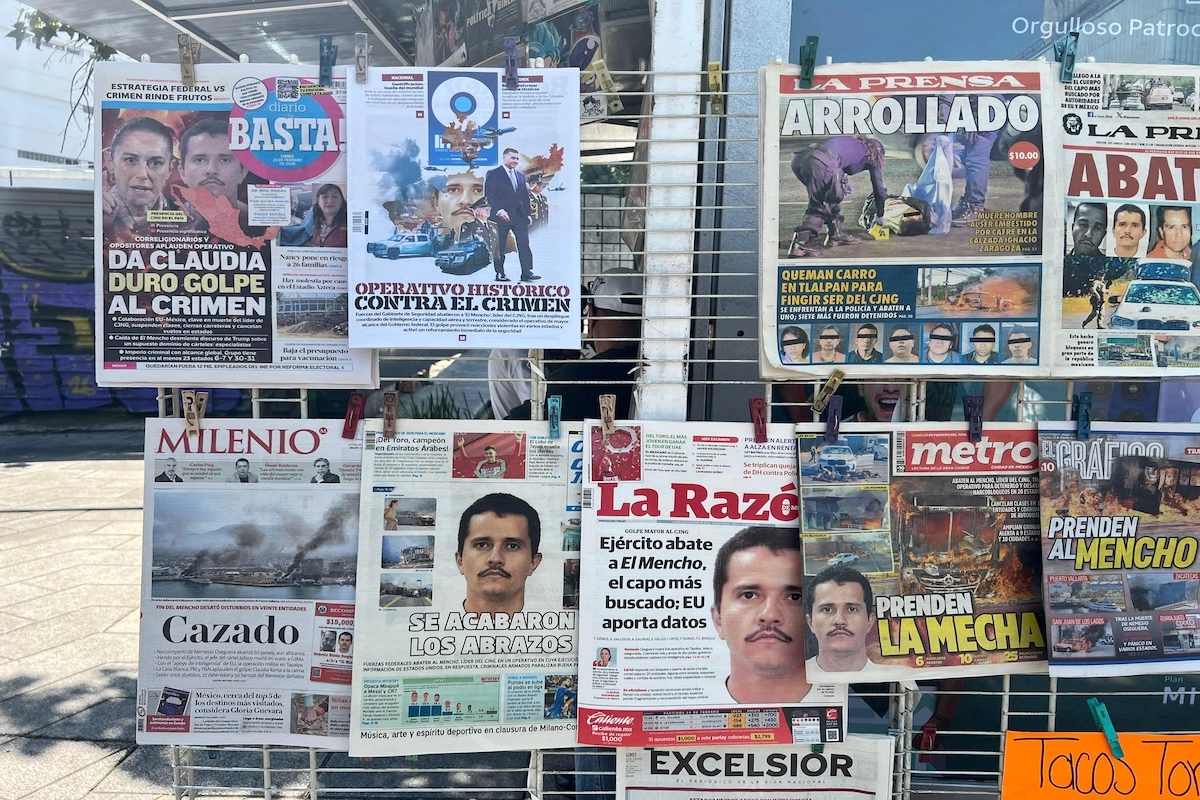
(Publish from Houston Texas USA)
Reports of El Mencho’s death signal a potential turning point in Mexico’s security strategy and a shift from López Obrador’s “Hugs Not Bullets” policy under President Claudia Sheinbaum’s administration.
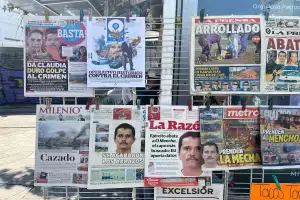
MEXICO CITY—One of the world’s most wanted drug traffickers, Rubén Nemesio Oseguera Cervantes, alias “El Mencho” was killed Sunday morning. His death came as part of an operation carried out by the Mexican government. According to Mexican officials, the operation took place in Tapalpa, Jalisco, in western Mexico. It was carried out with information and collaboration from U.S. authorities but executed solely by Mexican federal forces, they added.
Following El Mencho’s death, roadblocks, vehicle fires, and episodes of violence were reported in various parts of Jalisco. The state is a stronghold for the Cartel Jalisco Nueva Generacíon (CJNG), which the Trump Administration has designated as a Foreign Terrorist Organization. The ensuing chaos following the operation appeared to be aimed at sewing panic, and a sense of ungovernability. Videos flooded social media, including from the Guadalajara airport where crowds were seen fleeing.
Reports later found an AI driven campaign of misinformation was behind some portion of social media content. These include false reports of tourists—both Mexican and international—having been taken hostage by the cartel. Mexican authorities, meanwhile, have responded with a coordinated deployment of the Army, the National Guard, and other security forces to contain the situation.
Rise of El Mencho
El Mencho’s rise to power began around 2010, following the death of cartel leader Ignacio Coronel Villareal and the splintering of his group, the Milenio Cartel. Entrenched corruption, a nascent national security policy, and the enormous flow of weapons trafficked from the United States into Mexico allowed him to transform CJNG into a formidable paramilitary force.
Today, the CJNG not only traffics drugs. As is currently the case with criminal organizations worldwide, it controls other legal and illegal businesses. These include the extraction, transport, and sale of natural resources, human trafficking, extortion of merchants, influence peddling, and money laundering. The latter involves the participation of legally established companies in Mexico and other countries.
Taking on the cartels
Under the tenure of former Mexican President Andrés Manuel López Obrador, the country adopted an official policy of “Abrazos no Balazos,” or Hugs Not Bullets in dealing with extensive cartel violence.
The government of current President Claudia Sheinbaum, in contrast, has taken a more aggressive posture, putting CJNG in its sights from the very start. In 2020, CJNG attempted to assassinate Omar García Harfuch, head of security for Sheinbaum, then mayor of Mexico City. García Harfuch now directs Mexico’s national security policy.
The capture of El Mencho, considered the most powerful drug trafficker in Mexico, reflects this shift in the Mexican government’s security strategy, seen as well in earlier operations including Operation Northern Border, where Mexico’s government deployed 10,000 National Guard troops to border states to combat the trafficking of weapons, drugs, and people.
Mexico, US coordination
It is worth highlighting that despite the highly publicized tensions between Mexico and the United States over President Donald Trump’s immigration and tariff policies, the two governments have managed to work closely and in a coordinated manner on security matters. The strategy of Sheinbaum and Harfuch prioritizes operational intelligence, institutional and international coordination, as well as actions against high-profile targets in organized crime.
And while President Sheinbaum maintains an emphasis on social policy, as did her predecessor, her administration has combined this with a more robust and effective security strategy. That said, the capture of El Mencho and the violent reaction of his troops has unleashed criticism of Sheinbaum from her opponents, many of whom were part of previous administrations that allowed for the creation and growth of CJNG, as well as the other armed groups that operate in Mexico today.
Much to be done in Mexico, and the US
Much remains to be done in Mexico. The coming days will be crucial as CJNG will likely try to inflict as much damage as possible. Their actions will most probably consist of highly visible staged events, such as burning transport vehicles and blocking highways. The aim will again be to demonstrate their power and create chaos.
There is also the possibility of intra-cartel violence as others look to fill the vacuum left behind by El Mencho’s death. Still, much remains to be done in the United States as well. North of the border, demand for illicit drugs remains a seemingly bottomless well of funding for Mexico’s cartels. The unchecked sale and traffic of American-made arms, meanwhile, has put military grade weaponry into the hands of lawless criminals. Mexico’s government continues to take serious steps toward crippling organized crime in the country. It remains an open question whether the same can be said north of the border.
Manuel Ortiz Escamez is a Mexican journalist and sociologist with extensive experience in issues of democracy, human rights, and violence in Latin America. He is a member of the Democracy Action Lab at Stanford University, which researches issues of democracy and human rights worldwide.
For more information please visit our International news.