
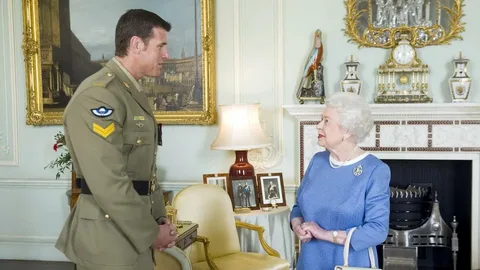

Ben Roberts-Smith, Australia’s most decorated living soldier and Victoria Cross recipient, has been arrested over alleged war crimes committed during Australia’s military operations in Afghanistan. The arrest marks a dramatic and historic turning point in a saga that has gripped Australia for years and raises deeply uncomfortable questions about military conduct, accountability, and justice.
This is not just a story about one man. It is a story about Australia in the Iraq War era, about what soldiers do in the fog of war, and about whether powerful institutions can ever truly hold their own accountable.
BACKGROUND
From War Hero to War Crimes Suspect
Ben Roberts-Smith was once the face of Australian military heroism. He received the Victoria Cross Australia’s highest military honour for his actions in Afghanistan in 2010. He was celebrated publicly, appeared on magazine covers, and was treated as a symbol of national pride by politicians and the military alike.
But behind that image, a very different picture was emerging. Allegations began surfacing that members of Australia’s Special Air Service Regiment the elite SAS had engaged in unlawful killings, throwdowns, and other serious misconduct during operations in Afghanistan. The term “throwdowns” in a military context refers to the alleged practice of planting weapons or objects on killed individuals to justify their deaths as legitimate.
Those allegations eventually led to the landmark Brereton Report a four-year inquiry that found credible evidence of 39 unlawful killings by Australian special forces in Afghanistan. Ben Roberts-Smith was among those whose conduct came under intense scrutiny.
DETAILS
The Arrest and What It Means
The arrest of Ben Roberts-Smith represents the most significant development yet in Australia’s long and painful reckoning with SAS war crimes. For years, critics argued that despite the findings of the Brereton Inquiry, actual criminal accountability remained elusive. An arrest of this magnitude signals that the Afghan inquiry process has moved from investigation to prosecution.
The Afghanistan Inquiry Response Task Force a body established specifically to manage the legal and investigative follow-up to the Brereton Report has been working with prosecutors and paralegals to build cases against individuals identified in the inquiry. A paralegal involved in the task force previously described the work as “extraordinarily complex,” involving witness protection, classified evidence, and international cooperation challenges.
Ben Roberts-Smith has consistently and forcefully denied all allegations against him. His legal team has challenged every aspect of the case brought against him, and he previously sued Australian newspapers for defamation over their reporting on the allegations a case he ultimately lost in 2023, with a federal court finding that the newspapers had proven on the balance of probabilities that he had committed war crimes.
Oliver Schulz and the SAS War Crimes Picture
Ben Roberts-Smith is not the only Australian SAS soldier whose name has appeared in connection with these allegations. Oliver Schulz, another former SAS soldier, was charged in 2023 with the murder of an Afghan man during a 2012 operation making him the first Australian soldier to face criminal charges arising from the Afghan inquiry. The Oliver Schulz SAS case opened the door that the Roberts-Smith arrest now walks through.
The SAS war crimes cases, as documented across multiple sources including what has become known informally as the SAS war crimes wiki of public reporting, describe a pattern of alleged conduct including unlawful killings of unarmed or wounded individuals, the use of throwdowns military practice to cover up killings, and a culture of secrecy within special forces units that made accountability extremely difficult.
Australia in Iraq War A Broader Pattern of Scrutiny
The current moment must also be understood in the broader context of Australia in the Iraq War and subsequent conflicts. Australia’s military involvement in Afghanistan ran from 2001 to 2021, overlapping significantly with the Iraq War period. Both deployments placed Australian special forces in extraordinarily high-pressure combat environments with limited oversight.
Critics have long argued that the culture of impunity within elite units did not emerge from nowhere it grew from years of deployments in which speed, lethality, and mission success were prioritised over legal compliance and civilian protection. The Afghan inquiry news has forced Australia to confront that institutional culture directly for the first time.
QUOTES
“The findings of the Brereton Report were some of the most damning ever made against the Australian Defence Force. What happens next in the courts will define whether accountability is real or merely symbolic.” Legal analyst, Australian National University
“Every soldier who served honourably in Afghanistan deserves to have these allegations resolved in court not left hanging indefinitely. Justice matters for victims and for veterans alike.” Former Australian Defence Force officer (identity withheld)
“The Afghanistan Inquiry Response Task Force has been doing difficult, meticulous work. This arrest shows that work is bearing fruit.” Human rights advocate, Sydney-based NGO
IMPACT
What This Means for Australia and Beyond
The arrest of Ben Roberts-Smith carries consequences that extend well beyond one individual’s legal fate. For Australia, it is a moment of genuine institutional reckoning a test of whether a democratic nation can hold its most celebrated military figures to the same legal standards as everyone else.
For Afghan victims and their families, the arrest represents a long-awaited signal that their suffering is being taken seriously by the Australian legal system. Human rights organisations have consistently argued that without genuine criminal accountability, the Brereton Report risks being remembered as a document that exposed wrongdoing but changed nothing.
Internationally, the case is being watched closely. Other nations whose soldiers face war crimes allegations including in Iraq, Syria, and Yemen are observing how Australia handles this moment. The credibility of Western nations in lecturing others about the laws of war depends in part on their willingness to apply those laws to their own soldiers.
The Afghan inquiry news has also reignited debate about the mental health of veterans, the ethics of special forces training, and the role of military culture in enabling or discouraging misconduct. These are not easy conversations, but they are necessary ones.
CONCLUSION
Justice Delayed, But Not Denied
The arrest of Ben Roberts-Smith does not end this story it begins a new chapter. A criminal prosecution will be long, complex, and fiercely contested. Roberts-Smith and his legal team will mount a vigorous defence, and the standard of proof in criminal proceedings is significantly higher than in the civil defamation case he lost in 2023.
What the arrest does confirm is that Australia is serious, at least for now, about following the Afghan inquiry process to its legal conclusion. The Afghanistan Inquiry Response Task Force paralegal and prosecution teams have worked for years to reach this point. The SAS war crimes cases from Oliver Schulz to Ben Roberts-Smith are now firmly in the hands of the courts.
Whether justice is ultimately served will depend on evidence, law, and the integrity of the process. But the fact that Australia’s most decorated soldier now faces criminal arrest over alleged war crimes in Afghanistan is itself a statement that rank, medals, and public honour do not place anyone above accountability.
FAQs
What were the 19 crimes to be sent to Australia?
The Brereton Report identified 39 incidents of alleged unlawful killing involving 25 current or former Australian soldiers. From these, the Afghanistan Inquiry Response Task Force referred a number of matters to the Australian Federal Police and Commonwealth Director of Public Prosecutions for potential criminal prosecution. The figure of 19 crimes referenced in some reporting relates to the specific referrals made for prosecutorial consideration, covering alleged murders and serious misconduct during special forces operations in Afghanistan between 2005 and 2016. Not all referrals have resulted in charges, and the process remains ongoing.
Have any Australian soldiers been charged with war crimes?
Yes. Oliver Schulz became the first Australian soldier criminally charged in connection with the Afghan inquiry when he was charged with murder in 2023 for allegedly killing an unarmed Afghan man during a 2012 operation. The arrest of Ben Roberts-Smith represents a significant escalation, as he is by far the most high-profile individual to face criminal proceedings arising from the Brereton Report findings. Additional charges against other individuals are considered possible as the Afghanistan Inquiry Response Task Force continues its work.
What did the Germans think of Australian soldiers?
Australian soldiers have historically enjoyed a strong reputation among German military observers and historians, particularly for their performance in both World Wars. During World War I, Australian and German forces faced each other extensively on the Western Front, and German commanders reportedly held Australian troops in high regard for their fighting ability and resilience. In modern contexts, Australia and Germany have served as NATO partners and allies in various multinational missions. However, the SAS war crimes revelations have inevitably complicated international perceptions of Australian military conduct in more recent conflicts.