In a significant Nov 26 incident bail cancelled ruling, the Islamabad High Court (IHC) has cancelled the bail of an accused in the Srinagar Highway case. The case relates to the PTI protest of Nov 26, 2024, when Rangers personnel were run over by a vehicle. A division bench led by Chief Justice Sardar Mohammad Sarfraz Dogar found that the trial court had not explained why the matter needed further inquiry. The bail question now goes back to the trial court, and both sides must appear there on Nov 25.
Background of the Srinagar Highway Rangers Case
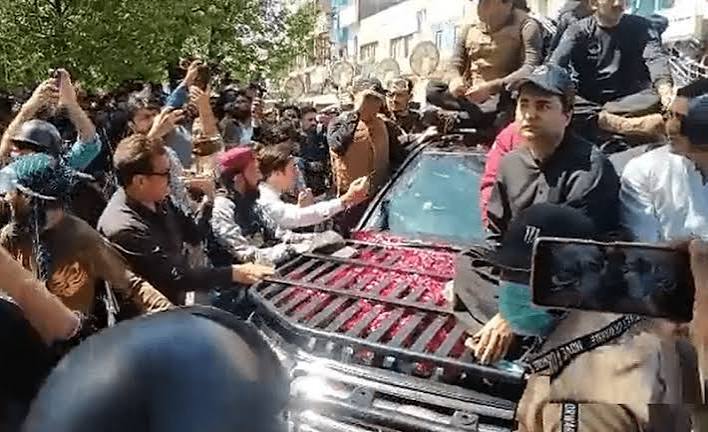
The case goes back to Nov 26, 2024, when PTI supporters marched towards Islamabad during a major protest. Containers were placed to block access to D-Chowk and the Red Zone, and the capital saw heavy deployments of security personnel. During that day, an incident on Srinagar Highway left Rangers personnel run over by a vehicle, and a criminal case was registered over it.
Since then, several matters linked to the Nov 26 protest have come before courts in Islamabad. Dawn’s related coverage shows that some of these cases have ended in acquittals or releases, while others are still moving through the legal process. The Srinagar Highway case stands apart because it concerns an allegation involving law enforcement personnel, which is why the prosecution has pursued it so firmly.
Details of the Islamabad High Court Bail Ruling
The Islamabad High Court bail ruling came on a petition filed by the prosecution, which asked for the accused’s bail to be cancelled. The bench, which included Justice Shahrukh Arjumand, allowed the petition and observed that the trial court had granted bail after arrest without recording any reasoning. In particular, the trial court had not shown why the case required further inquiry, which is the ground on which such bail was granted.
In its written order, the high court described this as an admitted position, meaning it was not seriously disputed during the hearing. Because of that gap, the court cancelled the bail and did not decide the merits of the case itself. Instead, it remanded the matter so that the trial court could look at the bail application again and pass a fresh order in accordance with law.
The high court directed the prosecution and the defence to appear before the trial court on Nov 25. That hearing will decide whether the accused is granted bail again, this time with proper reasons on record. Until then, the high court’s order stands, and the earlier bail remains cancelled.
What the Prosecution and Defence Argued
The prosecution was represented by Islamabad Prosecutor General Manzoor Ahmed Jajja. He argued that the trial court had granted bail to the accused on technical grounds. In simple terms, the prosecution’s case was that the bail order did not rest on a solid legal explanation and therefore could not be allowed to stand in a case of this seriousness.
Counsel for the accused took a different position. He told the court that bail had been granted around one and a half years ago, and that his client had appeared before the trial court on every hearing date since then. This argument pointed to the accused’s record of cooperation with the court and suggested that there was no sign of misuse of the bail.
The court did not dispute that the accused had been attending hearings. Its concern was narrower and rested on the form of the original order: reasons must be recorded when a court treats a case as one needing further inquiry. Dawn also reported that, according to police, Hashim Abbasi is already in custody in connection with another case.
Impact of the Ruling on the Nov 26 Protest Cases
The first and most direct impact is on the accused, whose bail is cancelled until the trial court decides the matter again. The outcome on Nov 25 is not fixed. The trial court can grant bail again with detailed reasoning, or it can refuse, depending on how it reads the material before it.
The wider legal impact is about the standard of reasoning in bail orders. This ruling is a reminder that even a bail order that stood for a long time can be challenged if it lacks recorded reasons. Lawyers on both sides of similar cases are likely to note this, because it shows that the delay in challenging an order does not automatically protect it. This is analysis based on the order as reported, and the full written order will give a clearer picture.
For public understanding, the case also shows how the legacy of the Nov 26 protest continues to shape Islamabad’s courts. Readers who follow national developments can find more updates in the National section of Pakistan Chronicle. For related reading on accountability and the justice system, see this piece on criminal accountability and the search for justice, and for security context, this article on Pakistan’s armed forces and regional diplomacy.
Conclusion
The Nov 26 incident bail cancelled decision does not decide guilt or innocence. It corrects a procedural gap, namely the absence of recorded reasons for treating the case as one needing further inquiry, and sends the matter back to the trial court. All eyes will now be on the hearing scheduled for Nov 25, where the prosecution and defence will argue the bail application again.
Whatever the outcome, the trial court’s fresh order will need to explain its reasoning clearly, because it may be tested again at a higher level. For now, the case remains an important example of how Pakistan’s courts handle the legal aftermath of the Nov 26 protest. Pakistan Chronicle will continue to follow the proceedings and report developments as they emerge.
Frequently Asked Questions
1. Why did the Islamabad High Court cancel the bail in the Nov 26 incident case?
The high court cancelled the bail because the trial court had granted bail after arrest without recording any reasons for treating the case as one that required further inquiry. The bench noted that this was an admitted position, so the prosecution’s petition was accepted. The cancellation is based on the missing reasoning in the order and not on a finding about the accused’s guilt, which will be decided during the trial.
2. Which case does this ruling relate to?
The ruling relates to the Nov 26, 2024 incident on Srinagar Highway, which took place during the PTI protest in Islamabad. In that incident, Rangers personnel were run over by a vehicle. The case has been before the courts since then, and the bail of one accused was the subject of the prosecution’s petition that the high court has now allowed.
3. What happens next in the case?
The high court sent the bail matter back to the trial court for a fresh decision. Both the prosecution and the defence have been directed to appear before the trial court on Nov 25. At that hearing, the trial court will hear the arguments again and pass a new order in accordance with law, which may either grant or refuse bail, this time with its reasoning recorded.
4. What did the prosecution and the defence say during the hearing?
Islamabad Prosecutor General Manzoor Ahmed Jajja argued for the prosecution that bail had been granted on technical grounds. The defence counsel responded that bail was granted around one and a half years ago and that his client had attended the trial court on every hearing date since. The high court focused on the lack of recorded reasons in the original bail order.
5. Does the cancellation of bail mean the accused has been found guilty?
No. Cancelling bail is not a verdict on guilt or innocence. It only means the accused cannot remain on bail under the earlier order, which the high court found to be lacking in reasons. The case will continue to be heard by the trial court, and the accused is presumed innocent unless the court convicts after a full trial. The bail question itself will be heard again on Nov 25.