Sindh Minister Calls for Strict Enforcement of Labour Laws and Workplace Safety Standards
Sindh Labour, Human Resources and Social Protection Minister Saeed Ghani has stressed the need for strict enforcement of labour and occupational safety and health (OSH) laws, saying that a conducive business environment and improved working conditions for labourers depend on stronger relations between the government and employers.
He said the number of workers employed in Pakistan’s informal sector was several times higher than that in the formal sector, making the registration of workers and the enforcement of labour laws major priorities for the Sindh government.
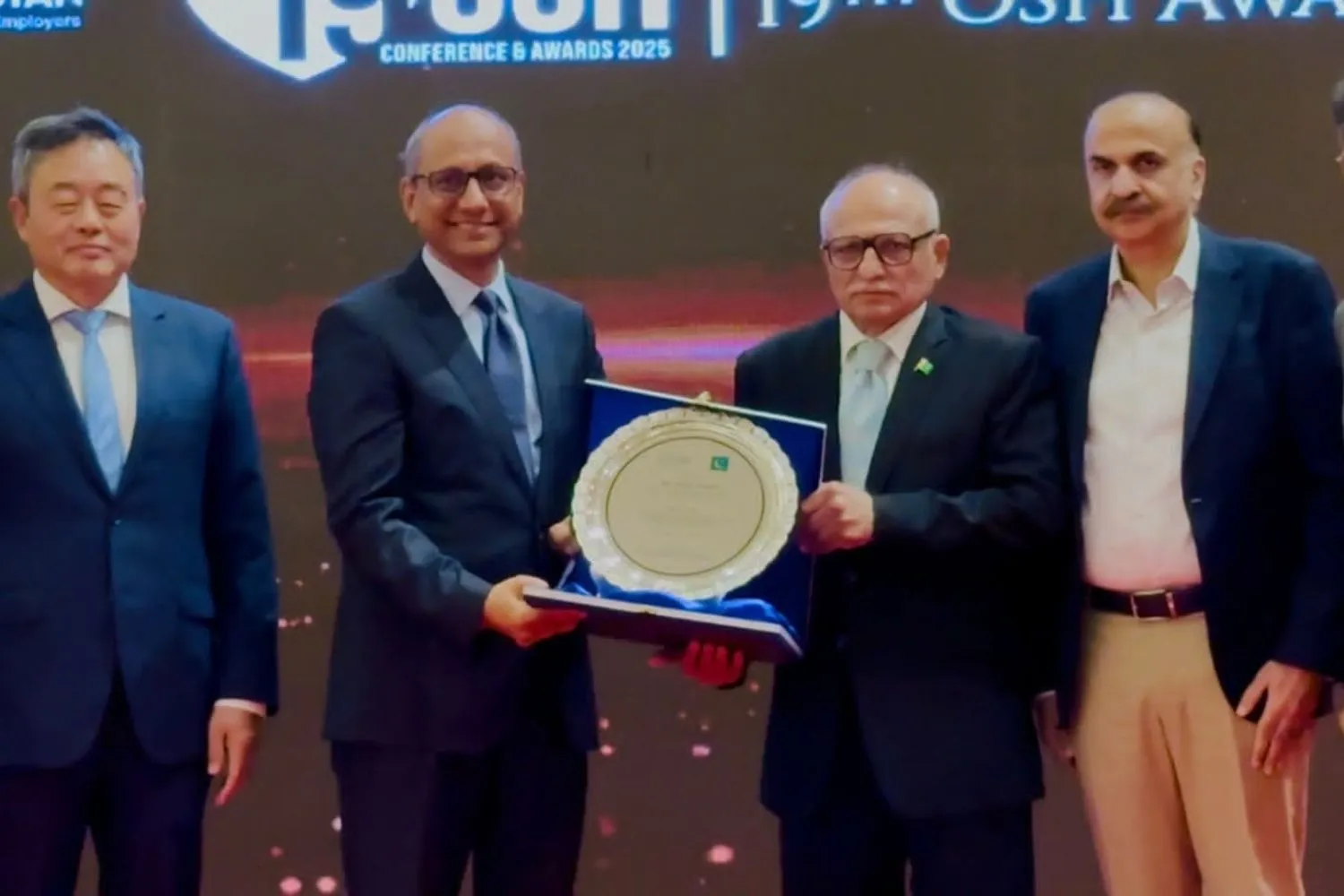
Addressing the 19th OSH Excellence Awards ceremony organised by the Employers’ Federation of Pakistan (EFP) at a local hotel on Tuesday, Ghani said the provincial government was committed to strengthening the implementation of labour laws, raising awareness, improving institutional capacity and encouraging businesses to adopt effective workplace safety measures.
EFP President Majyd Aziz, International Labour Organisation (ILO) Country Director for Pakistan Geir Tonstol, and World Health Organisation (WHO) Representative and Head of Mission in Pakistan Dr Luo Dapeng also addressed the ceremony.

Sindh Labour Secretary Sajid Jamal Abro, Pakistan Peoples Party Labour Bureau Sindh President Habibuddin Junaidi and other officials attended the event.
Several companies received the 2026 OSH Excellence Awards in recognition of their performance in workplace safety and health.
Congratulating the EFP on organising the ceremony, Ghani appreciated businesses that had demonstrated a strong commitment to protecting workers, improving workplace conditions and promoting safe, healthy and productive working environments.
He said more than 100 companies had met the relevant safety and health standards to qualify for recognition this year. However, he observed that the number of such companies should have reached thousands over the past 19 years.
Ghani said industrialists had begun paying greater attention to workplace safety following the Baldia factory tragedy, although some had taken the matter seriously even before the incident.
He added that, in his view, export-oriented industries continued to give greater priority to occupational safety and health than other businesses.
The minister said the Sindh Labour Department was initially focusing on registering workers in the formal sector and had entered into an agreement with the National Database and Registration Authority (NADRA) to facilitate the process. Registered workers were being issued Benazir Mazdoor Cards, he added.
Explaining the difficulties in registering informal-sector workers, Ghani said some employers were reluctant to register their entire workforce because of the contributions payable to the Sindh Employees’ Social Security Institution (SESSI). He also acknowledged that certain officials within the relevant institutions were involved in practices that obstructed registration.
He said he had begun consultations with employers and workers’ representatives four to five years ago to devise an alternative contribution mechanism under which employers could pay contributions based on annual turnover or another agreed percentage instead of a fixed amount for each worker.
He added that the relevant law had also been amended, opening up registration with SESSI beyond industrial workers to cover a wider range of employees.
Recalling the economic disruption caused by the Covid-19 pandemic, Ghani said several industries had shut down, leaving thousands of workers unemployed. Although the Sindh government had decided to provide financial assistance to affected workers, the absence of reliable, comprehensive data on the workforce had created serious difficulties.
He admitted that the government would at least have had a database of registered workers if the Benazir Mazdoor Card scheme had been launched before the pandemic.
The minister said the provincial government was continuing efforts to register formal- and informal-sector workers, as well as private-sector employees, despite resistance from within its own institutions.
He emphasised that responsibility for workplace safety could not be placed on workers alone, adding that shortcomings and a lack of responsibility were also evident among employers.
Citing the enforcement of mandatory helmet use for motorcyclists as an example, Ghani said the policy had faced protests over strict implementation and heavy fines. However, he argued that it was equally important to recognise how many precious lives had subsequently been saved in road accidents.
He called for collective efforts to overcome negligence and ensure strict compliance with industrial safety and health regulations, warning that even a minor factory accident resulting in a worker’s injury could affect the livelihood of an entire family.
Ghani said authorities should not only recognise companies that maintained high safety standards but also take action against industries that failed to put adequate protective arrangements in place.
He reiterated that stronger cooperation between the government and employers was essential for creating a favourable business climate and improving workers’ welfare. The provincial government, he said, was working to provide employers with a supportive environment, adequate resources and the assistance needed to run their businesses successfully.
“Unless employers prosper, the country’s economy cannot become stable, nor can its workers prosper,” he said, emphasising the need to improve industrial working conditions and provide better facilities.
The minister expressed hope that the award-winning companies would share their experiences and encourage wider adoption of effective OSH practices, particularly among small and medium-sized enterprises.
He also acknowledged the ILO’s valuable contribution to promoting decent work, occupational safety and health, and responsible business practices in Pakistan.