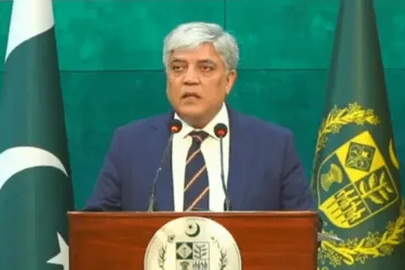
Foreign Office Warns of a “Forceful Response” to Any Attack
Pakistan has condemned the remarks of Indian Defence Minister Rajnath Singh, calling them provocative and a threat of aggression. Foreign Office spokesperson Sajjad Haider Khan made the statement at the weekly briefing on Friday, 16 October 2026. He said Pakistan is fully prepared to defend its sovereignty and that any aggression would be met with a forceful response. The exchange adds to the tension between the two nuclear-armed neighbours.
Background: Rhetoric After the May 2025 Conflict
The latest dispute follows a Thursday statement by Singh. According to Pakistan Observer and other outlets, he said any new terrorist activity originating from Pakistan would trigger a military strike larger than the previous one. I could not find Singh’s full remarks in an Indian primary source, so this account relies on those reports.
The two countries fought a brief conflict in May 2025 after an attack on tourists in Pahalgam, in Indian-administered Kashmir, killed 26 people. India blamed Pakistan-linked militants and launched Operation Sindoor on 7 May. Pakistan denied responsibility for the attack and responded with its own operation, called Bunyan-ul-Marsoos. A ceasefire followed on 10 May.
Details: What the Foreign Office Said
The Main Message
Khan said Singh’s remarks reflected New Delhi’s “hegemonic mindset” and carried a threat of Indian aggression against Pakistan. He said they posed risks to regional peace and stability in South Asia. He told reporters that “Pakistan remains fully prepared to safeguard its sovereignty,” according to Geo News.
Lessons From Last Year
The spokesperson recalled the May 2025 confrontation and said Pakistan had shown its ability and resolve to defend its territory. He urged India to learn from that experience, drop hostile rhetoric and take a responsible approach. He also said Pakistan’s restraint and commitment to peace should not be mistaken for weakness.
A Pattern of Exchanges
This is not the first such exchange this year. In July, the Foreign Office condemned Singh’s comments on Kashmir, which he reportedly made on a Sunday, calling them “highly provocative and irresponsible.” Pakistan’s defence minister, Khawaja Asif, also dismissed those remarks. In November 2025, the Foreign Office called Singh’s comments about Sindh “delusional and dangerously revisionist.”
What the Two Sides Say
Pakistan’s position is that it wants peaceful resolution of disputes but will defend itself. The Foreign Office has repeated that line in earlier statements, adding that it remains committed to settling disputes with India through peaceful means and international law.
India’s position, as described in reporting, is that Operation Sindoor was a response to terrorism and that it is not over. Singh has repeatedly described the operation as a pause, not an end. Each side blames the other for the tone of the exchange, and neither has offered talks.
Impact: Why It Matters for the Region
The main concern is the risk of miscalculation. India and Pakistan are both nuclear-armed, and the May 2025 fighting was the worst between them in decades. Strong rhetoric from senior officials can raise public expectations and reduce room for restraint if another attack occurs.
Other tensions add to the picture. India suspended the Indus Waters Treaty after Pahalgam, and the Kashmir dispute remains unresolved. Pakistan is also dealing with a separate border conflict with Afghanistan, which stretches its security attention.
Conclusion: What Comes Next
No new talks are scheduled, and both governments are expected to keep their positions. Observers will watch for further statements from Delhi and for any incident along the Line of Control. A fresh terrorist attack in Kashmir or India would be the most likely trigger for a serious escalation.
For now, the exchange remains verbal, and the ceasefire from May 2025 is still in place.
FAQs
What has Pakistan said about India?
This week, Pakistan’s Foreign Office rejected Rajnath Singh’s remarks as provocative. It said they reflect a “hegemonic mindset” and warned that any aggression would get a forceful response. It also urged India to learn from the May 2025 confrontation. Earlier, in July 2026, Pakistan condemned Singh’s comments on Kashmir and asked the UN to hold India accountable on the dispute. In November 2025, it called his remarks on Sindh “delusional.” Pakistan also says it wants disputes settled peacefully under international law.
Why is Pak attacking India?
The current reports do not show Pakistan attacking India. What is happening now is an exchange of statements. The last military fighting was in May 2025. It began after the Pahalgam attack on 22 April, which killed 26 people, mostly Indian tourists. India blamed Pakistan-linked militants and launched strikes on 7 May under Operation Sindoor. Pakistan denied responsibility for the attack and responded with its own operation. Both countries accept that a ceasefire was reached on 10 May. The cause of the conflict is disputed by each side.
How does Pakistan feel about India?
The government’s public position is a mix of firmness and a stated wish for peace. Officials criticise Indian leaders’ rhetoric, raise the Kashmir dispute and warn they will defend the country. They also say Pakistan is committed to resolving disputes through peaceful means and international law. Public opinion is harder to summarise, and I did not find reliable polling to cite. The relationship is shaped by the Kashmir conflict, past wars and the 2025 fighting, so views vary widely among people and politicians.
Who has won, India or Pakistan in war?
There is no agreed winner. After the May 2025 conflict, both countries claimed victory, and a US Congressional Research Service note said so. A CNN analysis argued that the conflict had no winners. A Stimson Center study cited by Dawn said Pakistan achieved a counter-air success on 7 May, while India says its strikes hit their targets. The sides also disagree over whether the US helped broker the ceasefire. The two countries have also fought earlier wars, and their outcomes are described differently in each country.