Joint Statement Says the Move Has No Legal Effect
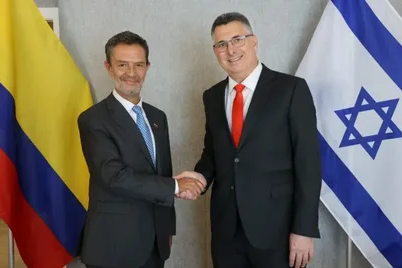
Pakistan and 17 other countries have strongly condemned the opening of the Colombia embassy in Jerusalem, saying the step has no legal effect. Their foreign ministers issued a joint statement on Friday, 16 October 2026, two days after the embassy was inaugurated. They said the move contravenes United Nations Security Council resolutions and weakens efforts to reach a lasting peace. Colombia’s government has described the opening as a diplomatic milestone.
Background: A Sharp Turn in Colombia’s Israel Policy
Colombia opened its embassy on Wednesday, 14 October, after conservative President Abelardo de la Espriella restored diplomatic ties that his predecessor, Gustavo Petro, had cut over the war in Gaza. The two countries first established relations in 1957 and have long had close security cooperation, and Colombia’s military uses Israeli-made equipment. Petro had announced plans for an embassy in Ramallah, in the occupied West Bank, but that mission never opened.
Restoring relations became a priority for the new government after it took office in August. In early October, Colombia named Tania Gilinski Bacal as its ambassador to Israel, with a brief to strengthen trade and cooperation on security, intelligence and cybersecurity. Protesters rallied in Bogotá against the policy shift before the embassy opened.
Details: What the Joint Statement Says
Who Signed
According to Pakistan’s Foreign Office and Dawn, the statement came from the foreign ministers of Pakistan, Algeria, Djibouti, Egypt, Indonesia, Jordan, Kuwait, Lebanon, Libya, Malaysia, Oman, Palestine, Qatar, Saudi Arabia, Somalia, Syria, Sudan and Türkiye. Some outlets, including Anadolu and the Saudi Press Agency, also list Yemen, which brings their count to 19. This article uses the figure given by Pakistan’s Foreign Office.
The Legal Argument
The ministers said they “strongly condemn and express their unequivocal rejection” of the inauguration. They cited UN Security Council Resolutions 476 and 478, both adopted in 1980. Those resolutions reject attempts to change Jerusalem’s character or status and call on states to withdraw diplomatic missions from the city.
They described Jerusalem as part of the Palestinian territory occupied in 1967. They said any measure to alter its legal or historical status, or to recognise it as Israel’s capital, is null and void. They also urged Colombia to reconsider and reverse its decision.
Earlier Reactions
Egypt, Kuwait and the Arab League condemned the move on Wednesday, the day the embassy opened. Pakistan and 13 other countries also issued a joint statement in May this year, when Somaliland announced plans for an embassy in Jerusalem. The latest statement follows the same pattern.
What Each Side Said
Israeli Foreign Minister Gideon Sa’ar welcomed the opening as “a day of celebration for Israel-Colombia relations, and for Jerusalem, our capital,” as reported by the Associated Press. Colombia’s Foreign Ministry called it a “diplomatic milestone.” Colombian Foreign Minister Omar Bula Escobar travelled to Jerusalem for the ceremony.
The 18 countries restated their support for an independent Palestinian state with East Jerusalem as its capital, based on the two-state solution. Both positions rest on the same city, which Israel treats as its capital and Palestinians claim as the capital of a future state.
Impact: Why the Colombia Embassy in Jerusalem Matters
For Colombia, the move places the country alongside the United States and a small group of states that have put embassies in Jerusalem. Most countries keep their embassies in Tel Aviv, saying Jerusalem’s final status must be settled in negotiations. The Times of Israel counts Colombia as the tenth country to open an embassy in the city.
For the wider region, the joint condemnation shows how quickly Arab and Muslim states react to such steps. Israeli officials have said other countries may follow, and the Democratic Republic of the Congo was named as an expected next opening. Each new embassy is likely to bring a similar round of statements.
Conclusion: What Comes Next
Further diplomatic reactions are possible, including at the United Nations. Colombia’s government is unlikely to reverse course, because restoring ties with Israel is central to its foreign policy. Domestic opposition may also grow, since the shift has already drawn protests.
For now, the dispute shows how one embassy can reopen a long-running argument over Jerusalem.
FAQs
What countries have their embassies in Jerusalem?
According to the Times of Israel, Colombia became the tenth country to open an embassy in Jerusalem. The others are the United States, Guatemala, Honduras, Kosovo, Papua New Guinea, Paraguay, Fiji, Somaliland and Nauru. Somaliland is a self-declared state that most of the world does not recognise, and Pakistan has called its embassy plan illegal. Most countries keep their embassies in Tel Aviv, because they say Jerusalem’s status should be settled in a final agreement between Israelis and Palestinians. The list can change quickly, so check recent reports.
Does Colombia support Israel or Palestine?
Colombia’s position depends on its government. Under President Gustavo Petro, the country strongly criticised Israel’s war in Gaza and cut diplomatic ties. Under President Abelardo de la Espriella, who took office in August 2026, Colombia has restored ties with Israel and opened an embassy in Jerusalem. At the same time, Colombia recognised the State of Palestine in 2018, a decision that has not been reported as reversed. Public opinion is divided, and protesters rallied in Bogotá against the new policy.
Does Colombia recognise Israel?
Yes. Colombia and Israel established diplomatic relations in 1957 and have cooperated closely on security ever since. Relations were severed under Petro over the war in Gaza and restored by de la Espriella. Colombia appointed an ambassador to Israel in early October 2026 and opened its embassy in Jerusalem on 14 October. Colombia also recognised Palestine as a free, independent and sovereign state in August 2018, under then-President Juan Manuel Santos, and the later government of Iván Duque acknowledged that decision was legal.