
Who Can Afford to Stay Healthy? Rural Hospitals Face a Breaking Point
By Tariq Khan, Pakistan Chronicle for American Community Media | September 18, 2026
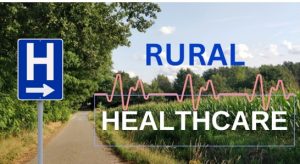
A rural road in the United States. More than 66 million Americans, one in five people nationwide, live in rural areas.
A Crisis Decades in the Making
More than 66 million Americans, one in five people in the country, live in rural areas, and the healthcare system that serves them is under mounting strain. That was the message delivered on September 18, 2026, when American Community Media, in partnership with the Robert Wood Johnson Foundation, convened a national briefing titled Rural Health Care at a Breaking Point: Who Can Afford to Stay Healthy? The virtual briefing, offered with interpretation in Korean, Mandarin and Spanish, drew ethnic and community media reporters from across the country to hear from three leading voices in healthcare policy, economics and primary care.
According to data presented at the briefing, roughly 8.4 percent of rural Americans currently have no health insurance at all. About 5 million Americans dropped their coverage as monthly premiums rose by an average of 25 percent in January, and advocacy groups expect another 15 percent increase in January 2027. The strain is most visible in the closure of rural hospitals. Citing May 2026 figures from the Center for Healthcare Quality and Payment Reform, briefing organizers said 720 rural hospitals nationwide are in danger of closing, with 294 facing shutdown within two to three years.
A National Policy View
Dr. Katherine Hempstead, a senior policy adviser at the Robert Wood Johnson Foundation, brought a national, data driven perspective to the discussion. Hempstead has spent more than a decade studying health insurance coverage, cost and access to care, and previously directed the Center for Health Statistics at the New Jersey Department of Health. Reporters on the call pressed panelists on how communities already struggling with limited resources will be affected. Nestor Fantini of HispanicLA.com asked about the specific challenges facing undocumented farmworkers in rural California, while Pamela Anchang raised concerns about mixed status families in which children who are citizens could lose access to care if their parents cannot obtain coverage.
A Physician’s View from the Ground
Dr. Amy Gordon Bono, a primary care physician in Mount Juliet, Tennessee, offered an on the ground perspective from a state where rural hospital closures have become an urgent concern. Bono, who chairs the public health committee of the Tennessee Medical Association, has testified before the Tennessee General Assembly on healthcare policy. Responding to a question from Michael Fitzgerald of the Finger Lakes Times about the loss of maternity care across the Western United States, Bono said the answer was to increase access to healthcare and prevent problems before they become critical, and to lower the cost of healthcare so that it is more accessible. She added that an ounce of prevention is worth a pound of cure, and that the American healthcare system does not prioritize prevention.
Real Consequences for Families
The human cost of the crisis came through in questions from reporters representing communities already stretched thin. John Zippert, co publisher of the Greene County Democrat in Alabama, said his community hospital and nursing home have struggled to stay open in a state that has not expanded Medicaid, and that the facility was not funded in the first round of the new Rural Health Transformation Fund despite applying.
Looking Ahead
Panelists agreed that the fund, created to offset the impact of Medicaid changes, falls short of what is needed for lasting improvement rather than short term fixes. With midterm elections approaching, reporters asked whether the political calculus around healthcare could shift. For now, the message from the briefing is clear. Without sustained investment, millions of rural Americans, including immigrant and minority families already facing barriers to care, risk losing access to the hospitals and clinics they depend on.
About the Speakers
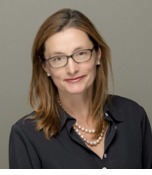
Dr. Katherine Hempstead
Dr. Katherine Hempstead is a senior policy adviser at the Robert Wood Johnson Foundation, where she focuses on health insurance, costs and access to care. She joined the Foundation in 2011 after directing the Center for Health Statistics at the New Jersey Department of Health, where she led major data initiatives including the state’s participation in the National Violent Death Reporting System. She holds a doctorate in demography and history from the University of Pennsylvania, was a postdoctoral fellow at Princeton University, and has taught history, public policy and biostatistics.
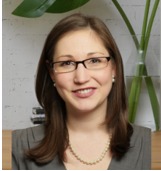
Dr. Amy Gordon Bono
Dr. Amy Gordon Bono is a primary care physician in Mount Juliet, Tennessee, and a native of Pulaski in southern middle Tennessee. She trained at Vanderbilt University, Tulane University School of Medicine and Northwestern University, and holds a master’s degree in public health focused on health systems management and policy. She chairs the public health committee of the Tennessee Medical Association and has testified before the Tennessee General Assembly. The views she expressed are her own and do not represent her employer or any affiliated organization.
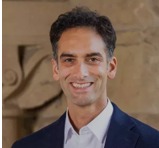
Dr. Neale Mahoney
Dr. Neale Mahoney is the Trione Director of the Stanford Institute for Economic Policy Research, a professor of economics at Stanford University, the George P. Shultz Fellow at the Institute, a research associate at the National Bureau of Economic Research, and an affiliated professor at J PAL. He served as a special policy adviser for economic policy in the White House National Economic Council in 2022 and 2023. He previously taught at the University of Chicago Booth School of Business and was a Robert Wood Johnson Fellow in health policy research at Harvard University. He received the ASHEcon Medal in 2021 and a Sloan Research Fellowship in 2016. Mahoney holds a doctorate and a master’s degree in economics from Stanford University and a bachelor’s degree in applied mathematics and economics from Brown University.