

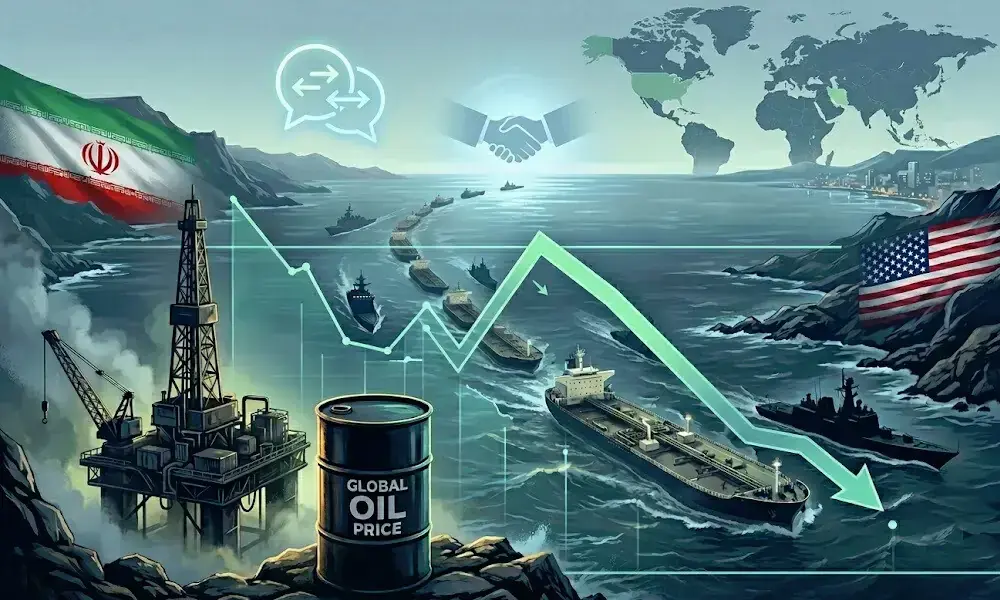

The US-Iran war remains the single biggest force driving global energy markets this week. Even as oil prices ease on hopes of diplomatic movement, the underlying conflict is far from resolved, and fresh attacks over the weekend show just how quickly sentiment could reverse.
Crude benchmarks slipped for a fourth consecutive session on Monday, with Brent trading close to $102 a barrel and WTI hovering just under $99. Yet officials on both sides have offered no confirmation that formal negotiations are actually underway.
Background: A Conflict That Keeps Reshaping Energy Markets
Since the war between the US, Israel, and Iran escalated earlier this year, oil markets have swung sharply on every twist in the conflict. Attacks on tankers, strikes on energy infrastructure, and disruptions near the Strait of Hormuz, one of the world’s most critical oil chokepoints, have repeatedly pushed prices higher.
Houthi forces in Yemen, which back Iran, have added another layer of volatility by striking Saudi Arabian targets directly, including energy facilities. That has forced Saudi Arabia, the world’s largest oil exporter, to temporarily adjust some of its shipping and production operations in recent months.
Details: This Week’s Developments
Hopes for progress are centered on the United Nations General Assembly session taking place in New York this week. Reports suggest an Iranian official could potentially engage with US counterparts on the sidelines, though nothing has been formally scheduled or confirmed by either government.
Meanwhile, the security situation on the ground tells a different story. Houthi fighters claimed missile and drone strikes on “sensitive” sites in Riyadh over the weekend, along with an attack on an Aramco facility in the Red Sea city of Yanbu, a major export hub for Saudi crude.
Diplomatic pressure is also building from other directions. China reportedly asked Iran to help rein in Houthi attacks after Saudi Arabia appealed directly to Beijing, suggesting Gulf states are now working multiple diplomatic channels at once to contain the fallout from the war.
Quotes: Caution Amid the Optimism
Market analysts have been careful not to overstate the chances of a breakthrough. A Singapore-based broker noted that the hope driving Monday’s price drop may or may not be justified, adding plainly that only time would tell how things unfold.
That caution reflects a broader pattern seen throughout the conflict: oil prices have repeatedly rallied on diplomatic hints, only to reverse when attacks resumed or talks stalled without a concrete agreement.
Impact: Ripple Effects Across the Global Economy
A prolonged US-Iran war continues to carry consequences well beyond the Middle East. Countries that rely heavily on imported crude, including Pakistan and other South Asian economies, feel the effects directly through fuel pricing, inflation, and transport costs whenever global benchmarks move sharply.
Shipping and insurance costs around the Strait of Hormuz remain elevated as long as the conflict continues, adding pressure to global supply chains. Any real diplomatic breakthrough would likely bring meaningful relief; continued escalation, on the other hand, risks pushing prices back toward the highs seen earlier in the war.
Conclusion: A Fragile Calm
For now, the oil market is caught between hope and caution. Diplomatic signals tied to the UN meeting have been enough to pull prices down from recent highs, but the Houthi attacks over the weekend are a reminder that the US-Iran war is still active on multiple fronts.
Until there is a confirmed, concrete step toward de-escalation, analysts expect oil prices to stay volatile, reacting quickly to both diplomatic headlines and fresh attacks in the region.
FAQs
What are the oil prices today?
Oil prices today, Monday, September 21, 2026, show Brent crude near $101.71–$102 a barrel and WTI crude near $98–$98.50 a barrel, both down roughly 2 percent and at their lowest point in over a week. The decline reflects hopes that this week’s UN General Assembly meeting could open a path to US-Iran diplomacy, even as the broader conflict, including new Houthi attacks on Saudi Arabia, remains unresolved.
What is Pakistan’s petrol price today?
Pakistan’s OGRA last set petrol at Rs343.87 per litre and high-speed diesel at Rs370.92 per litre, effective September 2, 2026, under the country’s daily petroleum pricing mechanism introduced in July 2026. Because rates are reviewed daily and tied closely to international crude benchmarks like Brent and WTI, any sustained fall in global oil prices linked to the US-Iran war could eventually feed through into future OGRA price notifications.
Why are oil prices dropping today?
Oil prices are dropping today largely because traders are betting that diplomatic engagement tied to the US-Iran war could gain momentum during this week’s UN General Assembly session in New York. That optimism, combined with a partial recovery in Saudi Arabia’s export capacity, has led investors to trim some of the risk premium built into crude prices, even though the conflict itself, including fresh Houthi strikes on Saudi energy sites, has not actually de-escalated on the ground.