

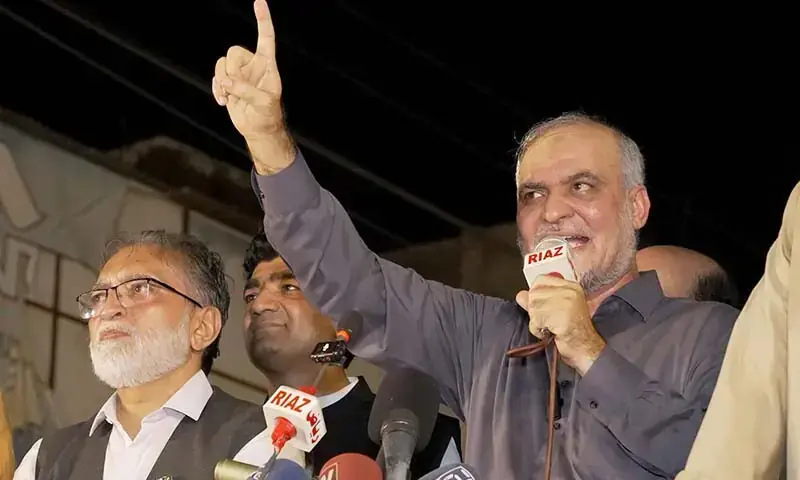

Jamaat-e-Islami has begun its long-promised march on Islamabad, putting the government on notice over a petroleum levy that has become the party’s central grievance this year. JI Emir Hafiz Naeemur Rehman warned on Sunday that if the government does not abolish the levy, the party’s protest could turn into a campaign to remove the government altogether. The Islamabad protest march marks the sharpest escalation yet in a standoff that has been building for weeks.
Background of the JI Islamabad March
The petroleum levy has sat at the center of JI’s politics for over a month now. The party intensified its campaign in stages after five rounds of negotiations with the federal government failed to produce a breakthrough, and Rehman has called the Islamabad long march the party’s “final call” on the issue. Sit-ins tied to the Jamaat-e-Islami petroleum levy protest have been running in dozens of cities for over a month, and this march is the culmination of that pressure campaign rather than a standalone event.
Details of the Protest March
Rehman addressed JI supporters at Karachi’s Cantonment Station before setting off for Islamabad, leading what the party has billed as a “train march.” Hyderabad was the first stop on the route, with participants continuing north from there toward the federal capital. Workers from other cities are travelling by road and are expected to converge on Islamabad from multiple directions as the week goes on.
JI leadership has been careful to frame this as a disciplined, non-disruptive protest march rather than a confrontation. Rehman has assured the public that the self-funded march will avoid road blockades and will not interfere with students sitting the upcoming Medical and Dental College Admission Test. That distinction matters for a party trying to keep public sympathy on its side while turning up the political heat.
What JI Is Saying
The party’s message has stayed consistent through weeks of sit-ins and now the march itself. Rehman said the government had chosen to make ordinary citizens pay for its own governance failures instead of offering relief, and argued that scrapping the levy could bring petrol prices down to around Rs200 per litre. He added that the march was being undertaken not for JI itself but on behalf of the country’s people, and said arrests would not deter the party.
Rehman has also aimed sharper criticism at the federal government directly, invoking the fall of Bangladesh’s former prime minister as a warning. That kind of language has raised the political temperature well beyond a routine pricing dispute.
Impact of the Petroleum Levy Protest
The federal government currently charges Rs114 per litre in tax on petrol and Rs100 per litre on diesel, a burden JI has repeatedly pointed to as proof the levy has outpaced what ordinary households can absorb. A sustained march reaching the capital carries real stakes for the government, both economically and politically, especially with other opposition movements also active at the same time.
Even as the march got under way, the government reopened contact with JI, with a federal minister inviting the party’s vice emir to another round of talks aimed at breaking the deadlock. That last-minute outreach suggests Islamabad is taking the march seriously rather than dismissing it as symbolic.
Conclusion
Whether this ends in a negotiated rollback of the levy or a longer standoff will likely become clear over the coming days, as JI convoys make their way toward the capital. For now, the petroleum levy protest has moved from scattered sit-ins into a single, coordinated push on Islamabad, and both sides appear to understand what is riding on it.
FAQs
Where is the JI protest march heading?
The march is headed to Islamabad, with the lead convoy travelling by train from Karachi through Hyderabad before continuing north. Separate convoys from other provinces are converging on the capital by road, with workers expected to arrive from multiple directions over the following days.
What are JI’s demands regarding the petroleum levy?
JI’s central demand is the full withdrawal of the petroleum levy, which the party has described as an unjustified additional tax on fuel. Party leaders have said that removing it could bring petrol prices down significantly, and have warned that failure to act could push their protest movement into a broader campaign against the government.
Will the protest disrupt daily life in Islamabad?
JI leadership has said the march will avoid road blockades and will be conducted in a way that does not disrupt routine activity, including ongoing academic exams in the capital. That said, large convoys converging on Islamabad over several days are likely to affect traffic and movement in parts of the city regardless of the party’s stated intentions.