

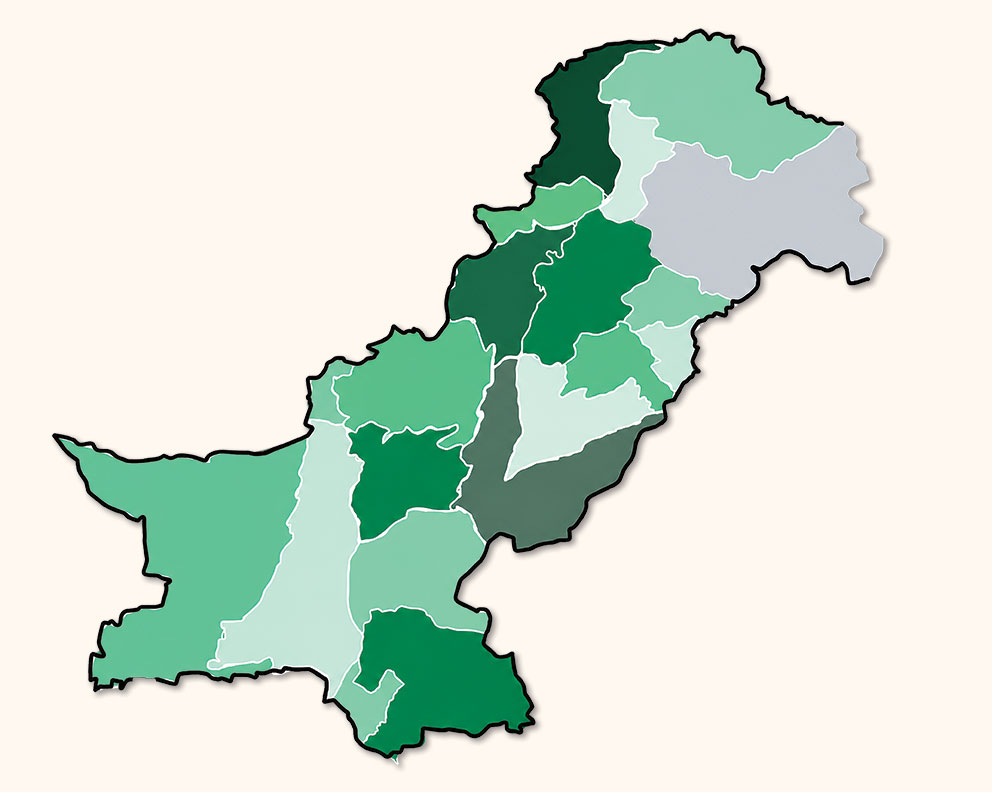

While politicians argue over whether Pakistan needs entirely new provinces, actual administrative reforms have quietly been rolling out in Punjab and Balochistan this year. New districts, redrawn boundaries and thousands of reassigned government employees show that some of this restructuring isn’t a future proposal. It’s already underway.
Background
Pakistan’s provincial governments have broad authority over local administration, and both Punjab and Balochistan used that authority in mid-2026 to reorganise how their bureaucracies function. At the same time, federal ministers have started talking publicly about a bigger structural “reset,” adding political weight to reforms that had mostly been technical decisions until now.
Details
Punjab’s Department Overhaul
In July, the Punjab government approved transferring 6,553 employees of the Population Welfare Department into a surplus pool managed by the Services and General Administration Department, as part of a wider restructuring. Staff across all 36 districts are being reassigned to newly created positions under the reorganisation plan.
Balochistan Redraws Its Map
Balochistan went further, approving what officials describe as one of the province’s most extensive administrative reforms ever, creating new divisions, districts, tehsils and sub-divisions, including Quetta East, Quetta West and a new Wadh district. The stated goal was to decentralise administration and bring public services closer to residents in a province where distances between district offices can stretch for hundreds of kilometres.
A Federal Push for a Bigger “Reset”
Interior Minister Mohsin Naqvi has separately called for creating new administrative units in Punjab and Sindh, saying Pakistan needs to “reset” its system to fix governance shortcomings, while insisting this would not affect any party’s political standing. He argued that large populations simply cannot be governed effectively from a single provincial capital, and also proposed granting Islamabad full provincial status, noting it currently gets no share under the National Finance Commission award.
Quotes
Naqvi told a ceremony in Lahore that any restructuring of administrative boundaries must stay within the Constitution and the law, and must be built on political consensus rather than the preferences of individual parties. He tied the whole push to population growth and changing public needs, and said devolving more authority to the grassroots level was overdue.
Impact
These reforms matter more day-to-day than the headline-grabbing new-provinces debate. Reassigning thousands of Punjab employees or redrawing Balochistan’s district map doesn’t require a constitutional amendment, so it can actually happen while the bigger political fight over new provinces drags on for years.
For residents, the practical effect depends heavily on execution. New districts and tehsils can shorten the trip to a government office considerably, but only if staffing and budgets actually follow the paperwork. Given how large Balochistan’s reform is, that rollout alone will take time to judge fairly.
Conclusion
Pakistan’s administrative reform story right now has two tracks running side by side: incremental provincial-level changes that are already happening, and a much larger new-provinces debate that’s still informal. How those two tracks eventually connect, whether the provincial reforms are eventually folded into a bigger constitutional restructuring or stay separate, is probably the question worth watching over the next few months.
FAQs
What is the administrative structure of Pakistan?
Pakistan runs on a federal system with four provinces (Punjab, Sindh, Khyber Pakhtunkhwa, Balochistan), plus Islamabad Capital Territory, Azad Jammu and Kashmir, and Gilgit-Baltistan. Provinces are divided into divisions, districts and tehsils, and since the 18th Amendment, provincial governments control most day-to-day public services.
Which city is richest in Pakistan?
Karachi holds that position by a clear margin. It generates around 22.5% of Pakistan’s national economy, with an estimated GDP of roughly $101.7 billion, more than Lahore, Faisalabad and every other major city combined.
What is Article 47 in Pakistan?
Article 47 covers the removal or impeachment of Pakistan’s President. It lays out a specific procedure that must be followed for removal, meaning the President cannot be removed through any other route, including claims of incapacity, without going through that process.