LAHORE: The Federal Board of Revenue has asked small shopkeepers and retailers across the city to sign up for its fixed tax scheme. Officials say the plan was built around one idea: make paying tax simple enough that small traders actually do it.
The pitch is straightforward. A one-page return, a flat rate of one percent of turnover, and a minimum tax bill of Rs25,000 a year. No accountant required, at least in theory.
What Prompted the Push
Pakistan’s retail sector has long sat outside the formal tax net. Millions of small shopkeepers report little or no income, and past attempts to pull them in in have run into resistance, partly because the old return forms were long, and partly because traders feared what documentation might invite.
The fixed tax scheme was notified through SRO 1166(I)/2026 as a direct response to that standoff. It gives shopkeepers an alternative path: skip the standard income tax return altogether and pay a fixed, predictable amount instead.
Who Is Covered
The scheme is aimed at individual shopkeepers and retailers, not large chains. Traders who run several outlets, jewellers, and professionals such as doctors, engineers and lawyers are excluded from the framework. Anyone whose turnover crossed the scheme’s threshold in the past three years is also left out.
Officials Explain the Details
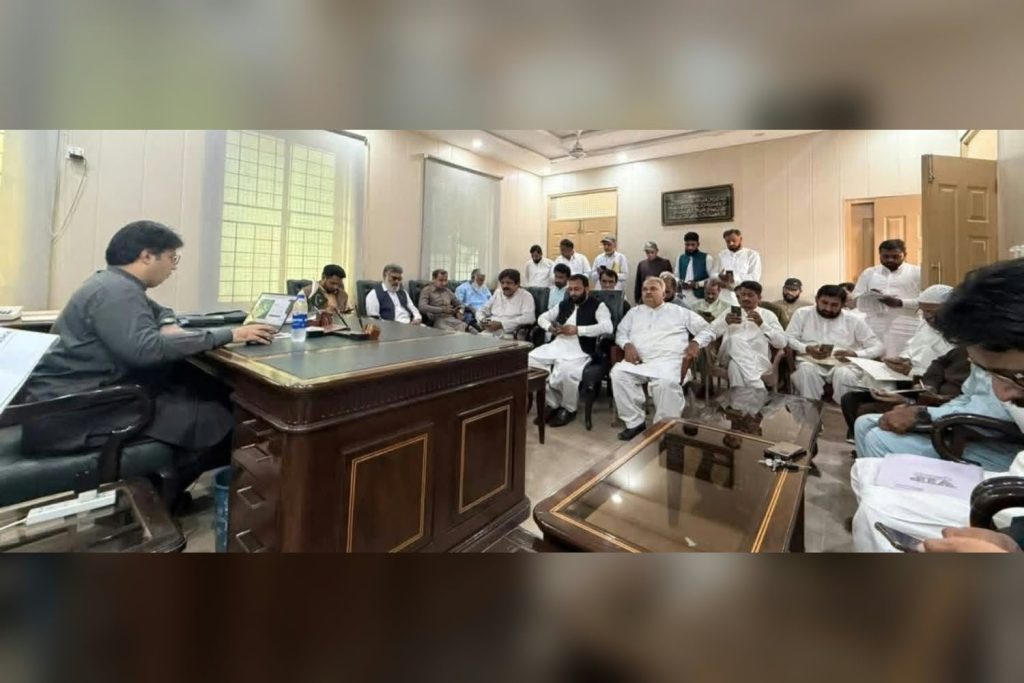
Speaking at a meeting with the Lahore Chamber of Commerce and Industry, Chief Commissioner Inland Revenue Fiza Batool laid out how the scheme actually works for shopkeepers who opt in.
“Broadening the tax base was essential for creating a level playing field,” she told the gathering, adding that the share of Pakistanis who pay tax remains negligible compared to the size of the economy.
She said registered shopkeepers get real relief in exchange for opting in: no routine audits, no requirement to integrate a Point of Sale system, and no mandatory digital invoicing. In place of those obligations, compliant traders receive what the FBR is calling a green plate.
“Field teams would generally not enter a registered business premises unless a major anomaly was identified,” Batool said, describing the green plate as one of the built-in safeguards against arbitrary inspections.
She was careful to stress that the scheme is optional. Shopkeepers can either move to the fixed tax system or keep filing under the regular income tax regime, whichever suits their business better.
What This Means for Traders
For a shop turning over roughly Rs2 million a year, the math works out simply. One percent of that turnover comes to Rs20,000, but since the scheme sets a floor of Rs25,000, that trader would pay the minimum amount rather than the percentage figure. Larger shops naturally pay more, since the one percent rate applies without a ceiling.
Registration runs through the FBR’s IRIS portal, its mobile app, or in person at the nearest tax office. Traders can also adjust any withholding tax already deducted against what they owe under the scheme, though the FBR has said excess withholding will not be refunded.
Business chambers have broadly welcomed the move, framing it as recognition that small traders were never going to fill out lengthy returns designed for large corporations. Batool told the LCCI gathering that the department’s doors were open to businesses with genuine concerns, and described the chamber as a bridge between tax officials and the trading community.
What Comes Next
The real test is uptake. Pakistan has rolled out simplified trader schemes before, and participation has typically fallen short of official targets. Whether this version fares differently will depend on how consistently the green plate protection is honoured on the ground, and whether shopkeepers come to trust that registering will not eventually invite the scrutiny it was meant to prevent.
The FBR has indicated it will continue outreach sessions with trade bodies in other cities as it looks to expand registrations beyond Lahore in the coming months.
Frequently Asked Questions
Is there a fixed tax scheme in 2026?
Yes. The FBR introduced the fixed tax scheme for small shopkeepers and retailers through SRO 1166(I)/2026. It is a voluntary special procedure that lets eligible traders pay a flat percentage of turnover instead of filing a standard income tax return, and Chief Commissioner Fiza Batool has been holding outreach sessions with trade bodies, including the Lahore Chamber of Commerce and Industry, to encourage shopkeepers to sign up for it.
What is a fixed tax regime?
A fixed tax regime is a simplified taxation arrangement where, instead of calculating tax through detailed income and expense records, an eligible business pays a predetermined rate applied to a simple measure such as turnover. In the case of the FBR’s scheme, that rate is one percent of annual turnover, with a minimum tax liability of Rs25,000, and it comes bundled with relief such as exemption from routine audits and Point of Sale integration for shopkeepers who register.
What tax will I pay on 20 lakhs?
On a turnover of Rs2 million (20 lakh), one percent works out to Rs20,000. Since the scheme sets a minimum tax of Rs25,000 regardless of turnover, a shopkeeper at this level would actually pay the Rs25,000 minimum rather than the percentage-based figure, because the floor amount applies whenever the calculated one percent falls below it.