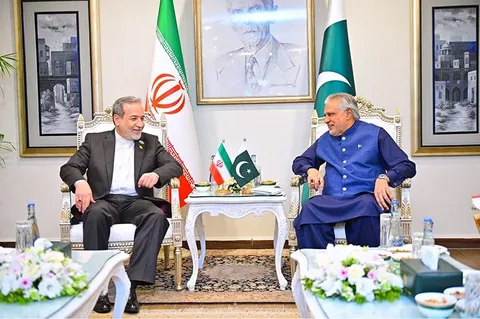
Pakistan’s Deputy Prime Minister and Foreign Minister Ishaq Dar sat down with Iranian Foreign Minister Abbas Araghchi on Tuesday, on the sidelines of the SCO Summit 2026 in Bishkek. The two men agreed on one thing above all: the Islamabad Memorandum of Understanding has to be followed through, not just signed and shelved.
The meeting took place as the wider Middle East remains tense, and it added another data point to Pakistan’s ongoing effort to keep itself in the middle of that conversation rather than on the sidelines of it.
What Led to This Meeting
The Islamabad MoU itself dates back to June 2026, when it was brokered as a framework to calm the standoff between Iran and the United States and to help reopen the Strait of Hormuz. It came together after weeks of on-and-off negotiations, and for a while, it looked like it might hold.
Then fighting between Washington and Tehran picked back up in early July, and the fragile understanding that Islamabad had helped stitch together came under real strain. Pakistani officials have been raising the MoU in nearly every regional forum since, and the SCO Summit 2026 gave them another platform to do exactly that.
This is also not the first Dar-Araghchi conversation on the topic. The two met earlier in July at the SCO Council of Foreign Ministers session in Cholpon-Ata, Kyrgyzstan, where they discussed much the same ground: de-escalation, dialogue, and holding the line on what had already been agreed.
Inside the Bishkek Talks
According to a statement from Pakistan’s Foreign Office, Dar told Araghchi that the sincere implementation of the Islamabad MoU remains the only realistic way forward given the state of the conflict in the Middle East. Dar had arrived in Bishkek a day earlier following a short visit to Turkiye, joining Prime Minister Shehbaz Sharif’s delegation for the summit.
The Bishkek meeting fits into a much bigger week for Pakistani diplomacy. The SCO Summit 2026, held under the Council of Heads of State format, brought together roughly a dozen leaders from across Eurasia, including Chinese President Xi Jinping, Russian President Vladimir Putin, Indian Prime Minister Narendra Modi, and Iranian President Masoud Pezeshkian. Shehbaz Sharif is expected to address the summit directly and is also set to hold separate bilateral talks with several of these leaders.
Pakistan’s stake in this particular summit goes beyond the Dar-Araghchi conversation. The country is due to take over the SCO Council of Heads of State chairmanship for the 2026-2027 term, a role that comes with real responsibility since Islamabad will host the next Council of Heads of State meeting itself.
What Officials Are Saying
Pakistan’s Foreign Office described the discussion between Dar and Araghchi as centered on the need for restraint and continued diplomatic engagement, rather than a return to open conflict. Araghchi, for his part, has previously acknowledged Pakistan’s role in supporting regional peace efforts and thanked Islamabad for helping with the safe return of Iranian sailors held during earlier maritime incidents.
Neither side used the meeting to announce anything new. That, in itself, says something: after weeks of instability, both foreign ministers appear more focused on protecting an existing agreement than negotiating a fresh one.
Why This Matters Beyond Bishkek
The stakes here extend well past a single bilateral meeting. The Strait of Hormuz carries a significant share of the world’s seaborne oil, and any breakdown in the Iran-US understanding risks rattling energy markets far beyond the region. Pakistan, which shares a long border with Iran and depends on regional stability for its own economic plans, has an obvious interest in keeping the MoU intact.
There’s also a broader signal in the timing. By raising the Islamabad MoU at the SCO Summit 2026, Pakistan is positioning itself as a country other regional players can lean on to keep channels open, even when Washington and Tehran are not talking to each other directly.
What Comes Next
With Pakistan set to chair the SCO for the coming year and host the SCO Summit 2027 in Islamabad, the country’s diplomats will have more opportunities to keep pushing this agenda. Whether the Islamabad MoU survives the next few months will depend far less on statements at summits and more on whether Washington and Tehran actually step back from further strikes.
For now, both Dar and Araghchi appear to be reading from the same page: keep talking, keep de-escalating, and try to protect what limited progress has already been made.
Frequently Asked Questions
Is Ishaq Dar the current foreign minister of Pakistan?
Yes, Ishaq Dar currently serves as Pakistan’s Deputy Prime Minister and Foreign Minister. He has held this dual role since 2024 and has been one of the most visible figures in Pakistan’s foreign policy over the past two years, representing the country at major regional forums including the Shanghai Cooperation Organisation meetings, the United Nations, and various bilateral engagements across the Middle East and Central Asia.
Who visited Pakistan recently?
Several regional officials have engaged with Pakistan recently, though the more notable recent development is Pakistan’s own outward diplomatic push, with Deputy PM Ishaq Dar and Prime Minister Shehbaz Sharif traveling to Bishkek for the SCO Summit 2026 and holding a series of bilateral meetings with visiting heads of state and foreign ministers, including Iran’s Abbas Araghchi, on the summit sidelines.
What is Pakistan’s stance on Iran?
Pakistan has consistently called for dialogue, restraint, and de-escalation between Iran and the United States rather than taking sides in the broader conflict. Islamabad has repeatedly stressed the importance of implementing the Islamabad MoU in full, describes its relationship with Tehran as close and longstanding, and has positioned itself as a facilitator working toward regional peace and stability rather than a party to the dispute.