Pakistan’s First Lady Aseefa Bhutto Zardari, has publicly urged the Punjab government to conduct a thorough and transparent investigation into the killing of 45-year-old Hina Javed, whose death in Rawalpindi this week has triggered nationwide outrage and a growing #JusticeForHina campaign. The case has drawn renewed attention to Aseefa Bhutto Zardari as a public figure, prompting fresh interest in her background, family, age and marital status alongside the news itself.
Background
Hina Javed, a 45-year-old woman, was found dead on Thursday morning in the bathroom of a second-floor apartment at Askari Apartments in Rawalpindi’s Lalkurti area. According to the first information report filed by her brother, her hands were tied behind her back, a cloth had been placed over her mouth, and a wire was found tied around her neck. Police say Hina had been married to Faisal Asghar, the son of a retired government official, since November 2025. Her brother alleged she had been killed by her husband, and the family has publicly accused her husband, her father-in-law, and a domestic worker of involvement in her death. The case escalated rapidly on social media, with the hashtag #JusticeForHina trending and prominent Pakistani celebrities, including actress Mahira Khan, voicing support for the family’s demand for accountability. Police have since arrested Hina’s husband and the domestic worker for questioning, while her father-in-law, also named in the case, remained at large as investigators awaited forensic and post-mortem findings.
Details
Aseefa Bhutto Zardari’s intervention places the case squarely in the national political conversation, adding pressure on Punjab authorities to ensure the investigation proceeds without delay or interference. As First Lady, and as someone who has previously spoken out publicly on cases of violence against women, her statement adds significant visibility to a case that has already generated widespread public anger. Her call for a thorough investigation echoes the demands already raised by Hina’s own family, who issued a statement urging the Punjab police to collect forensic evidence, examine all witnesses, and ensure that no one involved in the alleged crime, or in concealing it, escapes accountability. This is not the first time Aseefa Bhutto Zardari has spoken publicly on a case involving violence against women or girls; she has previously condemned similar killings, reflecting a consistent pattern of using her public platform to press for accountability in high-profile cases of gender-based violence in Pakistan. Her comments on the Hina Javed case follow a broader pattern in Pakistani politics, where senior public figures increasingly weigh in on cases that generate significant public attention, using their platforms to press provincial governments toward faster and more transparent action.
Who is Aseefa Bhutto Zardari?
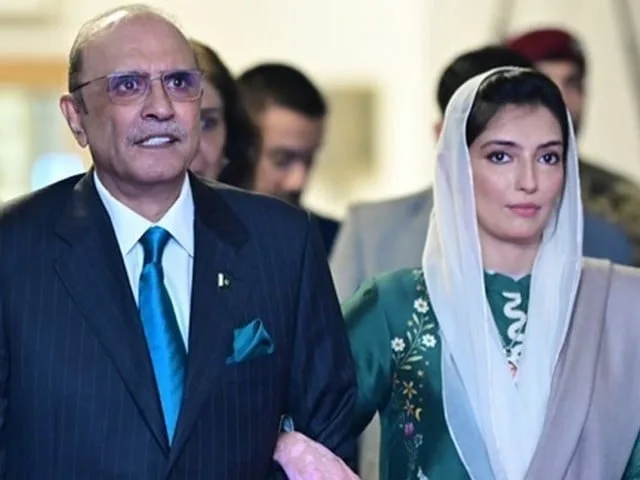
Aseefa Bhutto Zardari was born on February 3, 1993, in London, making her 33 years old. She is the youngest child of former Prime Minister Benazir Bhutto, who was assassinated in December 2007, and Asif Ali Zardari, the current President of Pakistan. She has two elder siblings: her brother, Bilawal Bhutto Zardari, chairman of the Pakistan Peoples Party, and her elder sister, Bakhtawar Bhutto Zardari. Aseefa studied at Oxford Brookes University, University College London, and the University of Edinburgh, and became known early in her public life as a health advocate, having served as Pakistan’s UN Ambassador for polio eradication. She made her formal political debut at a Pakistan Peoples Party rally in Multan on November 30, 2020, and was later elected unopposed to the National Assembly seat vacated by her father in Sindh’s Shaheed Benazirabad constituency, being sworn in as a Member of the National Assembly on April 15, 2024. In March 2024, President Zardari made the historic decision to formally recognize Aseefa as the First Lady of Pakistan, a title traditionally reserved for the spouse of the head of state. Since Zardari’s wife, Benazir Bhutto, was assassinated years before his second presidential term began, and he did not remarry, the decision marked the first time in Pakistan’s history that a president’s daughter, rather than his wife, held the title.
Is Aseefa Bhutto Zardari married?
As of the most recent public reporting, Aseefa Bhutto Zardari is unmarried and does not have children. While occasional rumors and public curiosity about her marital status have circulated over the years, including a 2015 report suggesting she was set to marry a college friend, none of these reports have been confirmed, and Aseefa has kept her personal life largely private. Unlike her elder sister Bakhtawar, Aseefa has focused publicly on her political career, her role as First Lady, and her advocacy work rather than personal matters.
Bakhtawar Bhutto Zardari: the married sister
Aseefa’s elder sister, Bakhtawar Bhutto Zardari, is married to Mahmood Chaudhry, a UAE-based businessman. The couple became engaged in November 2020 and married in a series of ceremonies at Bilawal House in Karachi in late January 2021, with the nikkah held on January 29 and the reception on January 30. Mahmood Chaudhry is the son of Younas Chaudhry, a Lahore-born, UAE-based businessman who built a fortune in the real estate and transportation sectors after migrating to the UAE in 1973. Bakhtawar and Mahmood have since welcomed three sons together, born in 2021, 2022 and 2024. Aseefa was present at her sister’s wedding celebrations, along with their brother Bilawal and their aunt Sanam Bhutto, as the siblings received guests together.
Quotes
Hina Javed’s family, in a public statement released after her death, described her as a daughter, sister, friend and young mother with plans and ambitions she deserved to live to see, language that has since been widely shared alongside the #JusticeForHina hashtag as the campaign gathered momentum online. The statement went further, urging the Punjab police and relevant authorities to conduct a fully transparent investigation, free from influence, pressure or delay of any kind, and specifically called on investigators to collect forensic evidence, examine every available witness, and ensure that no individual involved in the alleged crime, or in any attempt to conceal it, escapes accountability. Hina’s brother, Fahad Javed, has given the most detailed public account of the case so far. He told police and reporters that he received a call from his sister’s father-in-law, retired Colonel Asghar Fayyaz, informing him of an emergency and asking him to come to the apartment immediately. Fahad said that when he arrived with relatives, he found his sister’s body tied to the bathroom shower, her hands bound behind her back, a cloth placed over her face, and a wire tied around her neck, with blood visible near her mouth and on the bathroom floor. He has publicly alleged that his sister was killed by her husband, and separately said their elderly parents have been informed only that Hina died, without being told the full details of how.
On the law enforcement side, Rawalpindi police confirmed in an official statement that a murder case had been formally registered based on the complaint filed by the victim’s brother, and that two suspects, including Hina’s husband and a domestic worker employed at the residence, had been taken into custody and were being questioned as investigators awaited the results of a post-mortem examination. Police have not yet commented publicly on the family’s specific allegations against Hina’s father-in-law, saying only that the investigation remains ongoing and that all evidence collected at the scene continues to be reviewed. Public figures beyond Aseefa Bhutto Zardari have also weighed in as the case gained traction online. Actress Mahira Khan expressed sorrow over the killing in a series of Instagram Stories, sharing the family’s public letter calling for justice and helping push the #JusticeForHina hashtag further into mainstream conversation, with other members of Pakistan’s entertainment industry echoing similar calls for accountability in the days that followed.
Impact
The Hina Javed case has quickly become one of the most closely watched domestic violence cases in Pakistan this year, and Aseefa Bhutto Zardari’s public intervention adds a distinctly political dimension to what began as a local Rawalpindi crime story. Statements from senior public officials in cases like this one tend to have a measurable effect on how quickly and visibly provincial governments respond, since public commitments from high-profile figures create a form of accountability that is harder for local police departments or provincial administrations to quietly deprioritize. In this case, the pressure lands directly on Punjab’s provincial government, led by Chief Minister Maryam Nawaz Sharif, whose administration is now expected to demonstrate that the investigation is proceeding thoroughly and transparently rather than stalling, particularly given the family’s explicit public concern that the case could be influenced or delayed.
Beyond the immediate investigation, the case is already being folded into Pakistan’s broader, ongoing public conversation about domestic violence and how it is investigated and prosecuted. Cases involving women from stable, professionally established families, as Hina Javed’s case appears to be, often draw particular attention precisely because they complicate a common but incorrect public assumption that domestic violence is confined to less educated or economically disadvantaged households. The scale of the online response, including the rapid spread of the #JusticeForHina hashtag and public statements from entertainment figures with large followings, suggests the case may influence public discourse well beyond its immediate legal outcome, potentially adding momentum to longstanding calls from women’s rights organizations in Pakistan for stronger enforcement of existing domestic violence legislation and faster, more consistent police response in similar cases going forward. For Aseefa Bhutto Zardari specifically, her comments continue a pattern that has increasingly defined her public role since becoming First Lady: using a position that carries significant symbolic and political weight, but limited direct executive authority, to apply public pressure on issues of gender-based violence and public safety. That approach mirrors similar interventions she has made in prior cases, and it reinforces her emerging identity as a public figure willing to use her platform on socially sensitive issues, even when doing so places her, implicitly, in tension with provincial governments led by rival or allied political parties depending on the case.
Conclusion
As the investigation into Hina Javed’s death continues, the coming weeks are likely to bring further developments on several fronts. Investigators are still awaiting complete post-mortem and forensic findings, both of which are expected to play a central role in determining the formal charges brought against her husband and any other suspects. The status of her father-in-law, who remains at large according to the family’s public statements, is also likely to draw continued attention, particularly if public pressure, including from figures like Aseefa Bhutto Zardari, continues to build in the coming days. More broadly, how Punjab authorities handle this specific case may shape public expectations for how future domestic violence cases involving prominent or professionally established families are investigated and prosecuted across the province. If the case proceeds with the transparency both the family and the First Lady have publicly demanded, it could serve as a reference point for how such investigations should be conducted going forward. If it stalls or draws further public criticism, it is likely to reinforce existing skepticism among women’s rights advocates about the consistency of law enforcement response in cases of alleged domestic violence. Either way, Aseefa Bhutto Zardari’s public statement has already ensured that the case will remain under close national scrutiny rather than fading from public attention, and her continued engagement, or silence, on further developments is likely to be closely watched by both the public and political observers in the weeks ahead.
Frequently Asked Questions
Who is the father of Aseefa Bhutto Zardari?
Aseefa Bhutto Zardari’s father is Asif Ali Zardari, the current President of Pakistan, who is serving his second term in the role after previously holding the presidency from 2008 to 2013. Her mother was Benazir Bhutto, Pakistan’s first female Prime Minister, who was assassinated in December 2007. Asif Ali Zardari has led the Pakistan Peoples Party alongside his son, Bilawal Bhutto Zardari, and has been a central figure in Pakistani politics for decades, including his current role as head of state.
Is Aseefa Bhutto Zardari married?
No, based on publicly available and verified information, Aseefa Bhutto Zardari is not currently married and does not have children. She has occasionally been the subject of unconfirmed rumors regarding her personal life, including reports from 2015 suggesting a potential engagement, but none of these reports have been substantiated or confirmed by her or her family. She has instead built a public profile centered on her political career as a Member of the National Assembly, her role as Pakistan’s First Lady, and her long-standing advocacy work in public health, distinguishing her public image from that of her married elder sister, Bakhtawar Bhutto Zardari.
What is Aseefa Bhutto Zardari’s nationality?
Aseefa Bhutto Zardari is Pakistani. Although she was born in London, England, on February 3, 1993, while her parents were living abroad, she holds Pakistani nationality through her parents, former Prime Minister Benazir Bhutto and President Asif Ali Zardari, and has spent much of her life in Pakistan, particularly in Karachi. She currently represents a National Assembly constituency in Sindh province and holds the official title of First Lady of Pakistan, both of which are positions reserved for Pakistani nationals under the country’s constitution.