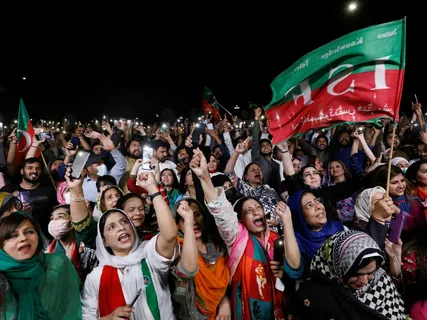
Pakistan’s political crisis in Pakistan has intensified in 2026, driven by continued PTI protests demanding Imran Khan’s release, the aftermath of the TLP ban following violent Gaza solidarity marches, and mounting friction between the federal government and opposition forces. The unrest has raised fresh questions about the country’s political stability, civil liberties, and the future of democratic dialogue. Analysts warn that repeated crackdowns risk deepening polarization rather than resolving it.
Background
Pakistan’s current political turmoil traces back to April 2022, when Imran Khan was removed as prime minister through a no-confidence vote, triggering years of confrontation between his party, PTI, and the coalition government that succeeded him. The arrest of Imran Khan in 2023 sparked the deadly May 9 riots, a turning point that led to mass arrests of PTI leaders and workers across the country. Since then, PTI protests have become a near-permanent feature of Pakistan’s political landscape, with the party repeatedly organizing marches toward Islamabad to demand Khan’s release and to challenge the legitimacy of the 2024 general election results. Alongside this, religious-political party Tehreek-e-Labbaik Pakistan, commonly known as TLP, has staged its own large-scale demonstrations, further complicating the security and political environment. In October 2025, TLP protests turned violent after the group marched from Lahore toward Islamabad in solidarity with Palestinians during the Gaza war. Clashes with security forces left several people dead, prompting the government to formally ban TLP later that month for alleged involvement in terrorism and violence. This made TLP one of the most prominent banned political parties in Pakistan in recent memory.
Details
The political problems of Pakistan today extend well beyond a single party or protest movement. PTI continues to organize demonstrations against what it calls government crackdowns, with the party in May 2026 publicly criticizing authorities for detaining workers following nationwide protests and calling for their release. PTI has also linked its street activism to opposition allies, including calls for a budget boycott over concerns about Imran Khan’s treatment in custody. At the provincial level, political instability has also emerged outside the PTI-government standoff. In October 2025, Khyber Pakhtunkhwa experienced a brief constitutional crisis after disputed resignation claims involving then-Chief Minister Ali Amin Gandapur, followed by a contested transition of power to his successor. The episode illustrated how fragile provincial governance structures remain amid the broader national crisis. Meanwhile, TLP has continued to organize protests even after its formal ban, with the group calling for nationwide demonstrations in July 2026 over its ongoing grievances, including demands for the release of its detained leadership. This underscores a broader pattern in Pakistan riots since 2023: banning a party or arresting its leaders rarely ends the underlying unrest, and often shifts protest activity into new forms. Civil society groups and other political parties have also weighed in on the impact of repeated street protests. Officials from parties such as the Pakistan Peoples Party have previously argued that some protest movements end up inconveniencing ordinary citizens rather than achieving their stated aims, reflecting a broader public fatigue with the cycle of demonstrations and shutdowns that has become common in major cities. Security responses have grown increasingly assertive as well. Authorities have repeatedly imposed Section 144 restrictions, deployed shipping containers to block roads, and suspended mobile internet services in Islamabad and Rawalpindi during major protest events. Legislation such as the Peaceful Assembly and Public Order Bill has also been used to regulate political gatherings, a move critics say restricts constitutional rights to assembly.
Quotes and Reactions
Officials have offered differing perspectives on the unrest. Punjab’s police leadership has previously stated that violence during protests, including attacks on officers, forced security forces into defensive action rather than initiating confrontation. PTI representatives, on the other hand, have accused the state of using excessive force and arbitrary detentions against peaceful demonstrators. Political commentators note that both PTI and TLP have successfully used social media and international outreach to sustain pressure on the government, even amid domestic restrictions. This digital mobilization has become a defining feature of how political problems of Pakistan now play out, extending far beyond physical protest sites.
Impact
The recurring cycle of PTI protests, TLP protests, and government crackdowns carries significant regional and economic consequences. Investor confidence remains sensitive to political instability, particularly as Pakistan works to sustain the economic stabilization gains achieved through IMF-backed reforms since 2023. Prolonged unrest risks undermining that fragile progress. The political crisis in Pakistan has also strained civil liberties, with internet shutdowns, mass arrests, and restrictions on assembly becoming routine tools of crisis management. Human rights observers argue this approach may offer short-term order but does little to address the underlying causes of dissent, potentially setting the stage for further Pakistan riots in the future. Regionally, the unrest has drawn attention from international media and diplomatic circles, particularly given TLP’s ties to broader geopolitical issues such as the Gaza conflict. This has added an international dimension to what began as a largely domestic political confrontation between PTI and the ruling coalition.
Conclusion
As Pakistan moves further into 2026, the underlying drivers of its political crisis, including PTI’s demand for Imran Khan’s release, unresolved grievances from banned political parties like TLP, and provincial governance disputes, show few signs of resolution. Analysts widely expect continued protest activity, particularly around politically sensitive dates and legislative sessions such as budget announcements. Whether the government pursues dialogue or continues its current approach of legal bans and security crackdowns will likely shape the country’s political trajectory in the months ahead. For now, Pakistan’s political landscape remains defined by uncertainty, with citizens, businesses, and international observers watching closely for signs of either escalation or eventual stabilization.
FAQs
What is the current political crisis in Pakistan?
The current political crisis in Pakistan stems from the prolonged confrontation between PTI and the ruling coalition government following Imran Khan’s removal from power in 2022 and his subsequent imprisonment. This has fueled repeated PTI protests demanding his release, alongside separate unrest involving religious-political groups like TLP, whose 2025 protests led to a formal government ban. Provincial disputes, such as the 2025 Khyber Pakhtunkhwa leadership crisis, have further added to the sense of ongoing political instability across the country.
Why are people in Pakistan protesting?
People in Pakistan are protesting for a range of overlapping reasons, including PTI supporters demanding the release of Imran Khan and challenging the legitimacy of recent election results, and TLP supporters mobilizing around religious and geopolitical causes, including solidarity with Palestinians during the Gaza war. Economic hardship, restrictions on political assembly, and frustration over repeated crackdowns have also contributed to sustained public demonstrations across major cities, including Islamabad, Lahore, and Rawalpindi.
What is the political situation in Pakistan right now?
Pakistan’s political situation remains tense and unsettled, with PTI continuing to organize demonstrations against the current government while facing allegations of crackdowns on its workers. TLP, despite being formally banned in October 2025, has continued to call for nationwide protests over its leadership’s detention. Meanwhile, provincial governance disputes and ongoing security measures such as internet shutdowns and assembly restrictions continue to shape daily political life in the country.