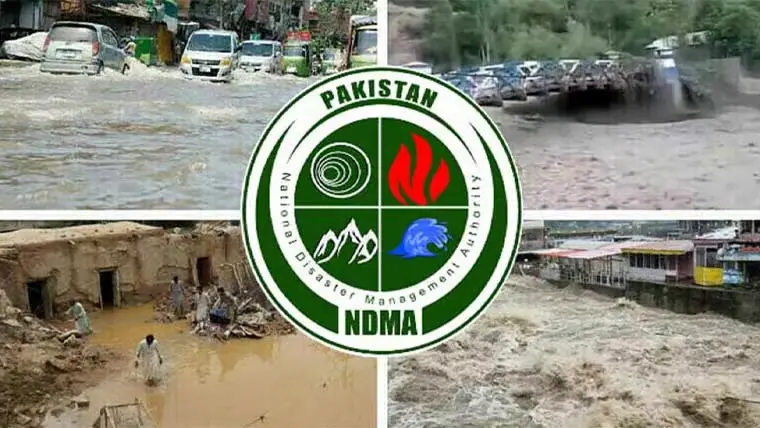
Officials issued a fresh flood update today in Pakistan, warning citizens across Punjab, Khyber Pakhtunkhwa, Balochistan and Azad Kashmir that river levels remain elevated as the 2026 monsoon season continues. The National Disaster Management Authority has repeated its flood warning in Pakistan 2026 after weeks of heavy rainfall pushed several rivers into low-to-medium flood zones.
This flood update today in Pakistan Punjab comes at a time when authorities are already managing the aftermath of a difficult monsoon spell. Provincial disaster departments have been placed on high alert, and citizens in vulnerable districts are being urged to stay away from riverbanks, hill torrents and low-lying urban areas until conditions stabilise.
Background: Why Pakistan Is Facing Repeated Flood Warnings in 2026
Pakistan’s monsoon season typically runs from late June through September, and 2026 has followed a familiar but troubling pattern. Heavy rain systems moving in from the Arabian Sea and neighbouring India have repeatedly triggered flood warning Pakistan alerts throughout July and August, with the National Disaster Management Authority issuing multiple nationwide bulletins over the past several weeks. This year’s monsoon has been shaped by low-pressure systems forming over Rajasthan and moving into Punjab and Sindh, dumping heavy to very heavy rainfall on catchment areas that feed directly into the Indus, Chenab, Jhelum and Ravi river systems. The result has been a cycle of rising and falling flood levels at major barrages, with hill torrent regions like Dera Ghazi Khan and Rajanpur facing repeated flash flood risk.The scale of this year’s monsoon has renewed public memory of previous flood disasters, including the catastrophic 2022 floods that displaced millions and caused tens of billions of dollars in damage, as well as last year’s severe flooding that struck Punjab and northern regions. That history is part of why every fresh flood update today in Pakistan draws such close national attention.
Details: Current Flood Situation and FFD Current State of Rivers 2026
According to the latest bulletins referenced in the FFD current state of rivers 2026 tracking, moderate flood levels have been recorded at Guddu Barrage on the Indus River, while low-level flooding continues at Kalabagh, Chashma, Taunsa and Sukkur. On the Chenab River, flows at Marala have fluctuated between moderate and high levels, with Khanki and Qadirabad experiencing low-to-moderate conditions depending on upstream rainfall. The Jhelum River has also seen increased flows near Mangla Dam, while the Ravi River at Baloki has recorded low-level flood conditions during peak rainfall spells. Authorities tracking the Pakistan flood map have flagged Rawalpindi, Gujranwala, Sialkot, Sargodha, Jhelum, Mandi Bahauddin, Narowal, Lahore, Okara, Sahiwal and Faisalabad as urban centres facing potential waterlogging and localised flooding risk. In Khyber Pakhtunkhwa, districts including Peshawar, Nowshera, Charsadda, Mardan, Buner, Shangla, Chitral and Upper Dir remain under close watch for flash flooding in streams and nullahs. Balochistan’s Zhob, Musakhel, Kohlu, Barkhan and Dera Bugti districts have also been named in flood advisories due to heavy rainfall in upper catchment areas, along with flash flood risk in Bagh and Kotli in Azad Kashmir. Disaster management officials have consistently advised residents to avoid crossing flooded roads, drains and bridges, and to postpone non-essential travel through flood-prone mountainous regions where landslides and debris flows remain a serious secondary hazard during heavy rain spells.
Quotes: What Officials Are Saying
Disaster management officials have repeatedly stressed that this flood warning in Pakistan 2026 should be taken seriously by residents of at-risk districts. NDMA bulletins have consistently urged provincial and district administrations to remain on high alert and to keep emergency response resources ready ahead of forecast rainfall spells. Provincial leadership in Punjab has also weighed in on relief efforts during earlier flood emergencies this year, emphasising that timely evacuation planning and coordination between rescue agencies has been central to reducing casualties. Meteorological officials have separately noted that monsoon systems this year have been unusually persistent, with successive wet spells arriving in close succession rather than isolated events, which has kept river systems under continuous pressure.
Impact: Regional and National Consequences
The repeated flood warning Pakistan alerts throughout 2026 have had wide-ranging effects. Agricultural land across Punjab and Sindh has faced repeated waterlogging risk during a critical point in the crop cycle, raising concerns for rural livelihoods. Urban centres named in this flood update today in Pakistan Punjab have also faced disrupted transport, damaged infrastructure and strain on municipal drainage systems during peak rainfall. Beyond the immediate physical damage, these recurring flood events place significant pressure on national disaster response capacity, relief camp logistics, and public health systems, particularly given the risk of waterborne disease outbreaks following prolonged flooding. Regionally, transboundary river flows shared with India add an additional layer of complexity, since upstream rainfall and dam releases can directly affect downstream flood levels in Pakistani Punjab .The broader economic impact also extends to daily wage earners, transport networks and small businesses in flood-affected districts, many of whom face repeated disruption each monsoon season without long-term structural flood mitigation in place.
NDMA Pakistan Internship 2026: A Related Opportunity Amid Disaster Response
Alongside its flood response operations, the National Disaster Management Authority continues to run its NDMA Pakistan internship 2026 programme, giving students and young professionals a chance to gain first-hand exposure to disaster risk reduction, emergency coordination and relief operations. Interested candidates looking into NDMA internship 2026 apply online options are NDMA internship 2026 apply online raged to check the authority’s official careers and jobs portal directly, since internship intake windows, eligibility criteria and documentation requirements are updated periodically by NDMA itself. Given the scale of this year’s flood response workload, disaster management internships and volunteer placements have taken on added relevance, offering participants direct insight into how national and provincial authorities coordinate flood forecasting, evacuation planning and relief distribution during an active monsoon emergency.
Conclusion: What to Expect Next
As monsoon activity continues, further flood update today in Pakistan bulletins are expected in the coming days, particularly if fresh low-pressure systems develop over the region. Residents in Punjab, Khyber Pakhtunkhwa, Balochistan and Azad Kashmir are advised to stay alert to official NDMA advisories, follow the latest Pakistan flood map guidance, and avoid unnecessary travel through flood-prone or hill torrent areas. Provincial disaster authorities are expected to maintain heightened readiness through the remainder of the monsoon season, with barrage and river level monitoring continuing around the clock. Citizens are urged to rely only on verified government sources for flood warning Pakistan updates rather than unconfirmed social media reports, particularly during fast-moving weather events.
Frequently Asked Questions
Is there a risk of flooding in Pakistan in 2026?
Yes, there is an ongoing risk of flooding in Pakistan in 2026, particularly in Punjab, Khyber Pakhtunkhwa, Balochistan and Azad Kashmir. The National Disaster Management Authority has issued repeated flood advisories throughout the monsoon season, citing rising water levels at major barrages including Guddu, Kalabagh, Chashma, Taunsa and Sukkur, along with flash flood risk in hill torrent regions such as Dera Ghazi Khan and Rajanpur. Urban centres across Punjab, including Lahore, Rawalpindi, Gujranwala and Faisalabad, have also faced periodic urban flooding and waterlogging warnings due to heavy monsoon downpours overwhelming drainage systems.
Why is Pakistan flooding so much?
Pakistan experiences recurring flooding due to a combination of factors, including intense monsoon rainfall, glacial melt in northern mountain regions, and river systems that carry heavy seasonal water volumes through densely populated plains. Climate change has intensified rainfall patterns in recent years, leading to more frequent and severe wet spells. Poor urban drainage infrastructure, encroachment on natural floodplains, and the country’s dependence on transboundary rivers shared with neighbouring regions further increase flood vulnerability, especially during peak monsoon months between June and September.
How many people died on 26 July 2005?
The 26 July 2005 flooding is most closely associated with catastrophic monsoon flooding that struck Mumbai, India, where torrential rainfall caused widespread urban flooding and a significant loss of life across the city and surrounding Maharashtra state. While this event occurred in India rather than Pakistan, it is frequently referenced in South Asian disaster history discussions because it highlighted how quickly urban centres in the region can become overwhelmed by extreme monsoon rainfall, a risk that continues to apply to major Pakistani cities during heavy flood seasons today.