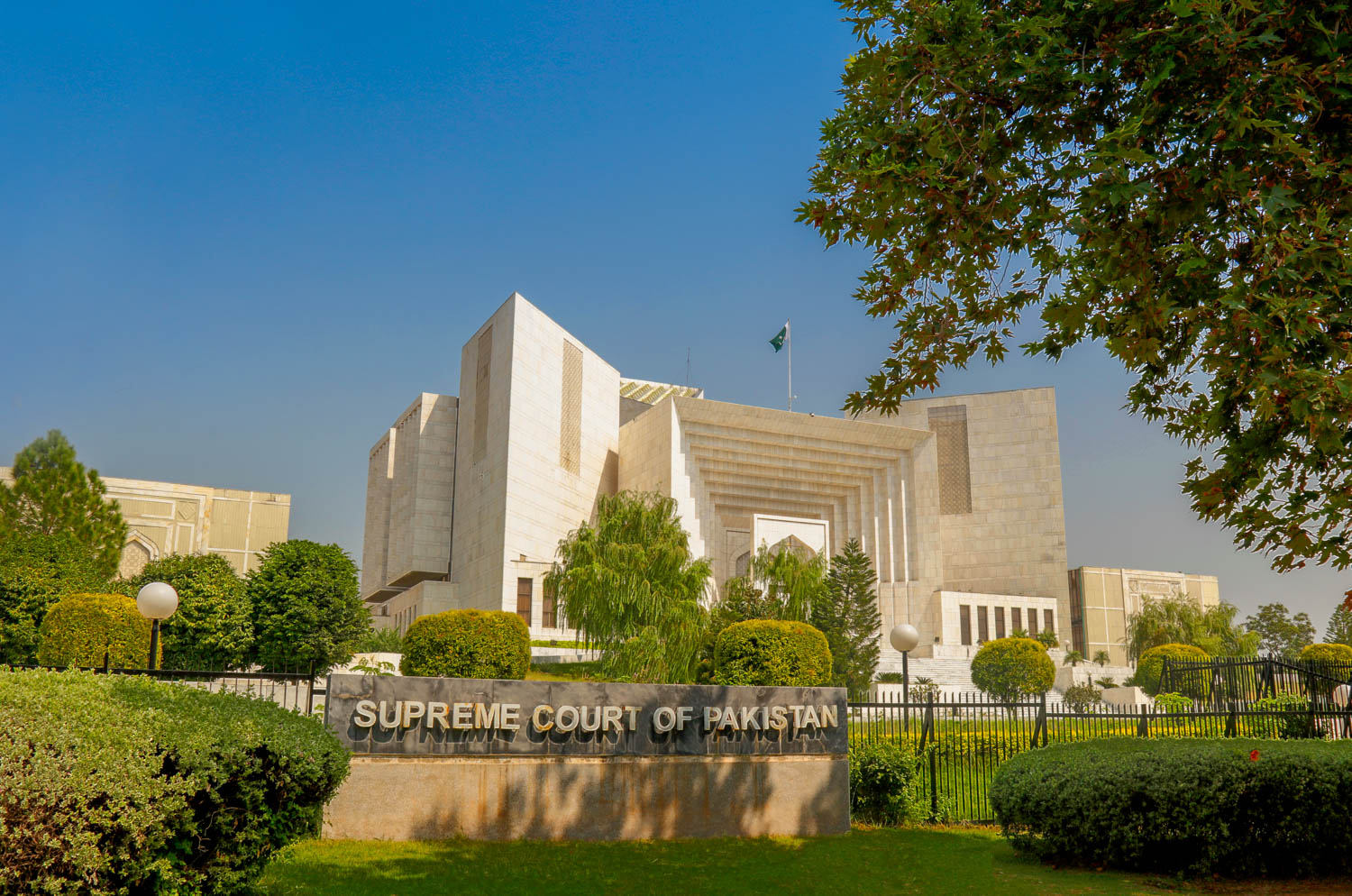
The Supreme Court of Pakistan’s push toward digital case tracking is back in focus after the court issued a significant ruling on construction contract disputes, holding that an unconditional no-demand certificate bars contractors from reopening settled claims. The judgement has renewed interest in how litigants and lawyers use the court’s online case status, cause list, and judgement search tools.
Background
In its recent decision, the Supreme Court of Pakistan ruled that once a contractor signs an unconditional no-demand certificate acknowledging final settlement of a contract, they cannot later reopen the same claim through arbitration or litigation. The court held that such certificates, when issued without protest or reservation, represent a full and final discharge of the contractual relationship between the parties.
The ruling addressed a recurring dispute in Pakistan’s construction and infrastructure sector, where contractors sometimes sign settlement documents to secure final payment, only to later argue the certificate was signed under pressure or does not reflect the true value of outstanding work. The court’s judgement draws a firmer line around when such certificates can be challenged.
Details
What the Ruling Means for Contractors
The bench found that allowing contractors to reopen settled claims after voluntarily signing an unconditional no-demand certificate would undermine the certainty that such documents are meant to provide in commercial contracts. The court noted that genuine cases of coercion or fraud remain an exception, but a party seeking to escape a signed certificate carries a heavy burden of proof.
This judgement is now publicly accessible through the Supreme Court of Pakistan judgements section on the court’s official website. It’s part of the institution’s ongoing effort to make its rulings searchable and available to the public shortly after they’re announced.
How to Search Supreme Court Judgement Records
For lawyers, litigants, and researchers who want to know how to search Supreme Court judgement records, the court’s website offers a dedicated judgements portal where users can search by case number, party names, date of judgement, or the presiding bench. Judgements are typically uploaded within days of being announced, and older decisions dating back several decades have also been digitized and added to the archive.
Using the Supreme Court of Pakistan Online Case Status Tool
Beyond judgements, the Supreme Court of Pakistan online case status portal allows registered users and the general public to check the current stage of a pending case, including whether it has been fixed for hearing, adjourned, or disposed of. Users typically need the case number or the names of the parties involved to retrieve accurate results through this system.
Reading the Cause List and Final Cause List
The Online Cause List Supreme Court of Pakistan is updated regularly and lists cases scheduled for hearing on a given date, organized by courtroom and bench. A separate Final Cause List Supreme Court of Pakistan is published closer to the hearing date and reflects the confirmed order in which cases will be taken up, which can differ slightly from earlier provisional listings due to adjournments or rescheduling.
Quotes
Legal commentators reviewing the no-demand certificate ruling noted that the judgement brings Pakistan’s approach closer in line with commercial arbitration practices in other jurisdictions, where settlement finality is generally given strong legal weight once a certificate has been voluntarily signed.
A senior advocate familiar with construction contract disputes said the ruling would likely reduce the volume of reopened claims reaching arbitration, since contractors and their legal teams will now need to scrutinize no-demand certificates far more carefully before signing them.
Impact
The ruling carries direct consequences for Pakistan’s construction and infrastructure industry, where disputes over final payments and settlement certificates are common. Contractors negotiating final settlements will now need to weigh the finality of an unconditional no-demand certificate much more carefully before signing, since the court has made clear that reopening such claims later will face a high legal bar.
More broadly, the case shows how central the Supreme Court of Pakistan’s digital case-tracking tools, including its online case status system, cause list, and judgements database, have become for businesses and legal professionals monitoring commercial litigation outcomes in real time.
Conclusion
As the Supreme Court of Pakistan continues to expand its digital infrastructure, tools like the online cause list, case status portal, and judgements archive are likely to see growing use from litigants and legal professionals alike. The no-demand certificate ruling itself is expected to influence how contracts are drafted and settled going forward, particularly in large infrastructure projects where final settlement disputes have historically been common.
Frequently Asked Questions
Who is the current Chief Justice of Pakistan in 2026?
Justice Yahya Afridi has served as the Chief Justice of Pakistan since October 26, 2024, continuing to lead the Supreme Court of Pakistan through 2026. His tenure has coincided with a major restructuring of the country’s judiciary following the 27th Constitutional Amendment, passed in November 2025, which established a separate Federal Constitutional Court to handle constitutional matters and federal-provincial disputes. Under this new structure, Justice Aminuddin Khan was appointed as the first Chief Justice of the newly created Federal Constitutional Court, while Justice Afridi continues to preside over the Supreme Court’s appellate jurisdiction in civil and criminal matters.
Which country is No. 1 in justice?
Rankings of judicial systems vary depending on the methodology used, but the World Justice Project’s Rule of Law Index, one of the most widely cited global assessments, has consistently placed countries like Denmark, Norway, Finland, and Sweden at or near the top in recent years, based on factors including judicial independence, absence of corruption, and access to justice. These rankings assess a broad range of factors beyond court efficiency alone, including government accountability, fundamental rights protections, and regulatory enforcement, meaning no single country holds a permanent or universally agreed “number one” position across all available indices.
Who built the Supreme Court of Pakistan?
The Supreme Court of Pakistan’s current building in Islamabad was designed by architect Edward Durell Stone and completed in the 1990s, replacing earlier facilities the court had used since Pakistan’s independence in 1947. The institution itself was established under the Government of India Act and later reconstituted under Pakistan’s own constitutional framework, with Justice Abdul Rashid serving as its first Chief Justice when the court was formed in 1949 as the Federal Court, later renamed the Supreme Court following the adoption of Pakistan’s 1956 Constitution. The building’s construction was overseen by Pakistan’s federal government as part of a broader effort to develop Islamabad as the country’s purpose-built capital.