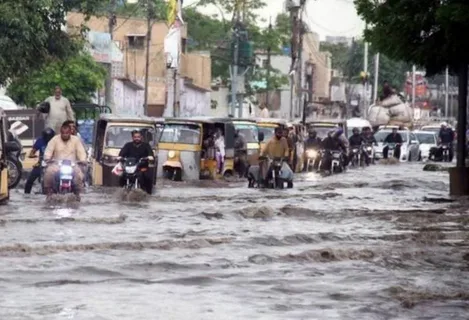
Fresh downpours have left Lahore rain disrupts traffic today headlines trending once more, as waterlogging shut down key underpasses, submerged major roads, and stranded commuters across the city. The latest spell adds to an already punishing monsoon season that has killed dozens across Punjab in recent weeks.
Background
Lahore has faced repeated bouts of heavy rainfall throughout this year’s monsoon season, which the Pakistan Meteorological Department’s Flood Forecasting Division has said will likely continue into early August. The city’s aging drainage infrastructure has struggled to keep pace, leading to a now-familiar cycle of flooded streets each time rain intensifies.
Earlier this season, the city recorded 343 millimetres of rainfall in a single 48-hour window, its heaviest spell of the monsoon so far, according to the Provincial Disaster Management Authority. That downpour flooded more than 130 locations across the city and forced authorities to close major underpasses for days at a time.
Videos and images of Lahore rain disrupts traffic today have become a recurring feature on social media this season, with commuters regularly sharing footage of cars wading through knee-deep water on roads including Ferozepur Road, Multan Road, and Johar Town.
Details
The latest rain spell has once again submerged low-lying areas across the city, including Township, Kacha Jail Road, Haider Road, and the Quaid-i-Azam Industrial Estate, where standing water reached one to one-and-a-half feet in depth. Long queues of vehicles formed on inundated roads as commuters struggled to reach their destinations during peak hours.
Authorities at the Wasa Lahore monsoon control room said the city received an average rainfall of roughly 25 millimetres during the latest spell, a smaller total than the record-setting 343mm downpour weeks earlier, but still enough to overwhelm drainage capacity in several neighborhoods and disrupt traffic flow across the city.
In previous spells this season, the Ghazi Underpass and Masjid Chowk Underpass were shut entirely because of heavy water accumulation, forcing traffic to divert through Z Block and other alternate routes in the DHA area. Similar closures and diversions have become standard practice whenever Lahore rain disrupts traffic live during peak monsoon hours.
Sinkholes have also emerged as a recurring hazard this season, with deep depressions appearing on Canal Road, Johar Town Main Boulevard, and Khayaban-e-Firdousi. Traffic police have repeatedly cordoned off affected sections while Wasa teams carried out emergency repairs, adding further delays for commuters already navigating flooded streets.
The human cost of this year’s monsoon has been significant beyond the traffic disruption itself. According to PDMA figures, at least 21 people had died and 154 others were injured in rain-related incidents across Punjab so far this monsoon season, with additional fatalities reported in recent days, including a house collapse in Bahawalpur and two children who drowned in Khushab.
Quotes
Lahore’s Chief Traffic Officer, Syed Abdul Raheem Sherazi, has repeatedly directed traffic officials to secure sinkhole sites, deploy personnel at flooded underpasses, and ensure smooth traffic flow through alternate routes whenever heavy rain hits the city.
Wasa officials have consistently maintained that drainage operations are underway on an emergency basis during each spell of rain, though residents in several localities have pushed back, saying water removal from their homes and streets has often been left to them due to delayed official response.
One Johar Town resident, describing the scale of flooding after an earlier record downpour this season, said the standing water made parts of Lahore resemble the flooded streets of Venice, a comment that captured the frustration many commuters have expressed as flooding has recurred throughout the season.
Impact
The repeated disruption carries real economic costs for a city Lahore’s size. Commuters face lengthy delays, vehicle damage from submerged roads, and business closures during the worst flooding episodes, while emergency services struggle to reach affected areas quickly when major roads and underpasses are shut.
Beyond Lahore itself, the broader monsoon season has strained Punjab’s infrastructure and emergency response systems, with the Flood Forecasting Division warning of continued heavy to very heavy rainfall across Punjab, Sindh, and Balochistan in the coming days, raising the risk of further urban flooding and rain-related casualties.
The recurring flooding has also renewed public criticism of Lahore’s drainage system. Residents and urban planning experts point to inadequate sewerage capacity, poor road compaction, and delayed infrastructure investment as long-term factors behind the city’s vulnerability to even moderate rainfall.
Conclusion
With the monsoon season expected to continue into early August, further episodes of Lahore rain disrupts traffic live coverage appear likely in the days ahead. Authorities have pledged continued emergency drainage operations, but residents remain skeptical that meaningful long-term improvements will follow once this year’s rains eventually subside.
Frequently Asked Questions
Why does it rain so much in Lahore?
Lahore’s heavy rainfall is driven primarily by the South Asian monsoon system, which brings moisture-laden winds from the Bay of Bengal and Arabian Sea into Pakistan’s Punjab province between roughly June and September each year. The city’s geographic position in the plains of Punjab, combined with its proximity to the foothills of the Himalayas, makes it particularly susceptible to intense, concentrated downpours during peak monsoon spells. In recent years, meteorologists have also pointed to climate change as a factor intensifying monsoon rainfall patterns, with cities like Lahore experiencing more sudden, high-intensity rain events that overwhelm drainage systems designed for more moderate historical rainfall levels.
What is the biggest flood in Pakistan history?
The 2010 floods remain widely regarded as the most catastrophic in Pakistan’s history, submerging roughly one-fifth of the country’s total land area and affecting more than 20 million people across Punjab, Sindh, Khyber Pakhtunkhwa, and Balochistan. Triggered by exceptionally heavy monsoon rains, those floods killed close to 2,000 people and caused damage estimated in the tens of billions of dollars, devastating agricultural land, infrastructure, and entire communities along the Indus River basin. More recently, the 2022 floods also ranked among the worst in the country’s history, displacing millions of people and once again highlighting Pakistan’s vulnerability to extreme monsoon flooding.
Why is Ring Road blocked?
Lahore’s Ring Road, like many of the city’s major thoroughfares, has periodically faced closures or heavy congestion during this year’s monsoon season due to waterlogging at low points along the route, along with sinkholes that have appeared on other major roads during periods of intense rainfall. When sections of the Ring Road or connecting routes become impassable due to standing water, traffic police typically divert vehicles onto alternate roads while Wasa teams work to pump out accumulated rainwater. Blockages tend to be most severe during and immediately after the heaviest rain spells, when drainage systems across the city are simultaneously overwhelmed and unable to clear water quickly enough to keep major roads open.