

Our Kashmir Policy — Will It Ever Liberate Kashmir?
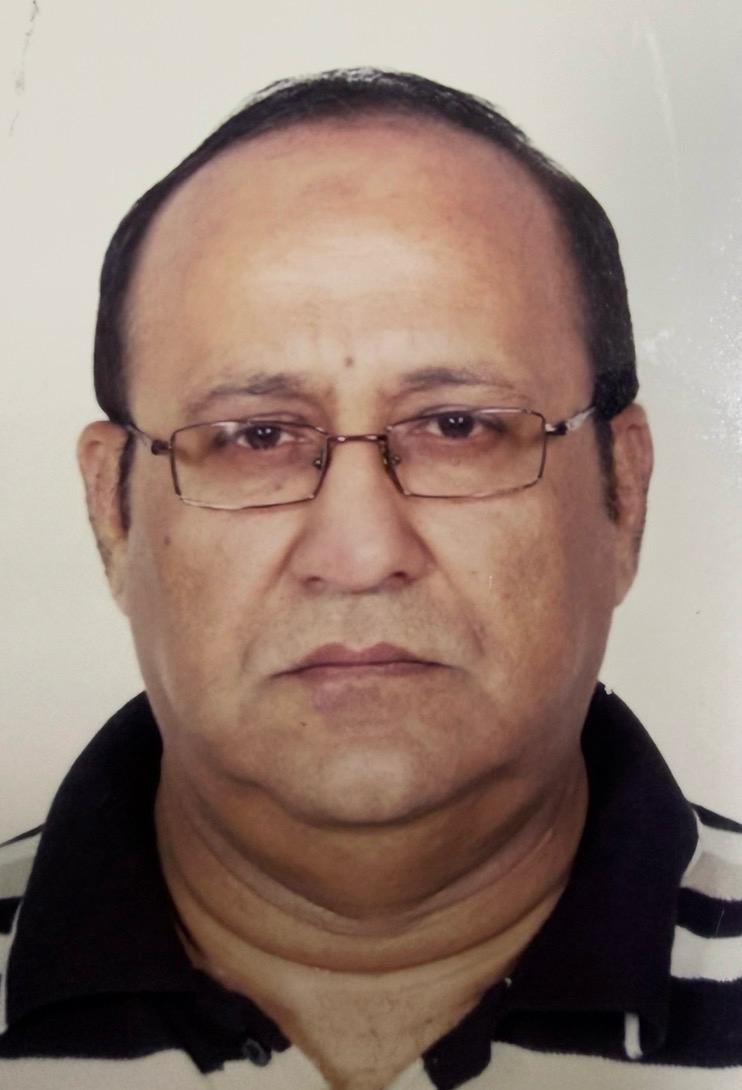
Amir Muhammad Khan
On the completion of five years since India’s illegal action of abolishing the special status of occupied Jammu and Kashmir, Kashmir Exploitation Day was observed in Pakistan and around the world. The fascist Modi government, in serious violation of United Nations resolutions and international laws, abolished the special status of occupied Kashmir on August 5, 2019, and imposed a military siege on the region. This day is observed as a Black Day. In addition, large rallies are being organised in support of the Kashmiri people’s spirit of freedom and against Indian state terrorism.
On the occasion of Kashmir Exploitation Day, large banners are displayed on roads and buildings, particularly in Islamabad, the capital of Pakistan. The freedom struggle of the Kashmiri people is older than Pakistan’s history as an independent country. Quaid-e-Azam Muhammad Ali Jinnah always spoke about Kashmir whenever the opportunity arose. There are recorded excerpts from his speeches showing that he repeatedly linked Pakistan with Kashmir.
At the time of independence, the Kashmir issue was left hanging as a result of the conspiracies and policies of the British and the Hindu leadership. Today, according to the way our ISPR has described the matter, Kashmir has acquired the status of Pakistan’s “most cherished child.”
Every nation makes the sayings and guidance of its founders and benefactors part of its national policies, particularly its governments. But perhaps our rulers do not even realise this. On August 14 this year, Pakistan will, God willing, enter its **80th year**. Apart from issuing statements about Kashmir, holding seminars and going to the United Nations once a year to deliver a speech, what have our governments actually done for Kashmir?
Every ruler has handed the Kashmir issue over to the Ministry of Foreign Affairs, and the “bureaucrats” of the Foreign Office continue to refer to it in their own style.
The Kashmir issue is also a security issue for Pakistan because the power occupying Kashmir is inflicting severe suffering on its people. The issue is also connected with Pakistan’s water security. All these are matters of national security.
During Pakistan’s 79-year history, the people of Pakistan spent 33 years under martial law. Those periods were largely spent punishing politicians and teaching political parties a lesson, while democracy was not given sufficient time to develop. Later, landlords and wealthy businessmen entered politics and, instead of working for the national interest, many remained focused primarily on increasing their own income and wealth.
The Kashmiri freedom fighters and people have continued to look towards Pakistan for strong support. Before them has always been the vision and statements of the founder of Pakistan, Quaid-e-Azam Muhammad Ali Jinnah, regarding Kashmir. They have believed and continue to believe that Pakistan would pay attention to the wishes and guidance of its founder concerning Kashmir.
Kashmir is not merely the name of mountains, rivers, valleys and snow-covered peaks. In the history of South Asia, Kashmir is a question that emerged with the creation of Pakistan and, even after nearly eight decades, remains as intense and unresolved as ever.
Whenever Kashmir is mentioned in Pakistan, the name of the founder of Pakistan, Quaid-e-Azam Muhammad Ali Jinnah, immediately comes to mind. This is not merely because Kashmir became a major national issue immediately after the creation of Pakistan, but also because Quaid-e-Azam himself took a deep interest in the political situation in Kashmir.
A famous statement attributed to Quaid-e-Azam regarding Kashmir is:
**“Kashmir is the jugular vein of Pakistan.”**
This sentence has been used for many decades in Pakistan’s political and public narrative. Interestingly, even if this particular statement is set aside, the importance of Kashmir is fully evident from Quaid-e-Azam’s actual statements and actions.
Quaid-e-Azam’s interest in Kashmir did not suddenly emerge after Pakistan was created in 1947. He was already familiar with the political circumstances of the Muslims of Kashmir before the creation of Pakistan.
In 1944, Quaid-e-Azam visited Kashmir. He met various political circles among the Kashmiri Muslims and emphasised the importance of their unity and political awareness. At that time, Muslim political leadership in Kashmir was divided over various issues, while Muslims faced numerous political and social difficulties under the Dogra ruler.
The basic political philosophy of Quaid-e-Azam was that the people should have a fundamental role in deciding their political future. The same principle later became prominent in the Kashmir issue.
At the time of the creation of Pakistan, the majority of the population of the State of Jammu and Kashmir was Muslim, while the ruler was Maharaja Hari Singh. Following the partition of India, the future of the state remained undecided.
In October 1947, the situation deteriorated rapidly. Armed tribal forces entered Kashmir, Maharaja Hari Singh signed the Instrument of Accession with India, and Indian troops entered Kashmir. Thus, Kashmir developed from a local political issue into a matter of war between Pakistan and India.
Quaid-e-Azam was not unaware of this situation. He took the Kashmir issue extremely seriously and considered the possibilities of finding a political solution.
In April 1948, during a meeting with the American Ambassador Paul Alling, while discussing the Kashmir issue, Quaid-e-Azam expressed Pakistan’s desire for a **fair plebiscite**.
On the other hand, there is the statement of India’s first Prime Minister, Jawaharlal Nehru, which he made on All India Radio in November 1947, and which he also repeated before various international bodies. He stated that:
**“The accession of Kashmir has taken place during a crisis, and therefore the people of Kashmir should subsequently be given the opportunity to decide their future.”**
He also said that once peace and law and order had been restored, a referendum could be held under the supervision of an international organisation such as the United Nations, and that India would accept the decision of the Kashmiri people.
He was a non-Muslim, yet successive Indian governments later did not honour the commitments and statements of their own leader, Jawaharlal Nehru.
But are we ourselves honouring the statements of our own founder, Quaid-e-Azam Muhammad Ali Jinnah?
Instead, we are fighting among ourselves, which is discouraging for those struggling for Kashmir.
The resident of Adiala had a friendly conversation with President Trump and, upon his return to Pakistan, even received a drum-beating welcome. The impression was created that he had spoken firmly about Kashmir.
The meeting took place on **July 22**, and India strengthened its control over Kashmir only **14 days later**.
During the meeting, Trump said that he had told Modi to resolve the Kashmir issue. The resident of Adiala thanked him and said:
**“I will be happy if you can get this problem resolved.”**
India gave a practical and ugly response to this weak diplomatic exchange. It abolished several provisions of Article 370, ended the special status of Kashmir, and subsequently introduced policies that enabled outsiders to settle there and engage in business and economic activities.
On **August 5, 2026, 2,557 days** had passed since the Indian action of August 5, 2019, and the Kashmiri people are still waiting for the dawn of freedom.
May Allah support them and deliver them from oppression.
The political drama over power that we are playing in Azad Kashmir is also painful for those who dream of freedom for Kashmir.
Every year we observe Kashmir-related days and issue the same statements.
But how can the Kashmir issue be resolved if we simply remain asleep?
It appears that every year, by observing **Black Day, Accession Day and Kashmir Exploitation Day**, we believe that we are doing everything possible for Kashmir.
But the question remains:
**Is this really enough?**
After nearly eight decades, should our Kashmir policy still be limited to annual days, speeches, seminars, banners and statements?
Or is it time to ask ourselves honestly what practical steps we have taken—and what more we must do—for the people of Kashmir who have been waiting for freedom for generations?