

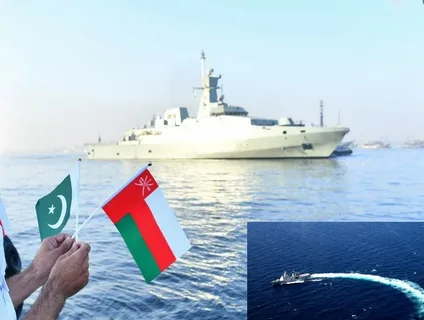

Pakistan’s Maritime Security Agency has intensified patrols and rescue operations across the country’s coastal waters this year, as regional tensions and rising shipping traffic put new pressure on the agency’s roughly 840 nautical miles of jurisdiction. The heightened activity has also renewed public interest in maritime security jobs and career paths within Pakistan’s growing maritime sector.
Background
The Pakistan Maritime Security Agency, commonly known by its acronym PMSA, is the country’s principal body responsible for protecting Pakistan’s maritime interests, including safety, security, environmental protection, and economic activity within its declared maritime zones. The agency is currently led by Director General Rear Admiral Shahzad Iqbal.
Pakistan maritime security has taken on greater importance in 2026 following the Pakistan Navy’s launch of Operation Muhafizul Bahr in March, a mission designed to counter what officials described as multidimensional threats to national shipping and maritime trade. The operation was launched in response to what the military’s media wing called an evolving regional maritime security environment and potential disruptions to critical sea lanes.
Alongside naval operations, the PMSA continues to coordinate closely with the Joint Maritime Information Coordination Centre, a hub linking 53 different stakeholders, including the Pakistan Coast Guards, Customs, the Anti-Narcotics Force, fisheries authorities, and the Edhi Foundation, to monitor activity across Pakistan’s coastline.
Details
Earlier this year, the PMSA and Pakistan Navy took part in Exercise Sea Guard 2026, a large-scale rescue drill in the Arabian Sea designed to test coordination between the various stakeholders responsible for maritime safety. During the exercise, PMSA aircraft and vessels simulated a search-and-rescue operation for a stranded fishing boat, showcasing the agency’s rapid-response capabilities.
The agency’s operational tempo has stayed high throughout the year. In May, the PMSA and Pakistan Navy provided humanitarian assistance to sailors, including six Indian nationals and one Indonesian crew member, stranded aboard an Indian vessel in the Arabian Sea after a technical fault left it unable to move. The PMSA’s multipurpose vessel PMSS Kashmir was deployed for the rescue.
In July, the PMSA also assisted in a 12-hour search-and-rescue operation after a cargo aircraft went missing near Ormara, working alongside the Pakistan Navy to locate the wreckage using both air and sea-based assets. Officials said the scope of the operation reflects how much the agency’s job has grown beyond its traditional focus on smuggling, piracy, and illegal fishing.
Beyond operational duties, growing maritime activity has also fueled demand across Pakistan’s broader maritime security sector. Interest in maritime security jobs has grown steadily as private maritime security companies expand their presence around Karachi Port, Port Qasim, and the deep-sea port of Gwadar, offering roles ranging from vessel security guard positions to shore-based surveillance and risk-assessment work.
For those looking to enter the field, a typical maritime security course covers areas such as ship security procedures, international maritime law, anti-piracy protocols, and emergency response training, often aligned with International Maritime Organization standards. Several training institutes in Karachi now offer certification programs aimed specifically at preparing candidates for roles with a maritime security company or with government agencies like the PMSA itself.
Quotes
PMSA Deputy Director General Syed Nauman Ali, speaking after the Sea Guard 2026 exercise, stressed the importance of coordination between the various agencies represented on the Joint Maritime Information Coordination Centre, noting the agency has saved more than 2,000 lives over the past five years.
The Inter-Services Public Relations wing, announcing Operation Muhafizul Bahr, said the Pakistan Navy remains fully prepared to respond to emerging maritime security challenges and is committed to ensuring the safety of national shipping and regional maritime security more broadly.
Federal Minister for Maritime Affairs Muhammad Junaid Anwar Chaudhry, commenting separately on Pakistan’s removal from a global risk assessor’s list of dangerous waters, said the development would strengthen the confidence of international shipping companies, traders, and investors in the country’s ports.
Impact
The expanded role of Pakistan maritime security agencies carries real economic weight. Pakistan’s recent removal from a major risk assessor’s list of high-risk maritime zones, a designation the country had carried for roughly two decades following the post-9/11 war on terror, is expected to reduce war-risk insurance premiums for shipping companies operating through Karachi Port, Port Qasim, and Gwadar.
Regionally, the PMSA’s willingness to assist stranded vessels regardless of nationality, including the rescue of Indian sailors earlier this year, has been viewed as a quiet but meaningful example of maritime cooperation even amid broader political tensions between neighboring countries.
The growth of Pakistan’s maritime security workforce also carries economic significance for coastal communities. As shipping traffic increases and ports expand capacity, demand for trained personnel, from certified security guards to licensed maritime security course graduates, is expected to continue rising across both public agencies and private maritime security companies.
Conclusion
With Operation Muhafizul Bahr ongoing and Pakistan’s maritime trade environment showing signs of improvement following its removal from international risk lists, the PMSA’s role is likely to keep expanding in the months ahead. Officials have signaled continued investment in port capacity, surveillance technology, and personnel training as part of a broader push to position Pakistan as a regional logistics and transshipment hub.
For those exploring maritime security jobs or considering a maritime security course, the sector’s growth points to steady demand for trained professionals, particularly as Gwadar and other deep-sea ports expand their role in regional trade.
Frequently Asked Questions
What qualifications do I need for maritime security?
Entry requirements for maritime security roles vary depending on whether the position is with a government body like the PMSA or a private maritime security company. Government roles typically require candidates to meet specific age, education, and physical fitness criteria similar to other uniformed services, along with specialized training at maritime academies. For private-sector roles, most maritime security companies look for candidates who have completed a recognized maritime security course covering ship security procedures, anti-piracy response, and basic seamanship, often combined with prior experience in the navy, coast guard, or general security services, along with relevant certifications aligned with International Maritime Organization standards.
Is Pakistan a maritime country?
Yes, Pakistan is very much a maritime country, with a coastline stretching roughly 1,000 kilometers along the Arabian Sea across the provinces of Sindh and Balochistan. The country’s maritime zone extends approximately 840 nautical miles under the jurisdiction of the Pakistan Maritime Security Agency, encompassing major ports including Karachi Port, Port Qasim, and the strategically significant deep-sea port of Gwadar. Pakistan’s maritime sector plays a central role in national trade, energy imports, and regional connectivity, particularly given its proximity to the Strait of Hormuz and its role in projects like the China-Pakistan Economic Corridor.
What are the 4 pillars of maritime safety?
Maritime safety frameworks generally rest on four interconnected pillars: safety of life at sea, which covers search-and-rescue capability and vessel safety standards; security, which addresses threats like piracy, smuggling, and terrorism; environmental protection, which focuses on preventing and responding to marine pollution and disasters; and regulatory compliance, which ensures vessels and operators follow international maritime law and standards set by bodies like the International Maritime Organization. Agencies like Pakistan’s Maritime Security Agency are structured specifically to address all four pillars simultaneously, coordinating with multiple government departments and stakeholders to maintain comprehensive oversight of the country’s maritime zones.