

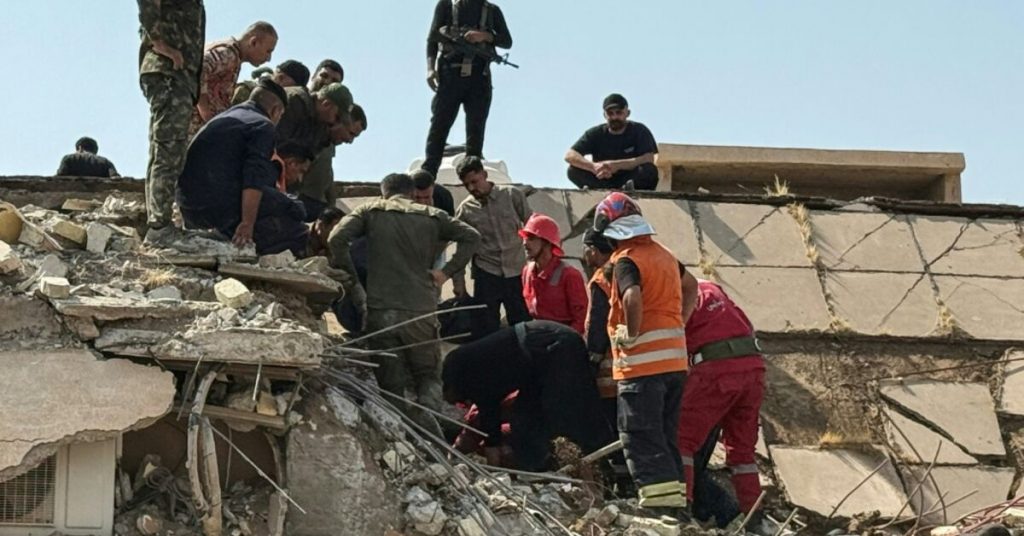

The US Iran war has entered a dangerous new phase. The United States military launched another heavy wave of strikes across southern Iran early Thursday morning, targeting dozens of Islamic Revolutionary Guard Corps (IRGC) sites. This US fresh attack on Iran came just hours after Iranian forces struck an American military base in Jordan, pushing the already tense conflict closer to full-scale war.
What Happened: The US Fresh Attack on Iran
According to a statement posted on X by the United States Central Command (CENTCOM), American forces carried out a large-scale operation against Iranian military infrastructure in the early hours of July 30, 2026. The targets in this latest US attacks on Iran included military command centres, missile and drone production facilities, coastal surveillance sites, and maritime defence installations along Iran’s southern coastline.
This wave of bombings was not a surprise in isolation it followed a direct warning from US President Donald Trump, who had publicly promised to hit Iran “very hard” after Tehran’s forces targeted a Jordanian base housing American troops. What many were asking after last night did the US bomb Iran last night has now been answered with full confirmation from CENTCOM itself.
Where Were the Strikes Carried Out
The US Iran Al Jazeera coverage confirms that these latest strikes were heavily concentrated in Iran’s southern provinces, particularly those bordering the Persian Gulf and the strategic Strait of Hormuz. Al Jazeera’s correspondent reporting from Tehran described the bombardment as similar in geography to what America carried out during a 13-day military campaign in the weeks prior.
Qeshm Island, a strategically significant landmass inside the Strait of Hormuz, was among the most notable targets. Iranian officials confirmed that a residential building on Qeshm Island was struck, leaving three people trapped under rubble and sending at least two injured civilians to hospital. The explosions were powerful enough that they were heard as far away as the port city of Bandar Abbas in Hormozgan province, causing early and inaccurate reports that the port itself had been bombed.
Authorities on Qeshm reported widespread power outages, and emergency crews began working to restore electricity and clear debris from collapsed structures. American forces also targeted locations near Abadan in Khuzestan province, according to a provincial deputy security minister who addressed Iran’s state broadcaster IRIB directly. Iran’s semi-official Tasnim news agency separately confirmed US strikes near the city of Kazerun in Fars province and reported two loud explosions on Kish Island in the Gulf, though airport operations and ferry services on Kish remained unaffected.
Background: Why Is the US-Iran War Happening
The US-Iran war news live updates cannot be understood without looking at the broader picture. Tensions between Washington and Tehran have been building for months over Iran’s increasing control of the Strait of Hormuz the narrow waterway through which a major share of the world’s oil shipments pass every day. Iran has been accused by the United States of using its position to force commercial vessels to purchase insurance as a condition of safe passage, effectively taxing global trade while funnelling money to the IRGC.
On Wednesday, just one day before this latest US attacks on Iran, the US Treasury Department announced new sanctions against two Iranian firms it described as central to this IRGC-backed scheme. Treasury Secretary Scott Bessent stated clearly that “the United States will not allow Iran to hold global commerce hostage or use international shipping to finance the IRGC’s terrorism, aggression, and repression.”
Iran earlier rejected a diplomatic proposal put forward by Oman that would have established a shared arrangement for managing shipping routes through the strait. That rejection cleared the way for renewed military pressure from Washington.
Iran’s Response and Stance
The IRGC issued a firm statement following the strikes, warning that as long as American threats continue, Tehran’s resistance will also continue. This response signals that the US Iran war is unlikely to de-escalate in the short term, with both sides showing no intention of backing down from their stated positions.
Iran’s government has consistently framed its actions as defensive, arguing that American military pressure and economic sanctions have left it with no other option but to respond in kind. Iran attack on Israel today updates remain closely tied to this wider regional escalation, as Tehran’s allies across the Middle East have also been on heightened alert.
Expert Analysis: What Comes Next in the US Iran War
Ryan Bohl, a senior Middle East analyst with the RANE network, outlined two possible paths forward in the US-Iran war news live situation. The first option, he explained, is for America to continue focusing on targets directly related to Iran’s blockade of the Strait of Hormuz the strategy that has defined most of the recent strikes. The second, and far more alarming option, would be a significant escalation toward targeting bridges and power generation infrastructure across Iran, a threat that President Trump has made repeatedly in public statements.
Former Pentagon official David Des Roches, speaking to Al Jazeera, offered a slightly more measured reading of the latest bombardment. He noted that this round of strikes was “not a very overwhelming attack,” suggesting that the Trump administration may be deliberately keeping the pressure calibrated either to leave space for future diplomatic contact or to avoid triggering a full-scale regional war that would involve other actors, including Israel and Gulf states.
Global Impact: Why the World Is Watching This US Iran War
The breaking news on Iran war carries consequences that stretch far beyond the borders of the two countries directly involved. The Strait of Hormuz is one of the most critical chokepoints in the global energy supply chain. Any prolonged disruption to shipping through this waterway would immediately affect oil prices worldwide, increase fuel costs for importing nations across Asia and Europe, and create uncertainty in global financial markets.
Gulf Arab nations many of whom host US military bases and maintain complex relationships with both Washington and Tehran — are watching the US-Iran war news live with serious concern. A miscalculation by either side could rapidly draw neighbouring countries into a wider conflict, creating a humanitarian and economic crisis that the region is not equipped to absorb.
Conclusion: Where the US Iran War Goes From Here
The US Iran war today shows no clear signs of ending soon. American forces have now carried out multiple rounds of strikes across Iranian territory, and Tehran has responded with attacks on US military positions in the wider region. Both sides have drawn firm lines, and the diplomatic off-ramps that once existed are becoming narrower by the day.
The coming 48 to 72 hours will be critical. Whether the Trump administration chooses to escalate further toward high-value infrastructure targets or steps back to allow back-channel diplomacy to function may determine whether this conflict remains a limited military exchange or transforms into something far more catastrophic for the entire Middle East.
Frequently Asked Questions (FAQs)
When did America bomb Iran in 2026?
The United States began launching airstrikes against Iran in mid-2026 as part of an escalating military standoff rooted in disputes over the Strait of Hormuz and Iran’s nuclear programme. The strikes that became part of what is now widely called the US Iran war started with targeted operations against IRGC military infrastructure and have since expanded in frequency and geographic reach. The most recent confirmed wave of US attacks on Iran took place on July 30, 2026, when CENTCOM announced strikes across southern Iran, including on Qeshm Island, Abadan, Kazerun, and Kish Island. This followed an Iranian strike on a US military base in Jordan the previous day, which prompted President Trump to issue a direct threat of a “very hard” retaliatory response. The conflict has now stretched across multiple weeks, with both sides carrying out strikes and counter-strikes in what analysts describe as an open-ended military confrontation with no clear diplomatic resolution in sight.
Who is more powerful, Iran or Israel?
Comparing Iran and Israel militarily is more complex than looking at raw numbers, because both nations have built their power around fundamentally different strategic doctrines. Israel possesses one of the most technologically sophisticated military forces in the Middle East, with advanced air power, a highly capable intelligence apparatus, and widely believed nuclear deterrence capability, even though Israel has never officially confirmed possessing nuclear weapons. Iran, on the other hand, has invested heavily in asymmetric warfare capabilities ballistic missiles, drone technology, proxy militia networks stretching from Lebanon to Iraq to Yemen, and a hardened domestic defence posture built to absorb external pressure over decades of sanctions and isolation. In terms of conventional military hardware and precision strike capability, most defence analysts consider Israel to hold a significant advantage. However, Iran’s capacity to project force through regional proxies, its missile arsenal, and its ability to threaten maritime chokepoints like the Strait of Hormuz give it a different but still serious form of strategic leverage that Israel alone would struggle to neutralise without significant outside support.
Who is more powerful, Iran or the USA?
By virtually every conventional military metric, the United States is overwhelmingly more powerful than Iran. The US operates the world’s largest defence budget, maintains over 700 military bases across dozens of countries, commands multiple aircraft carrier strike groups, and possesses the most advanced air force, naval fleet, and special operations capability on the planet. Iran’s military, while significant in a regional context, is a fraction of the size and technological sophistication of American forces. What makes the Iran-US confrontation genuinely dangerous, however, is not the question of who would win a direct conventional war that outcome is not seriously debated by military analysts. The real concern is the cost of that war. Iran has built an asymmetric deterrence strategy specifically designed to make any conflict prohibitively expensive for Washington. Its ability to close the Strait of Hormuz, activate proxy forces across the Middle East, target US bases in the region, and sustain a guerrilla-style resistance means that defeating Iran militarily would require a prolonged, costly engagement with serious economic and humanitarian consequences far beyond anything the US has experienced in recent conflicts. This is precisely why, despite America’s overwhelming power advantage, the US Iran war has not escalated into a full invasion.