

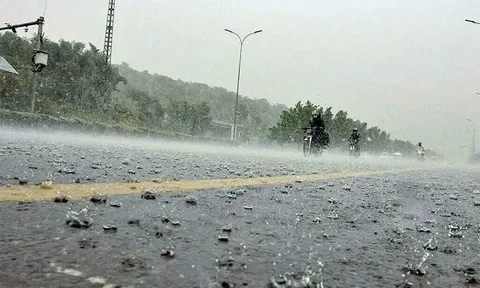

Punjab woke up to a dramatic shift in the skies on Wednesday morning as heavy monsoon rains today lashed multiple cities across the province. The fresh monsoon session arrived just hours after the previous rainfall spell wound down a spell that had already claimed over 110 lives and displaced thousands of families. Residents had barely begun to recover when the new monsoon rains returned with renewed force.
Lahore, Sialkot, Islamabad, Rawalpindi, Jhelum, Narowal, and Murree were among the cities that received heavy to moderate showers during today’s monsoon session in Punjab. The Pakistan Meteorological Department confirmed the onset of a new monsoon spell, warning that it is expected to continue through August 5, 2026. This is not a brief shower it is a full monsoon session, and officials are urging people across Punjab to take immediate precautions.
How Heavy Were the Punjab Monsoon Rains Today?
The Water and Sanitation Agency (WASA) recorded rainfall data from multiple stations across Lahore as of 11:30 AM on July 29. The numbers were striking. Tajpura recorded the highest rainfall at 44.8mm, closely followed by Mughalpura at 44.4mm. Shadipura recorded 32.6mm, Pani Wala Talab logged 31.4mm, and Chowk Nakhuda saw 29mm of monsoon rain.
Johar Town recorded 26.8mm of rainfall during the monsoon session, while Mannawan logged 26mm. Lakshmi Chowk received 22.4mm, Farrukhabad 16.4mm, and Saggian 7.6mm. Even relatively quieter areas like Nishtar Town recorded 6.2mm, Upper Mall received 5.8mm, and Gulshan-i-Ravi registered 1mm. Iqbal Town and Jail Road also experienced rainfall at 0.2mm and 0.8mm respectively. These numbers reflect the wide geographic spread of today’s Punjab monsoon rains.
In Sialkot, the Pakistan Meteorological Department recorded a staggering 54mm of rainfall between 2 AM and 5 AM alone. This is a significant figure, and WASA Sialkot reported standing water at depths of 10 to 18 inches across several areas by 6 AM. The monsoon rains today did not spare the city.
First Casualty of the New Monsoon Session in Punjab
Within hours of the fresh monsoon rains beginning in Punjab, the first injury was reported in Lahore. According to Rescue 1122, a 25-year-old man was hurt when the roof of a house collapsed in the Baghbanpura area of the city. The roof structure was reportedly made of wooden beams and older construction material — a tragically common vulnerability during Pakistan’s monsoon season.
The injured man was shifted to Kot Khawaja Saeed Hospital for medical treatment. Rescue teams were dispatched promptly, and emergency services confirmed they remained on high alert across Lahore during the ongoing monsoon session in Punjab. Officials expect more such incidents as the rainfall continues through the week.
PMD’s Warning: What the Monsoon Season Means for Punjab
The Pakistan Meteorological Department issued its forecast a day before today’s Punjab monsoon rains arrived. According to PMD, heavy rainfall is expected to continue across multiple regions from July 29 through August 5, 2026. The department specifically warned that the monsoon session could generate flash floods in hilly and mountainous areas, and urban flooding in major cities.
This warning did not come without context. Just days before this fresh monsoon spell, Punjab was still reeling from the devastation caused by the previous monsoon rains. Nullahs seasonal streams that run through agricultural land had to be breached to divert floodwaters, which then inundated vast stretches of land near Lahore, Gujranwala, and Kasur along the GT Road. The monsoon season in Pakistan comes with these high stakes every single year.
An irrigation official speaking to the media confirmed that the situation around the GT Road corridor remained serious, with water still standing in many low-lying agricultural zones even before today’s monsoon rains added to the burden.
Villages Submerged, Rescue Operations Continue
The human cost of this ongoing monsoon session in Punjab is already severe. Muhammad Faisal, a 39-year-old labourer from a village near Muridke, described the scene on the ground as complete submersion. “Floodwater has inundated our area since Friday, leaving the entire neighbourhood submerged,” he said. His words painted a picture shared by dozens of villages across the region.
Haris Dar, a rescue volunteer working in the affected areas, said that teams were still evacuating stranded residents while distributing meals to families cut off by floodwaters. Dozens of villages remained under water as the fresh monsoon rains today arrived on top of an already saturated and overwhelmed drainage system. For many families, there is no dry road home.
The scale of the previous monsoon season’s damage, as confirmed by a high-level government meeting chaired by the Prime Minister, included 110 deaths, 360 injuries, 796 damaged houses, and the loss of 376 livestock. These numbers were recorded before today’s fresh monsoon spell even began.
Government Response to the Monsoon Session
Following the Prime Minister’s review meeting, the government acknowledged that agricultural land had been inundated across multiple districts due to flooding in seasonal streams. A statement issued after the meeting confirmed that drainage operations were actively under way. Rescue teams, including those from Rescue 1122, were placed on full operational alert across Punjab as the new monsoon rains arrived.
Government officials urged residents in flood-prone areas to move to safer locations immediately. The authorities also appealed to the public to avoid crossing flooded roads and underpasses, as water levels in urban centres like Lahore and Sialkot had risen rapidly within just the first few hours of today’s monsoon session in Punjab.
Local administrations in Rawalpindi, Jhelum, Narowal, and Islamabad were also put on alert as showers swept through these cities during the early morning hours of July 29. The regional impact of the monsoon session extended well beyond Punjab’s provincial boundaries.
Pakistan’s Monsoon Season: A Recurring National Crisis
Pakistan’s monsoon season runs roughly from late June through September each year. It is one of the most critical weather events on the country’s annual calendar both for agriculture and for disaster management. Punjab, as Pakistan’s most populous province, consistently bears a heavy share of the monsoon’s impact due to its river systems, dense urban population, and vast agricultural plains.
The monsoon rains today are part of a much larger pattern. The monsoon session in Punjab typically sees multiple rainfall spells arriving in waves, each one testing the capacity of urban drainage systems, river embankments, and rural infrastructure. Cities like Lahore and Sialkot face annual urban flooding due to rapid urbanization, outdated drainage networks, and the sheer volume of water that monsoon rains dump within short timeframes.
This year’s monsoon season has already proven unusually destructive. With over 110 deaths confirmed from just the first major monsoon spell, the country is now bracing for the second one which arrived without pause today.
What Comes Next: Outlook for the Fresh Monsoon Spell
According to the Pakistan Meteorological Department, the current monsoon session is expected to remain active until at least August 5. This means Punjab, Islamabad, and surrounding areas should anticipate continued rainfall over the next week. Residents in areas prone to flash floods, roof collapses, and waterlogging have been specifically warned.
Emergency services including Rescue 1122 remain mobilized across Punjab. WASA teams are working to clear drains and pump out stagnant water, though in areas where rainfall exceeds drainage capacity as seen today in Tajpura and Sialkot the challenge is enormous. Floodwater from the GT Road corridor is also expected to flow into new areas over the coming days as it moves downstream.
Meteorologists say the intensity of individual monsoon spells may vary, but the overall monsoon session will remain potent through early August. Citizens are advised to stay updated through official PMD advisories, limit unnecessary travel, and report emergencies to Rescue 1122 immediately.
Frequently Asked Questions (FAQs)
Where is Red Alert in India today?
Red Alerts are issued by India’s Meteorological Department (IMD) to warn of extremely heavy rainfall, typically defined as more than 204.4mm within 24 hours. As of July 29, 2026, Red Alerts in India are currently active in several states experiencing intense monsoon activity, particularly across parts of Uttarakhand, Himachal Pradesh, Rajasthan, and Maharashtra, where heavy monsoon rains have been triggering landslides, river flooding, and urban waterlogging. IMD issues colour-coded warnings Green, Yellow, Orange, and Red based on rainfall severity and risk to life. A Red Alert means people in that area must take immediate action, avoid travel, and follow instructions from local disaster management authorities. The alerts are updated daily based on weather model forecasts, and residents in warned zones are urged to monitor official IMD bulletins closely.
Which part of Pakistan has the highest rainfall?
Pakistan’s highest rainfall is consistently recorded in the northern and north-eastern parts of the country, particularly Murree, Azad Kashmir, Gilgit-Baltistan, and the upper reaches of Khyber Pakhtunkhwa. Among cities, Murree in Punjab’s northern highlands regularly records the highest rainfall figures during the monsoon season. In today’s Punjab monsoon rains, Sialkot’s city area alone recorded 54mm within just three hours between 2 AM and 5 AM, making it one of the most rainfall-intensive zones in the current spell. Sialkot, Narowal, and Rawalpindi, all located in northern Punjab, tend to receive significantly more rainfall than Lahore or southern Punjab districts. The geographical position of these cities closer to the Himalayas and the foothills means they intercept monsoon moisture more intensely. In terms of overall annual rainfall, however, parts of Azad Kashmir, including Muzaffarabad, regularly record among the highest figures in the entire country.
What is the monsoon season in Pakistan?
The monsoon season in Pakistan is the annual period of heavy seasonal rainfall driven by moisture-laden winds that arrive from the Arabian Sea and Bay of Bengal. It typically begins in late June or early July and continues through September, though its intensity and timing can vary significantly from year to year. The monsoon in Pakistan is not a single continuous rainfall event it arrives in waves, or spells, each lasting several days, separated by brief dry periods before the next monsoon session begins. During this season, the entire country experiences elevated rainfall, but Punjab, Sindh, and Azad Kashmir are typically the most affected. The monsoon season is critical for Pakistan’s agriculture it replenishes reservoirs, recharges groundwater, and waters crops including cotton, rice, and sugarcane. However, when the monsoon rains are excessive, they bring devastating consequences including flash floods, urban inundation, river overflow, and loss of life and property. In 2022, Pakistan experienced one of the deadliest monsoon seasons in its history, submerging nearly a third of the country.