

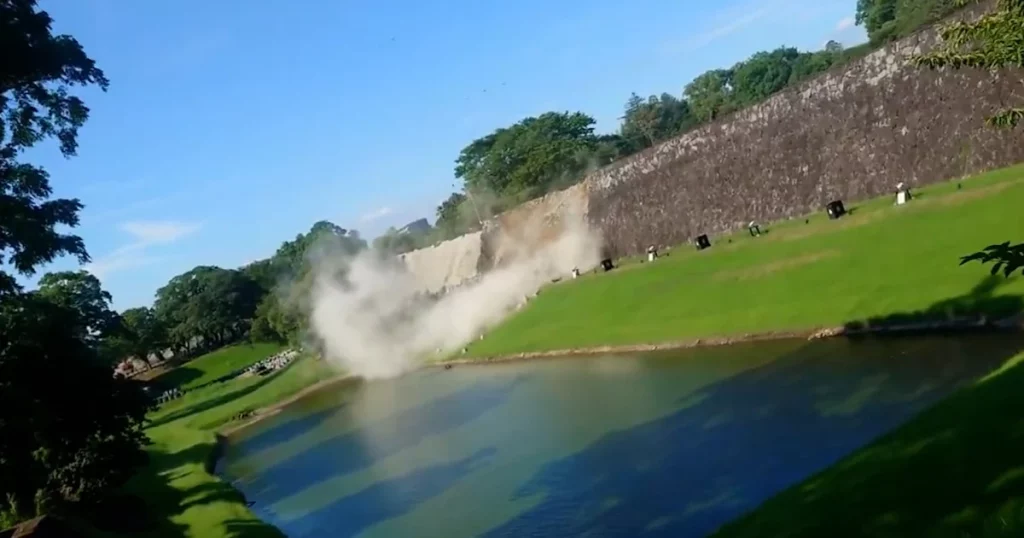

A powerful magnitude 7.1 earthquake struck southern Japan’s Kumamoto Prefecture on Tuesday afternoon, triggering a tsunami warning, collapsing buildings, and causing an explosion at a shopping mall where several people are feared dead. Prime Minister Sanae Takaichi has urged residents to stay alert for further strong aftershocks.
Background
Japan sits along the Pacific Ring of Fire and experiences hundreds of earthquakes every year, accounting for roughly 18 to 20 percent of the world’s seismic activity. Most tremors cause little to no damage, but the country remains acutely aware of the risks after the 2011 magnitude 9.0 undersea quake that triggered a tsunami killing or leaving missing around 18,500 people and wrecked the Fukushima nuclear plant.
Kyushu, Japan’s southern main island, has a history of destructive earthquakes, including a deadly sequence in April 2016 that killed dozens of people in the same Kumamoto region now affected by this week’s quake. That history has shaped how seriously authorities and residents treat any Japan earthquake today, since aftershock sequences in this area have previously produced multiple large tremors within days of each other.
Concern had already been elevated in Japan this year after a magnitude 7.7 tremor struck the country’s north in April, injuring at least 10 people and shaking large buildings as far away as Tokyo. That earlier quake prompted authorities to issue a special advisory warning of an increased risk of a magnitude 8.0 or stronger earthquake somewhere in the country.
Details
Tuesday’s earthquake struck at 4:27 p.m. local time near the city of Uki, about 20 kilometers south of Kumamoto city, at a shallow depth of roughly 10 kilometers. The Japan Meteorological Agency measured the quake at magnitude 7.1, registering the maximum possible level of seven on Japan’s Shindo intensity scale, while the US Geological Survey initially recorded 7.1 before revising its estimate down to 6.8.
Strong shaking was felt across Kumamoto and the neighboring prefectures of Nagasaki, Kagoshima, Fukuoka, Saga, Oita, and Miyazaki, all located on Kyushu island. The Japan Meteorological Agency initially warned of a possible tsunami of up to one meter along the Ariake and Yatsushiro seas before lifting the advisory later that evening after confirming no tsunami activity had been observed.
The most serious reported damage came from an explosion at Kumamoto Prefecture’s largest shopping mall, where police said 20 to 30 workers were unaccounted for after the blast, with several people presumed to have been killed and others believed to remain trapped. Public broadcaster NHK reported one hospital alone received more than 50 injured patients, including 10 in serious condition.
Beyond the mall incident, the earthquake knocked out power to thousands of homes, ruptured roads, and derailed a high-speed Shinkansen train, injuring several passengers. Rail operator JR Kyushu suspended bullet train and local services across the region for safety inspections, while Japan’s Nuclear Regulation Authority confirmed no abnormalities had been detected at nearby nuclear power plants.
Major manufacturers with operations in the earthquake’s path, including Sony and chipmaker TSMC, confirmed their facilities were being checked for damage, given Kyushu’s importance as a manufacturing hub for the global semiconductor industry.
Quotes
Prime Minister Sanae Takaichi addressed the nation shortly after the earthquake, saying her government was still assessing the extent of injuries and property damage but had already been informed of several injuries across the affected region.
She added that power outages and fires were occurring in some areas, with roads, bridges, and buildings damaged, and urged residents in the strongly shaken areas to remain vigilant for the possibility of another earthquake of similar magnitude in the coming days.
Takaichi also cautioned residents cooking at home to be careful with open flames and broken glass following the shaking, stressing that her government was putting people’s lives as the top priority as rescue and assessment operations continued.
A Japan Meteorological Agency spokesperson explained the tsunami advisory decision, noting the earthquake had occurred inland and no tsunami activity had been observed, which allowed officials to lift the warning at a relatively early stage once sea level conditions were confirmed stable.
Impact
The regional impact of this Japan earthquake today extends well beyond Kumamoto. Kyushu is a critical hub for global semiconductor manufacturing, and any disruption to plants operated by companies like TSMC could ripple through international supply chains that depend on the region’s chip production capacity.
The earthquake has also renewed public anxiety in Japan following this year’s earlier magnitude 7.7 quake and the government’s standing advisory about elevated risk of a stronger earthquake nationwide. Seismologists continue to monitor whether Tuesday’s quake could be a precursor to further significant activity, given the region’s history of earthquake clusters.
For residents following Japan earthquake today live updates, the immediate concern remains aftershocks. Authorities have warned that strong follow-up tremors are possible in the days ahead, a pattern consistent with the 2016 Kumamoto earthquake sequence, when a smaller quake was later understood to have been a foreshock to an even larger one.
Conclusion
As rescue operations continue at the damaged shopping mall and emergency crews assess wider infrastructure damage, authorities are expected to provide updated casualty figures in the coming hours. The coming days will be critical in determining whether Tuesday’s magnitude 7.1 earthquake was an isolated event or part of a larger seismic sequence affecting southern Japan.
Given Japan’s history with major earthquakes, both the government and residents in Kumamoto and neighboring prefectures are likely to stay on heightened alert until seismologists can rule out the risk of a larger follow-up quake.
Frequently Asked Questions
Was there a current earthquake in Japan?
Yes. A magnitude 7.1 earthquake struck Japan’s Kumamoto Prefecture on Kyushu island on Tuesday afternoon local time, according to the Japan Meteorological Agency. The quake triggered a tsunami advisory for the Ariake and Yatsushiro seas, which was later lifted after no tsunami activity was confirmed. The earthquake caused injuries, power outages, structural damage, and an explosion at a shopping mall in the affected area, prompting Prime Minister Sanae Takaichi to set up a task force to assess the damage and coordinate rescue efforts.
Did an 8.7 earthquake hit Russia?
Yes, though this was a separate event from today’s Japan earthquake. A massive earthquake measuring between magnitude 8.7 and 8.8, depending on the seismological agency’s estimate, struck off Russia’s Kamchatka Peninsula on July 29 to 30, 2025. It ranked among the largest earthquakes recorded globally in recent decades, comparable in scale to the 2011 Tohoku earthquake in Japan, and triggered Pacific-wide tsunami warnings that reached as far as Chile and French Polynesia. That earthquake caused flooding in the Russian port city of Severo-Kurilsk and damaged infrastructure at a nearby naval base, though it resulted in comparatively few direct casualties given its scale.
Did Tokyo feel the earthquake?
Tokyo did not report significant shaking from Tuesday’s magnitude 7.1 Kumamoto earthquake, since the epicenter was located roughly 900 kilometers southwest of the capital on Kyushu island, far enough away that the impact was largely confined to Kyushu and its immediate surrounding prefectures. This is different from Japan’s magnitude 7.7 earthquake earlier this year, which was strong enough to shake large buildings in Tokyo despite its epicenter being elsewhere, illustrating how an earthquake’s felt impact depends heavily on both its magnitude and its distance from major population centers.