

Pakistani comedian and rapper Ali Gul Pir is having a busy year, having recently welcomed his first child with wife Dr. Azeemah Nakhoda and now speaking out publicly against people who try to scare new parents with negativity. The Karachi-born entertainer, known for satirical hits like “Waderai Ka Beta,” is also the great-grandson of Pir Ilahi Buksh, a former Chief Minister of Sindh, giving him a family history that stretches well beyond comedy.
Background
Ali Gul Pir was born on February 14, 1986, in Karachi, into a Sindhi feudal family with roots in Dadu District. His family lineage traces back to Pir Ilahi Buksh, who served as the second Chief Minister of Sindh from 1948 to 1949 and was a prominent figure in the Pakistan Movement before the country’s independence.
Despite this political and spiritual family background, Ali Gul Pir’s own childhood was shaped by hardship rather than privilege. He has spoken publicly in past interviews about a difficult period when his father was imprisoned for several years on political charges that were never proven, a period that left the family without financial stability and forced them to return to Karachi from Canada.
Ali Gul Pir has generally kept detailed information about his father out of the public eye, focusing instead on the emotional impact of his parents’ separation, which he later explored openly in his 2019 spoken-word track “Sorry I Wasn’t Enough.” Questions about Ali Gul Pir’s father name continue to circulate online, though he has rarely named him directly in interviews, choosing instead to speak about the experience rather than the individual.
Details
Ali Gul Pir rose to fame in 2012 with his debut single “Waderai Ka Beta,” a satirical take on Pakistan’s feudal elite that gained half a million YouTube views within a week of release and earned him a Best Newcomer nomination at the 1st Hum Awards in 2013. He has since built a career blending comedy, music, television hosting, and social commentary.
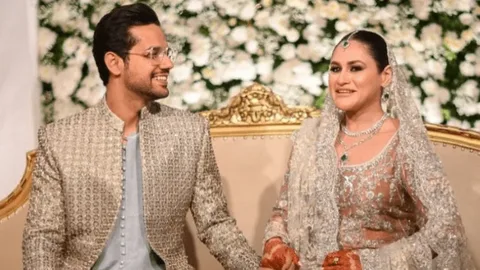
On the personal front, Ali Gul Pir wife Dr. Azeemah Nakhoda has become a regular presence in his public updates since their marriage in 2023. The couple welcomed their first child, a son named Salaar, on June 21, 2026, timed almost perfectly with Father’s Day celebrations that year.
Following the birth, Ali Gul Pir shared an emotional message about fatherhood, writing that his first wish upon holding his son was to protect him from all pain, before acknowledging that difficult moments are also part of a meaningful life. He and his wife have since shared several family photoshoots featuring baby Salaar, captioned simply, “And then there were three.”
More recently, Ali Gul Pir has used his platform to push back against a common habit among older relatives and acquaintances: overwhelming new parents with frightening stories and unsolicited warnings. Younger Pakistani parents seem to be leaning the same way lately, favoring encouragement over the fear-based commentary that was common in earlier generations.
His connection to Pir Ilahi Buksh continues to shape how audiences view his satirical work. Critics and fans alike have noted that his willingness to mock Pakistan’s feudal and political elite carries extra weight given his own family’s historical ties to that same political class.
Quotes
Speaking to Norient in an earlier interview about his upbringing, Ali Gul Pir said his father was “put in prison on drummed-up political charges, which haven’t been proven till this day,” adding that his family had no savings and struggled even to cover school fees during that period.
In his Father’s Day announcement, Ali Gul Pir wrote that he understood his son would not always be happy and would learn important lessons through difficult moments, but promised he would always be there for him as his father.
On the subject of new parents facing unsolicited fear-based advice, Ali Gul Pir has argued that pregnancy and early parenthood already come with enough anxiety, without well-meaning relatives adding to it with worst-case scenarios and old wives’ tales.
Impact
Ali Gul Pir’s openness about both his difficult childhood and his joyful transition into fatherhood has resonated with fans navigating similar family dynamics in Pakistan, where conversations about divorce, absent parents, and mental health have historically been treated as taboo subjects.
His comments about not scaring new parents also tie into a broader cultural conversation happening across South Asia, where younger parents are increasingly pushing back against older generations’ tendency to share alarming stories about childbirth and infant care rather than offering practical support.
The continued public interest in his family background, particularly his descent from Pir Ilahi Buksh, also reflects how audiences often view celebrities with historical political ties differently, especially when that celebrity has built a career satirizing the very class his family once belonged to.
Conclusion
As Ali Gul Pir settles into fatherhood alongside wife Dr. Azeemah Nakhoda, his public commentary suggests he plans to keep using his platform for candid conversations about family life, just as he did with his earlier work on divorce and childhood trauma. Whether his advocacy around new-parent anxiety turns into a recurring theme in his content remains to be seen, but it’s very much in line with how he’s built his career: turning his own personal experiences into public conversation starters.
Frequently Asked Questions
Did Ali Zafar kiss Alia Bhatt?
Yes, Pakistani singer and actor Ali Zafar shared an on-screen kiss with Alia Bhatt in the 2016 Bollywood film “Dear Zindagi,” a departure from his previously stated no-kissing clause in earlier projects. Reports at the time noted that Zafar had used a body double for a kissing scene in an earlier film, “London Paris New York,” making his choice to perform the “Dear Zindagi” scene himself notable to entertainment media covering the film’s release. It’s worth noting Ali Zafar is a separate public figure from Ali Gul Pir, though the two have crossed paths publicly in the past.
What was Ali Zafar accused of?
In 2018, Pakistani singer Meesha Shafi publicly accused Ali Zafar of sexual harassment, alleging multiple instances of inappropriate behavior. Ali Zafar has consistently denied the allegations and pursued legal action, including a defamation case against Shafi and others, and the matter has moved through Pakistani courts over several years with mixed outcomes at different stages. The case became a prominent flashpoint in Pakistan’s broader #MeToo movement, and it also indirectly involved Ali Gul Pir, who released a diss track referencing the allegations in 2019 and was subsequently sent a defamation notice by Zafar’s legal team.
Is Ali Fazal Indian or Pakistani?
Ali Fazal is an Indian actor, born in Lucknow, Uttar Pradesh, India, and is best known internationally for his role in the Amazon Prime series “Mirzapur” as well as appearances in Hollywood productions like “Furious 7” and “Victoria & Abdul.” He is a different public figure entirely from both Ali Zafar, the Pakistani singer-actor, and Ali Gul Pir, the Pakistani comedian and rapper, despite the similarity in their first names occasionally causing confusion among casual searchers.