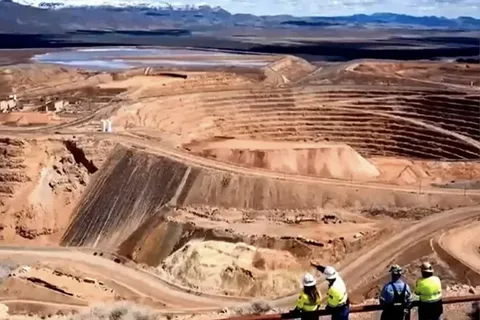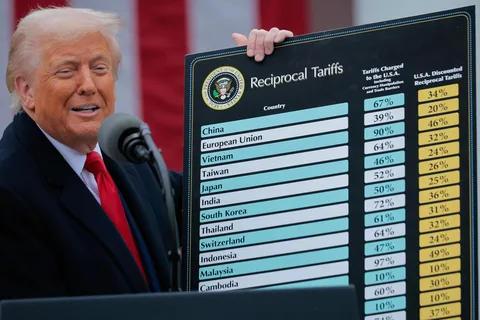
Markets are bracing for a formal decision on the long-awaited Trump copper tariff, with copper prices hovering near multi-month highs as traders wait for the White House to act on Commerce Department recommendations that were due weeks ago. The delay comes even as Trump’s broader steel and metals tariff regime keeps reshaping trade relationships with partners well beyond copper alone.
Background
Copper tariffs first entered serious discussion in mid-2025, when the administration announced plans for a 50% duty on copper imports following a national security review conducted under Section 232 authority. That review examined how dependent the United States had become on foreign copper, with Chile and China ranked among the world’s largest producers and refiners of the metal.
Steel and aluminum tariffs had already been raised earlier that year, with rates climbing as high as 50% for most trading partners except the United Kingdom, which secured a lower 25% rate under a separate economic agreement. Since then, the scope of Trump steel tariff news has expanded well beyond raw metal, pulling in hundreds of derivative products ranging from farm equipment to household appliances.
By 2026, the administration had adjusted its metals tariff framework multiple times. In April, tariffs shifted to apply against the full customs value of covered products rather than just their metal content, a change officials said was meant to close loopholes tied to artificially low declared values.
Details
The most recent formal update came on June 1, 2026, when President Trump signed a proclamation further adjusting Section 232 tariffs on steel, aluminum, and copper, with new rates taking effect June 8 and running through the end of 2027. The changes lowered tariffs on select agricultural and industrial equipment, including combines, harvesters, bulldozers, and forklifts, down to 15% from the previous 25% rate.
Despite these updates to steel and aluminum, the standalone Trump copper tariff decision remains unresolved. Copper traded near $14,000 per metric ton this week, close to its highest level since early June, as traders continued watching for a Commerce Department recommendation that was supposed to reach the president more than three weeks ago.
The uncertainty has already reshaped global copper flows. Anticipation of new copper tariffs has pulled large volumes of the metal into US warehouses throughout the year, tightening global supply and pushing prices higher even before any formal announcement takes effect. As of July 30, new customs reporting rules will also require importers to disclose the primary country of smelt and cast for many copper products, adding another layer of compliance tied to the broader tariff push.
While copper tariffs remain pending, the administration’s steel and metals strategy has become tangled with unrelated political disputes elsewhere. Brazil offers the clearest example: Washington imposed a 50% tariff on Brazilian goods in 2025, explicitly linked to the criminal trial of former president Jair Bolsonaro, a Trump ally convicted of plotting to overturn Brazil’s 2022 election. A separate 25% tariff followed in July 2026, targeting roughly 18% of Brazil’s exports to the US over alleged unfair trade practices, including deforestation policy and digital trade restrictions.
Quotes
Commerce Secretary Howard Lutnick said in a CNBC appearance that he expected copper tariffs to take effect by the end of July, though he did not provide the White House with a specific implementation date at that time.
The White House, in a fact sheet accompanying the June proclamation, said the administration’s approach was designed to more effectively address national security threats, spur investment in American manufacturing, and facilitate US production of related products.
On the Brazil dispute, US Trade Representative Jamieson Greer said an investigation had concluded that Brazilian policies harmed American interests across digital trade, ethanol market access, and deforestation enforcement, while Secretary of State Marco Rubio wrote that Lula’s government had not negotiated with Washington in good faith.
Brazilian President Luiz Inácio Lula da Silva rejected that framing directly, telling reporters in Rio de Janeiro that he wanted to fight what he called a war of narrative and truth, and pledging that Brazilian society would not be misled by Washington’s justification for the tariffs.
Impact
The copper tariff delay carries real consequences for manufacturers who rely on the metal for everything from electrical wiring to construction materials. Continued uncertainty has already driven a surge of stockpiling, and once a final rate is announced, industries dependent on imported copper could face sudden cost increases similar to those already absorbed by steel-consuming sectors.
Globally, the broader Trump steel tariff and copper tariff agenda has strained relationships with major trading partners, prompting retaliatory threats and renegotiated agreements across multiple continents. The White House has framed rising US manufacturing activity, which grew at its fastest pace in four years as of May 2026, as evidence the strategy is working, though critics argue the tariffs have also raised costs for American businesses and consumers.
The Brazil tariffs illustrate how these trade tools have increasingly blended economic and political objectives. Analysts note the tariffs have become entangled in Brazil’s own October 2026 presidential election, with Lula’s camp arguing the levies amount to a political gift that could boost his standing against Bolsonaro-aligned candidates, including Flávio Bolsonaro, who has publicly asked Washington to delay the tariffs until after the vote.
Conclusion
With a formal Trump copper tariff decision still pending and steel and aluminum rates locked in through the end of 2027, markets are likely to stay volatile in the near term. Analysts expect the administration to announce its copper policy within weeks, and the political fallout from the Brazil tariffs will keep shaping both countries’ trade relationship as Brazil heads toward its October election.
Frequently Asked Questions
What is the tariff from Brazil to the USA?
As of mid-2026, Brazilian exports to the United States face a combination of tariffs stacked on top of one another. An initial 50% tariff was imposed in 2025, explicitly tied to Brazil’s prosecution of former president Jair Bolsonaro, while a separate 25% tariff was added in July 2026 following a Section 301 investigation into alleged unfair trade practices, including deforestation policy and digital trade barriers. Together, Brazil’s government estimates these measures affect around 18% of its total exports to the US, worth roughly $7.4 billion, though certain products like beef, coffee, some fruits, and aircraft parts have received exemptions.
Why did the US put tariffs on Brazil?
The tariffs on Brazil stem from two distinct disputes that became intertwined. The original 50% tariff was tied directly to Brazil’s criminal trial of former President Jair Bolsonaro, a Trump ally who was sentenced to 27 years in prison for allegedly attempting to overturn his 2022 election defeat to Lula, with Trump publicly calling the prosecution a “witch hunt.” The additional 25% tariff announced in 2026 was framed around more conventional trade complaints, including allegations of illegal deforestation, restricted access to Brazil’s ethanol market, and digital trade practices the US considers unfair, though Brazilian officials maintain the entire dispute is fundamentally political rather than economic in nature.
What is the import duty from USA to Brazil?
Brazil has historically maintained its own tariff structure on US goods, with rates varying by product category under its standard trade rules with non-preferential trading partners. Following the US tariff hikes, President Lula stated Brazil was prepared to respond with reciprocal tariffs on American goods, though as of mid-2026 Brazil’s government had not finalized the specific rates or products it would target in retaliation, instead focusing initial efforts on diplomatic negotiations and formal complaints through trade channels while keeping the option of matching tariffs open.